Welcome to the Central Trade Authority wiki. This page contains all information I've written for the worldbuilding project and generally looks better on PC. Scroll to view a short explanation of what the CTA is.
The Central Trade Authority is a pseudo-governmental and highly bureaucratic organization that grew out of a postwar era from a demand for order and no stable governments after the war ended. It was intended as a temporary solution to badly managed and fragile systems and stuck around because no other powers were as organized or powerful as they were/are. Their current goal is to cling on to power as long as possible, but its authority now relies more on bureaucratic habit and paperweight regulation than genuine control.
GOALS
Figure out more to write...
TO-DO
add better visuals
replace the banner image
design the CTA's emblem
design SEVRA uniforms, etc.

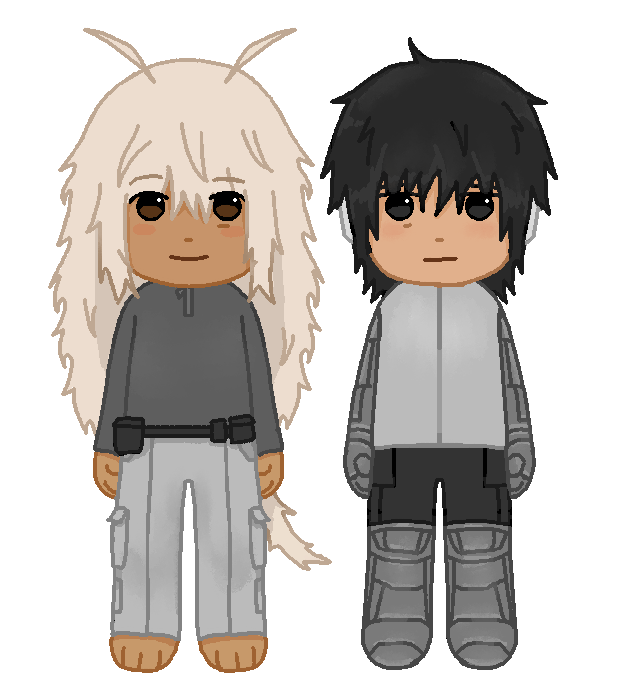
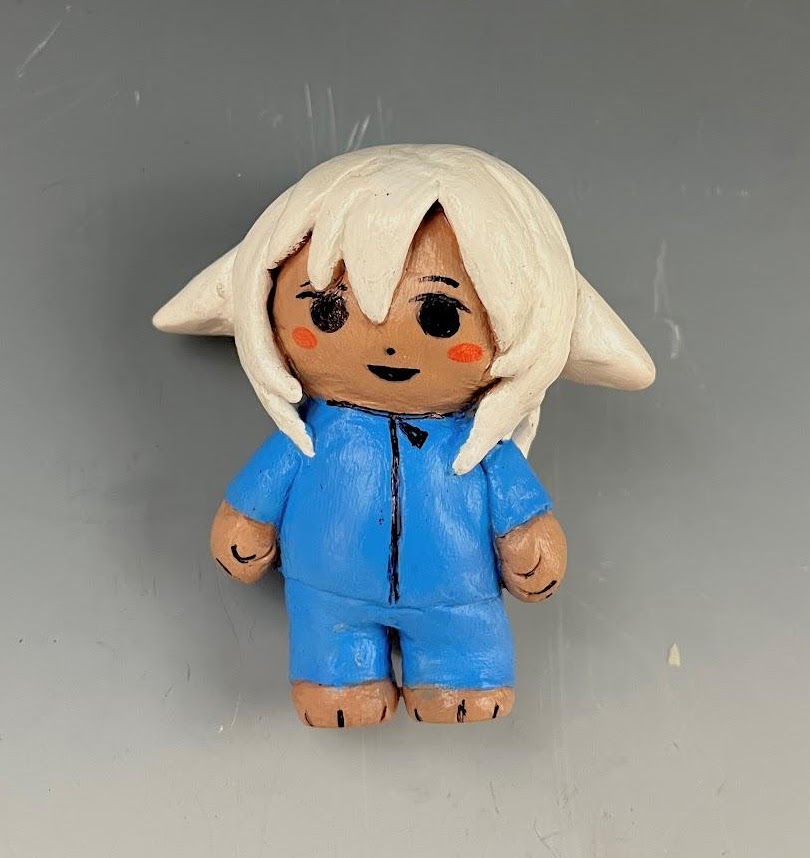
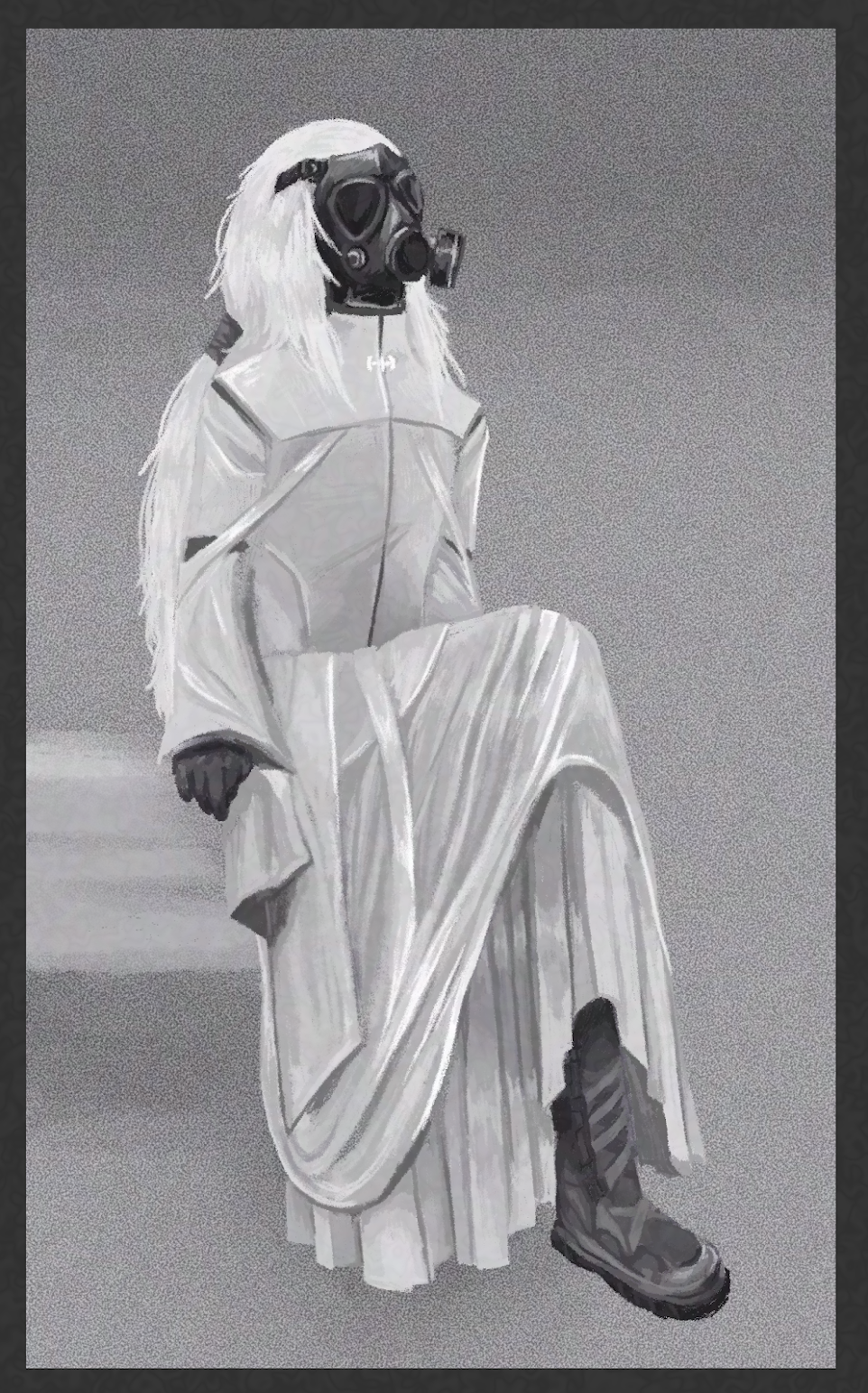
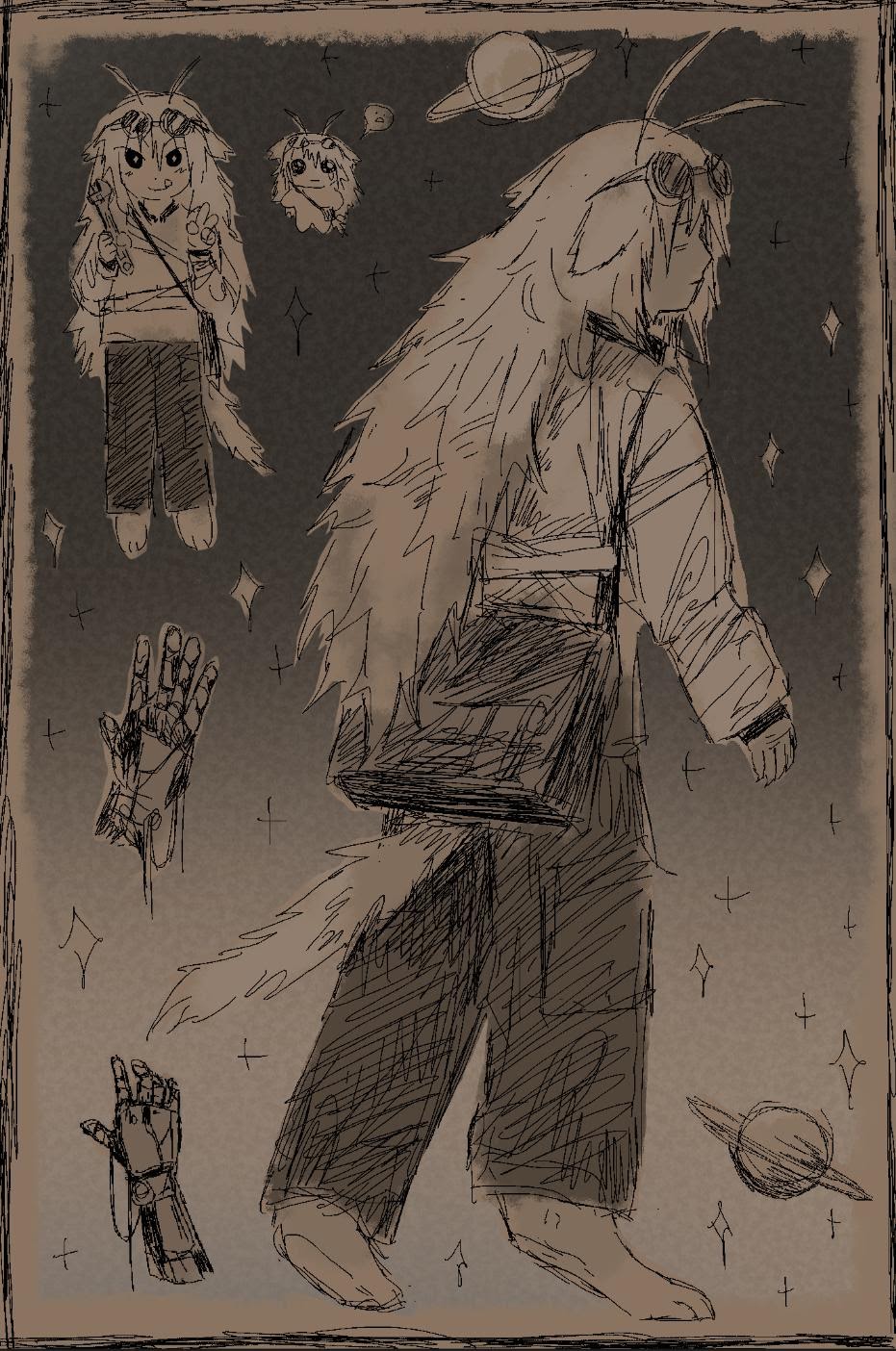
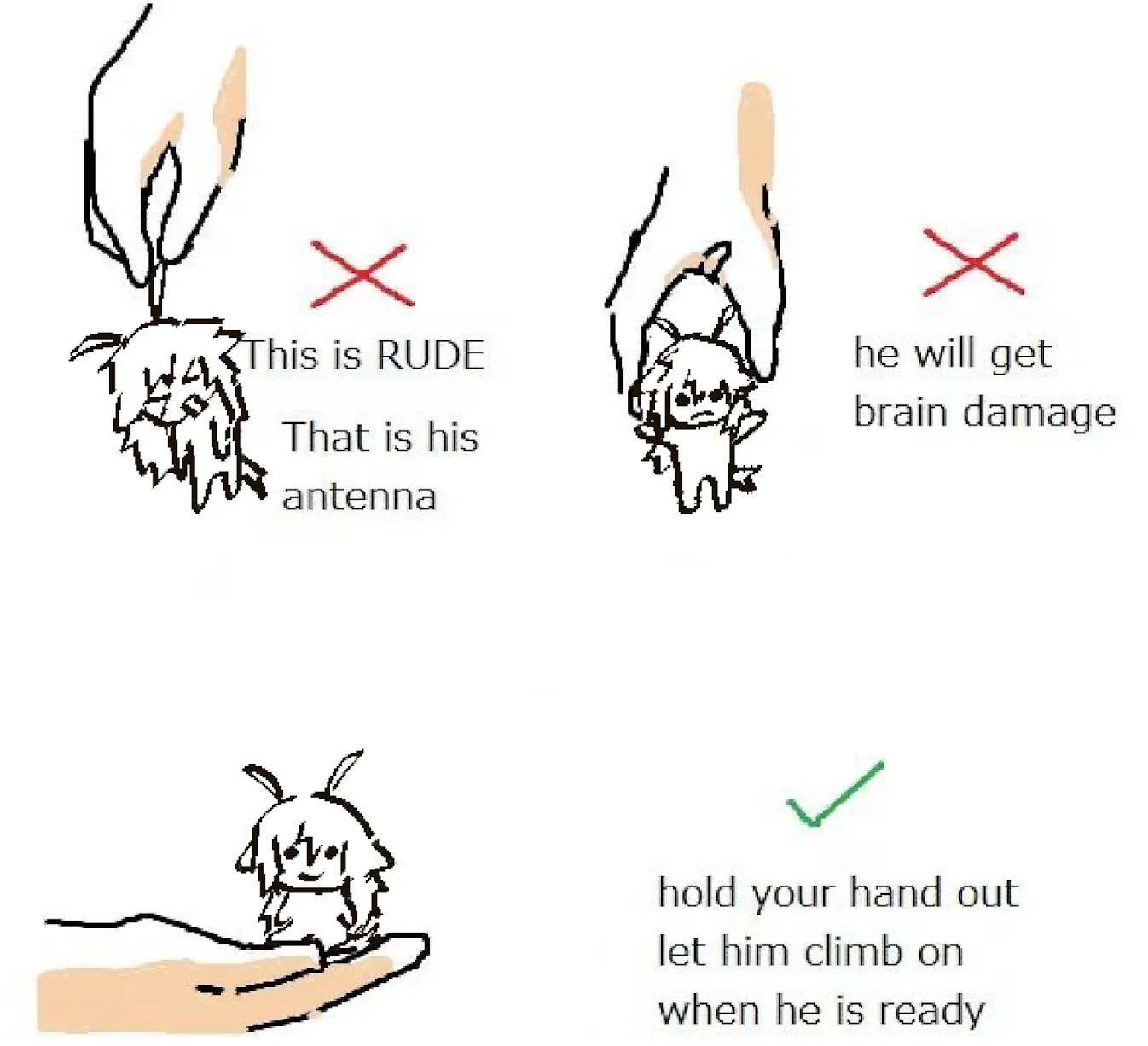
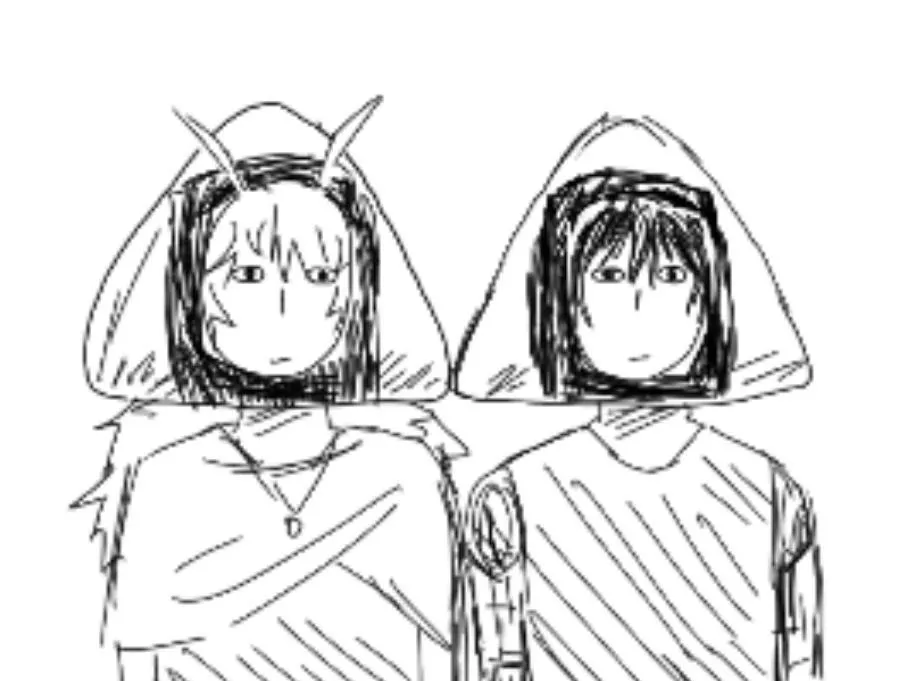
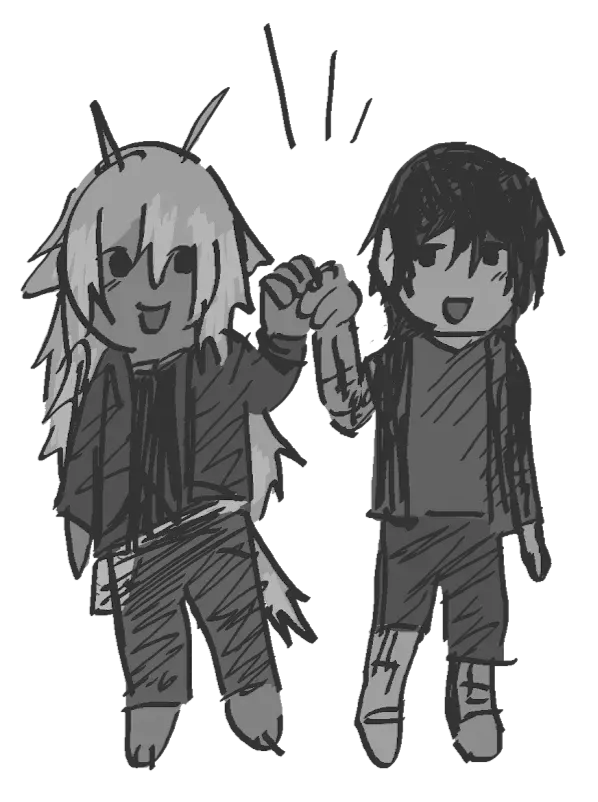
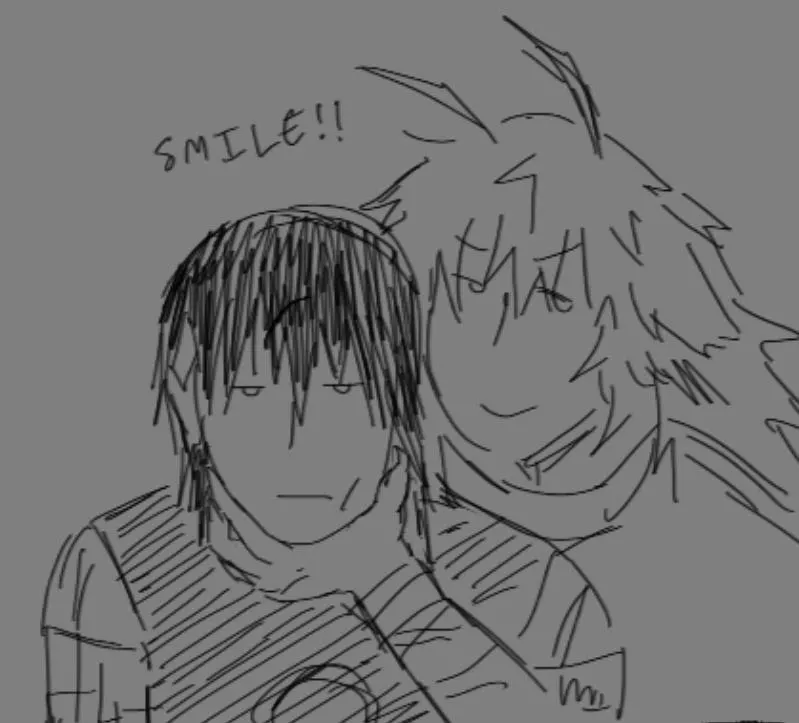
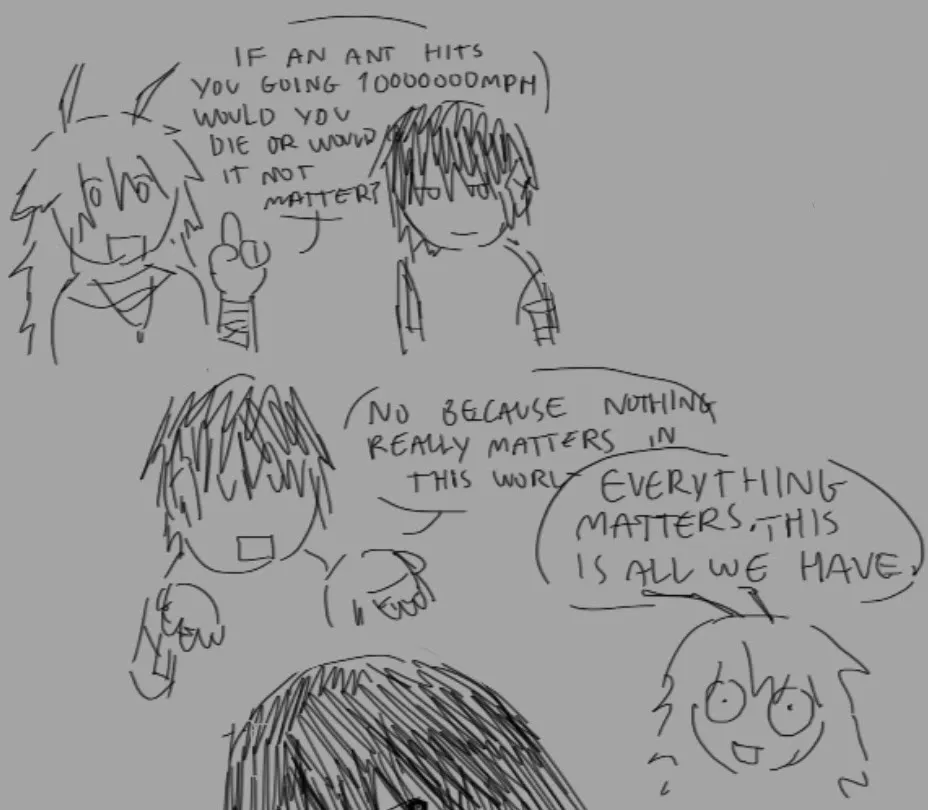
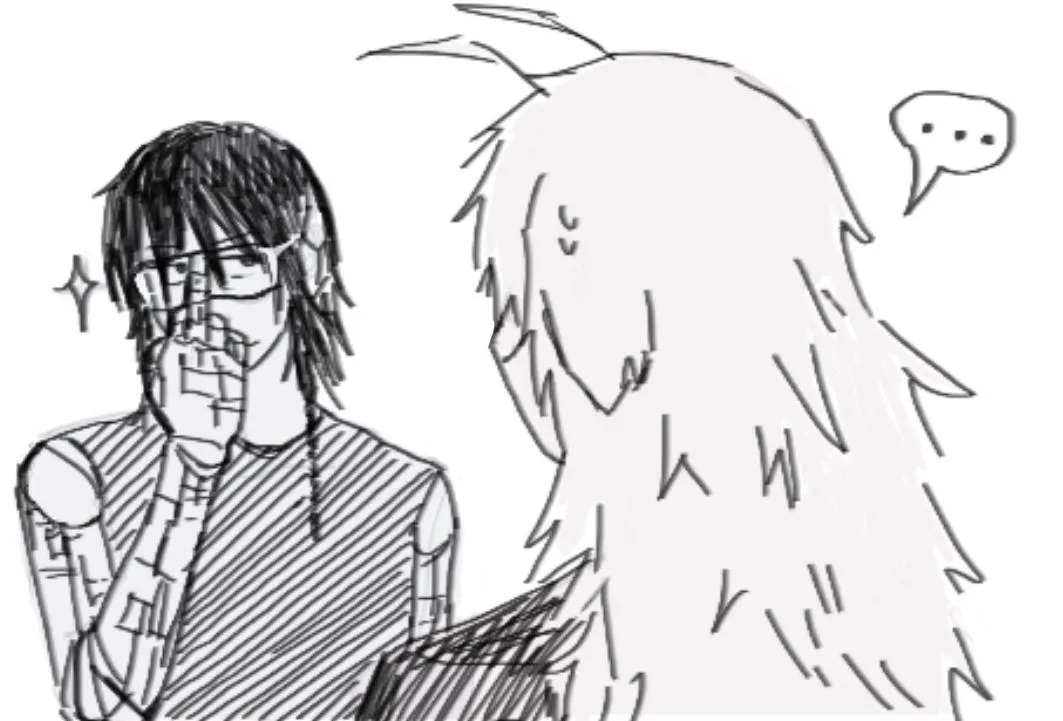
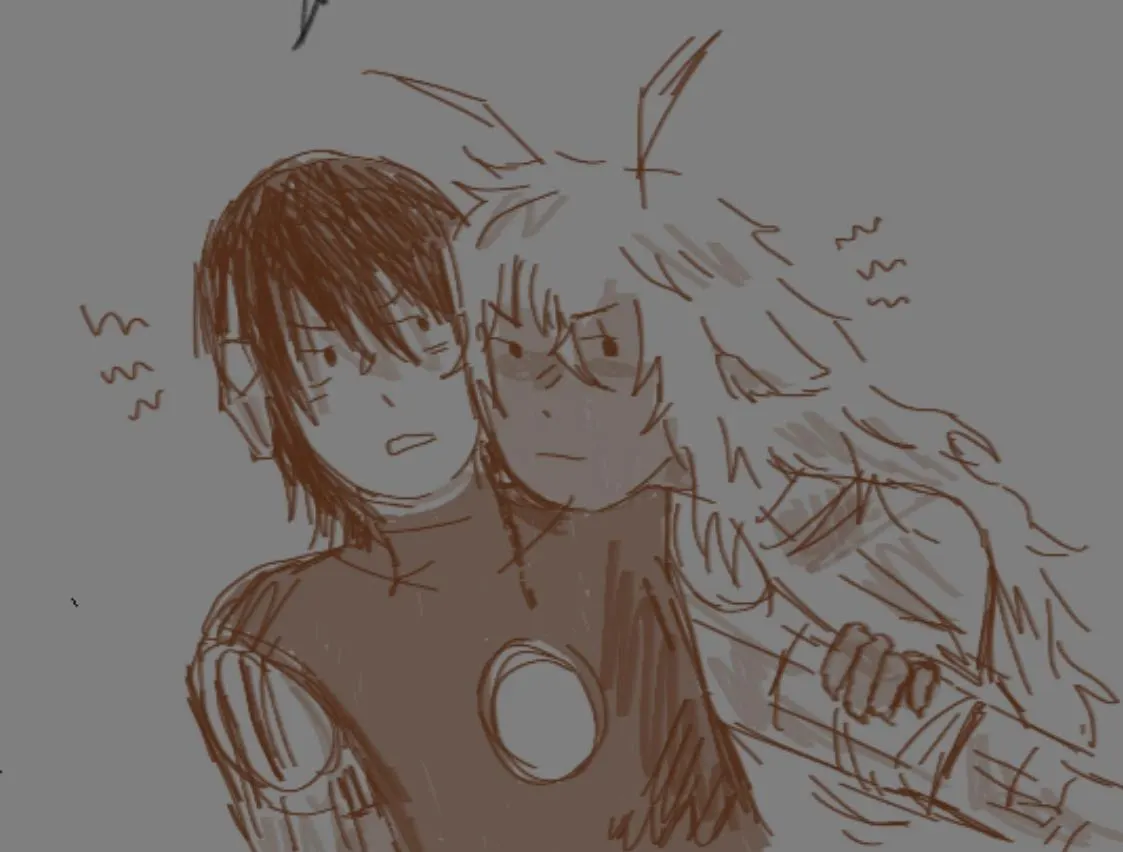
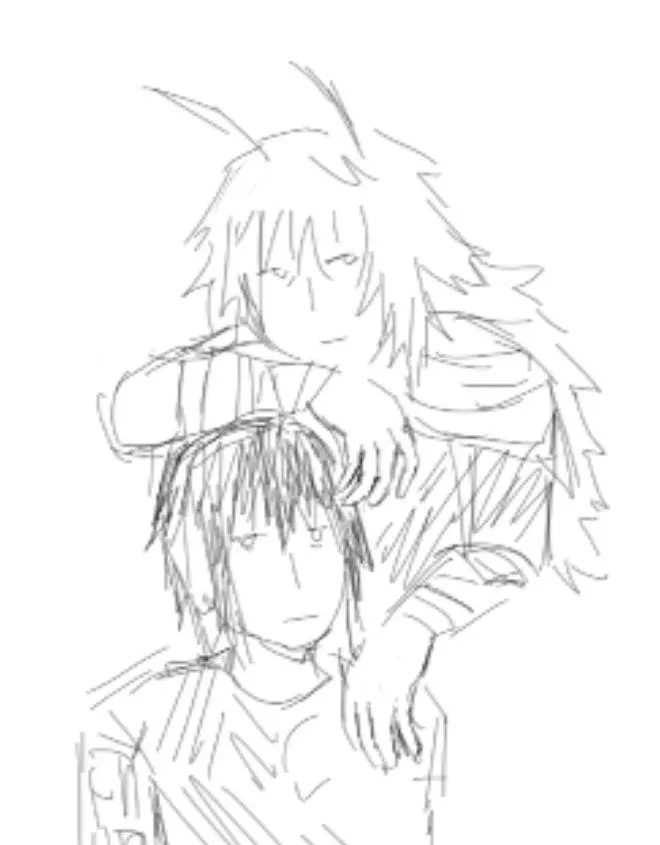
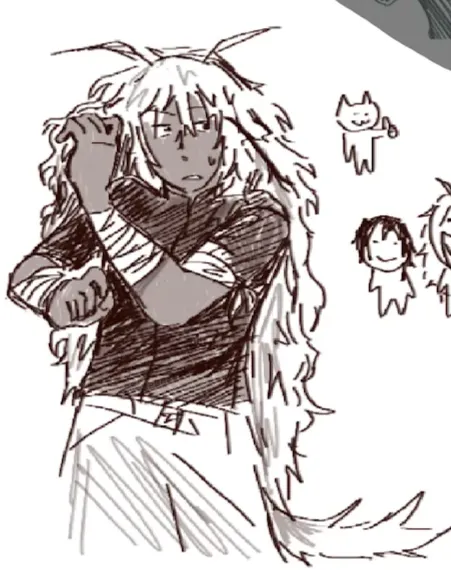
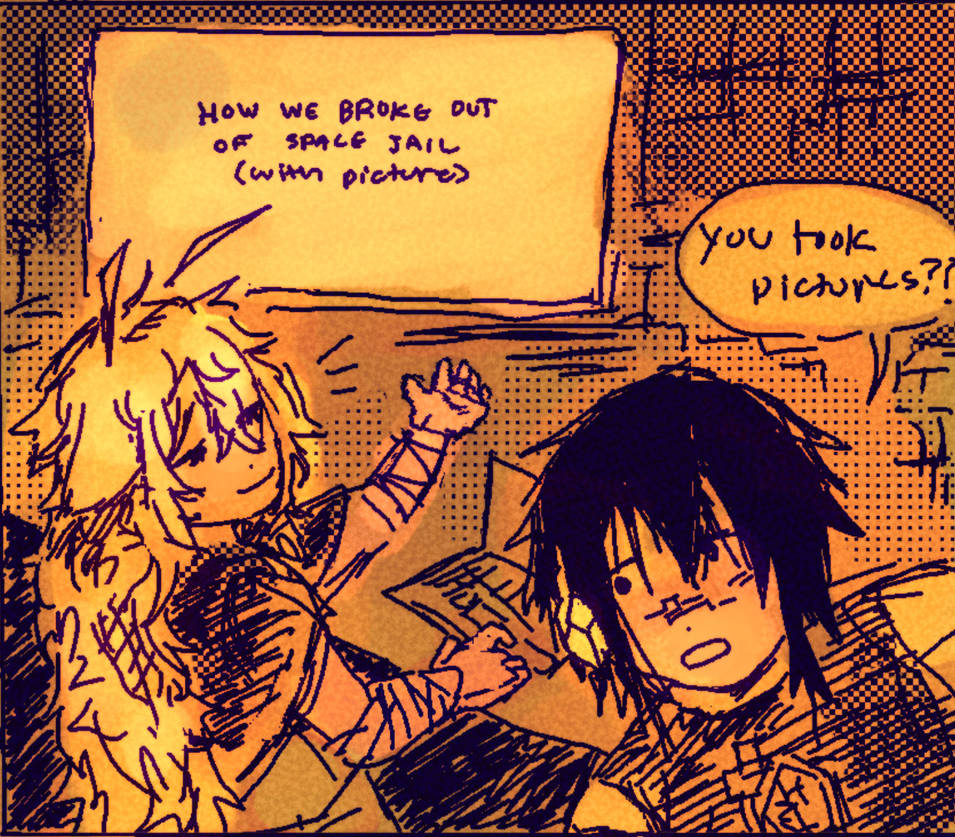
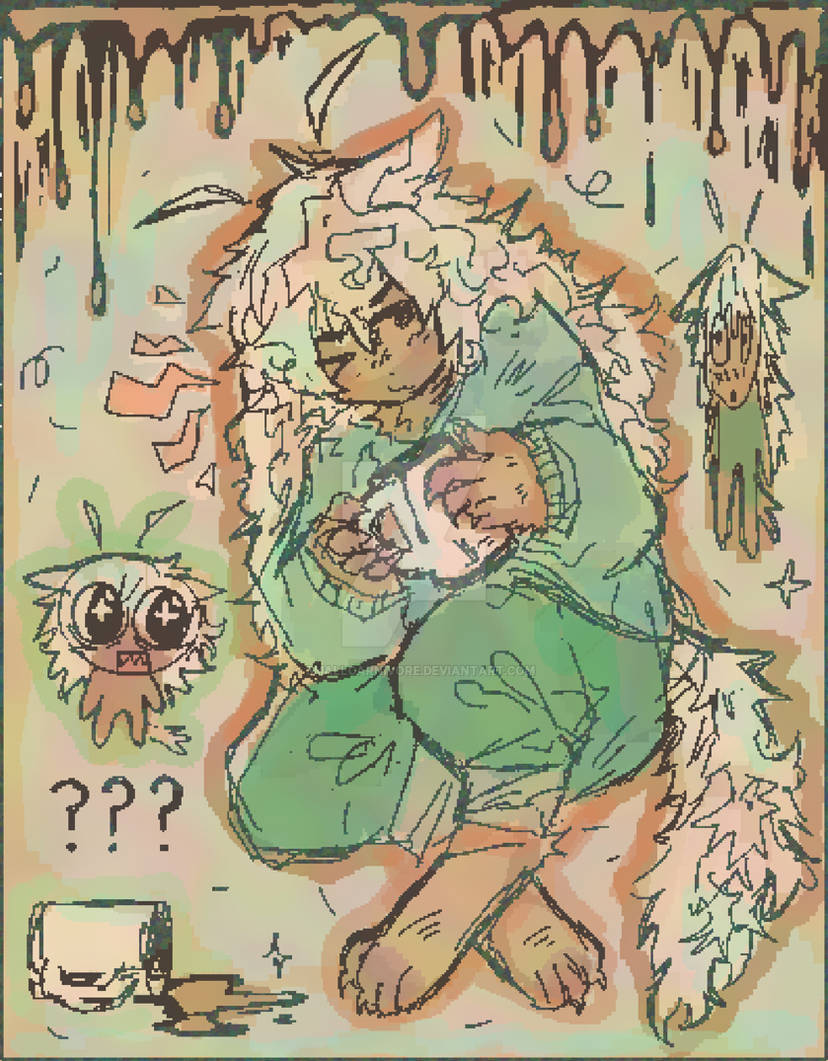
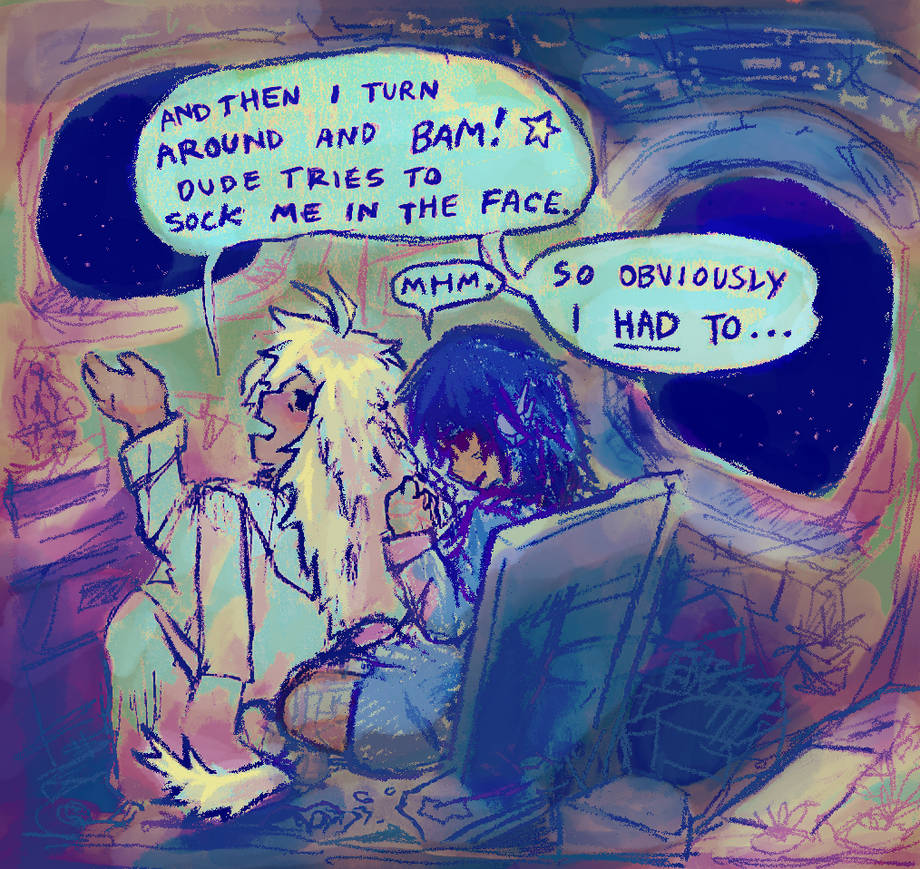
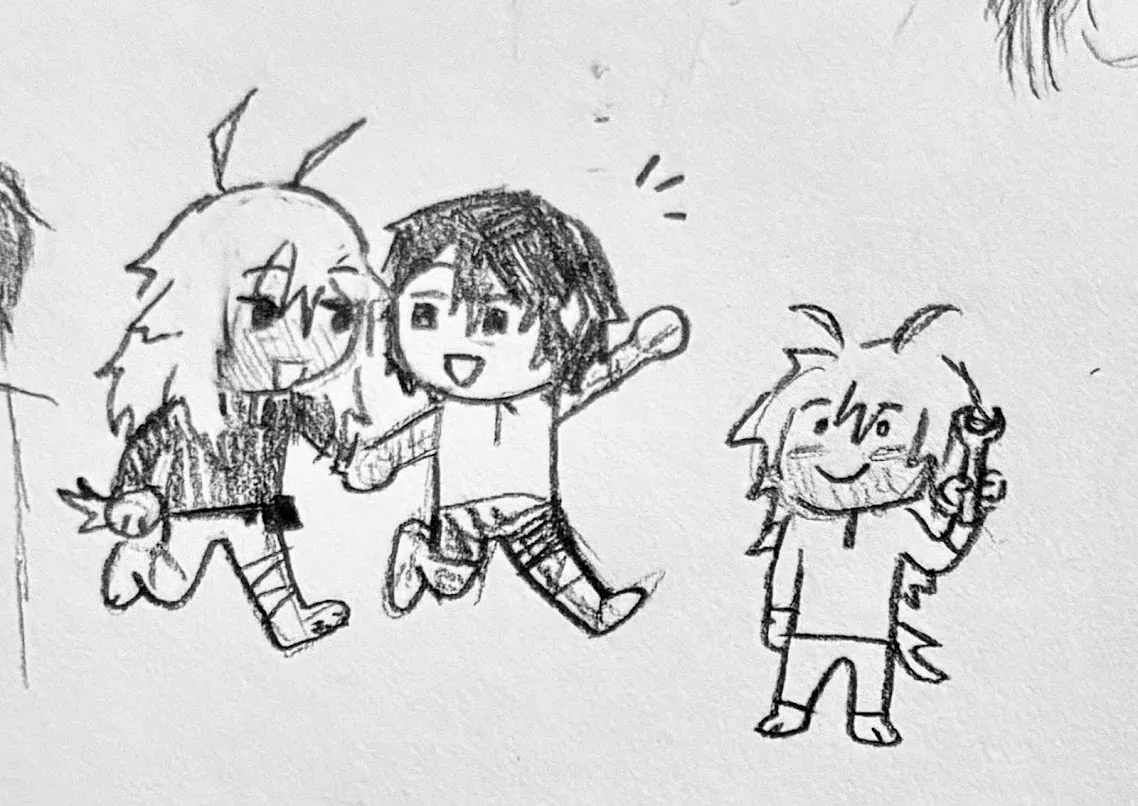
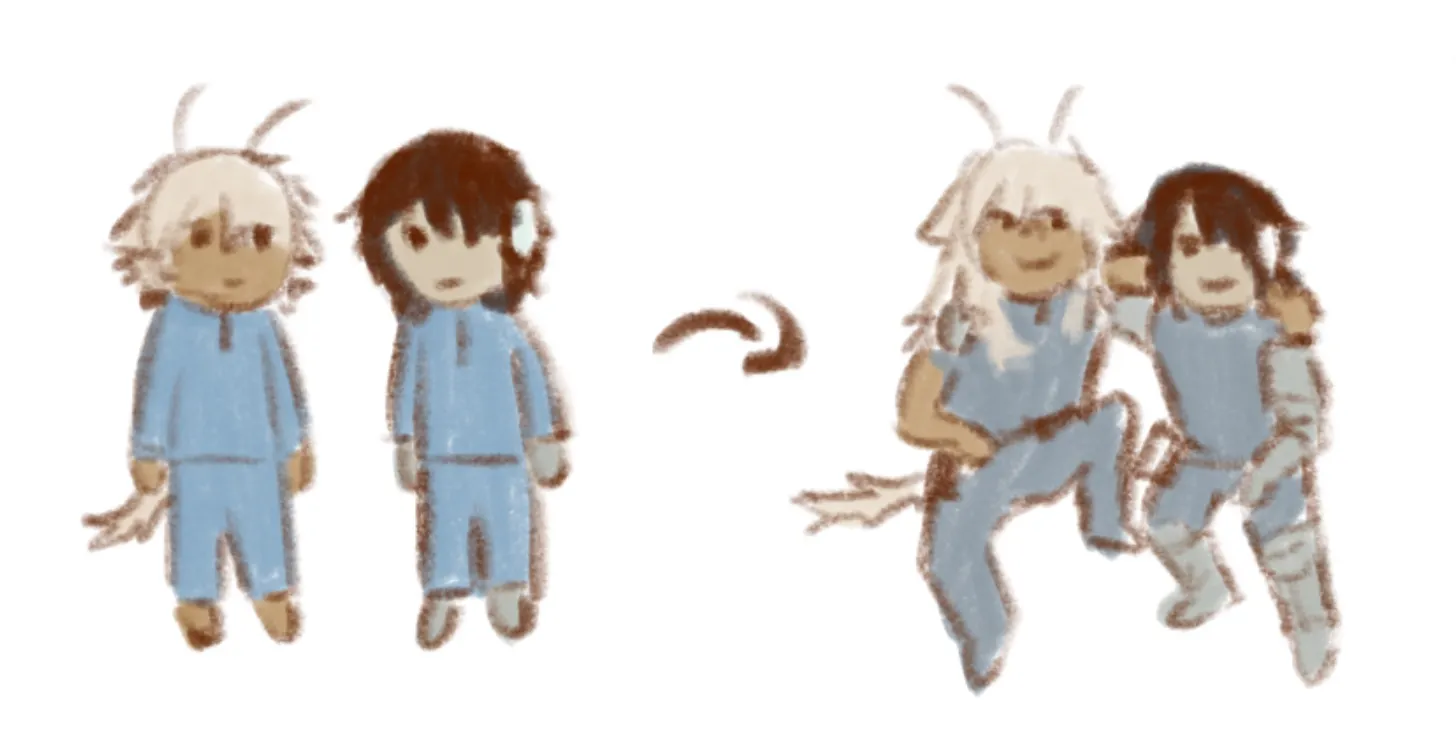
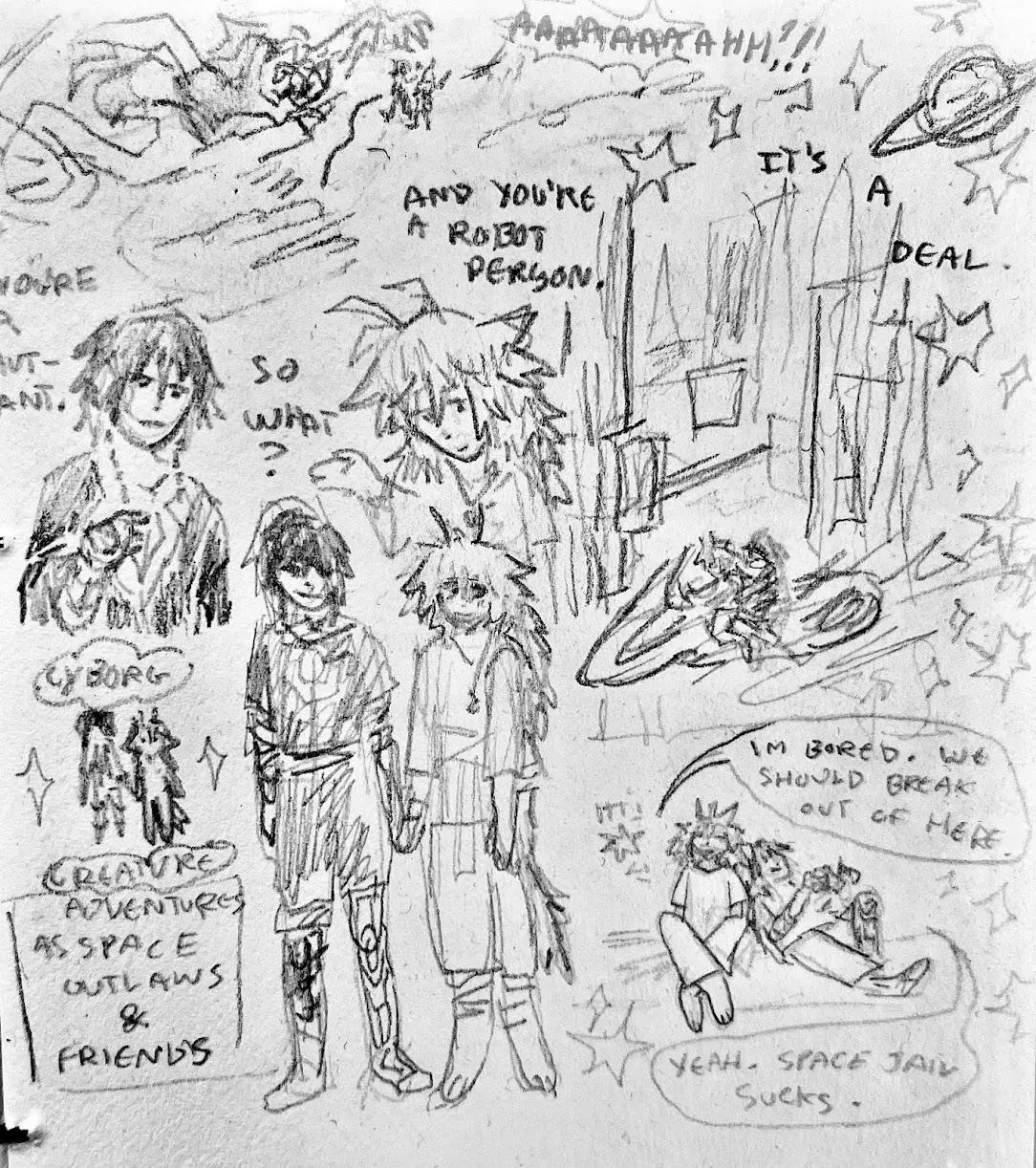
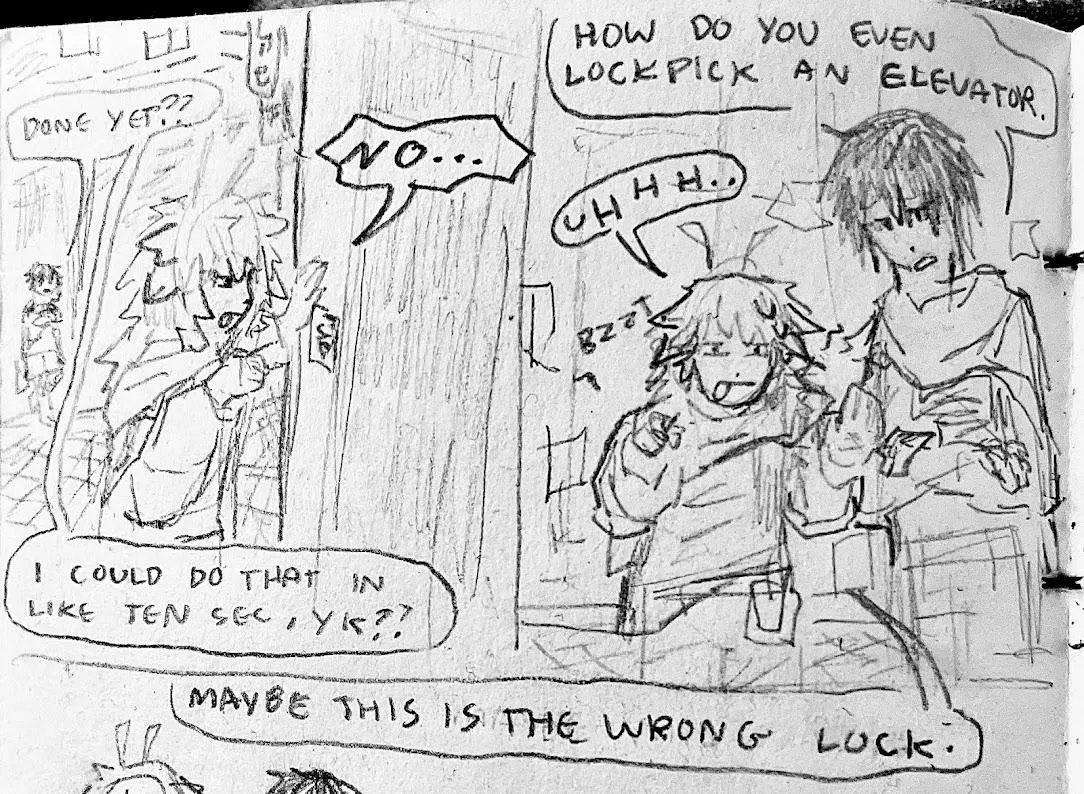
Almost all art I've made for this project :) You can kinda tell who I like drawing more...
CENTRAL TRADE AUTHORITY
GENERAL INFO
Type: Pseudo-governmental entity
Status: Active, but declining
Region: Spans 7 major systems (Core Sector, Outer Colonies/Rings)
Founded: Cycle Year 0
Affiliation: Self-governing, non-traditional state entity
Function: Maintain trade routes, utilities, station governance, and itself
1. Overview
The Central Trade Authority is a pseudo-governmental and highly bureaucratic organization that grew out of a postwar era from a demand for order and no stable governments after the war ended. The CTA spans seven major systems.
It was originally intended as a temporary solution to dysregulation and fragile systems and stuck around because no other powers were as organized or powerful as they were/are.
Their current goal is to cling on to power as long as possible, but its authority now relies more on bureaucratic habit and paperweight regulation than genuine control.
Most citizens live in class-segmented strata based on access and identification codes. High-status individuals tend to be Registered Workers, often with full permissions to move, contract, and report income.
“The CTA still exists if it’s decaying, through inertia. It is too big to fail all at once—like a machine still running because no one has shut it off. Systems auto-renew, payments cycle through shell companies, outposts operate independently. Nobody’s really steering the ship anymore, it’s just drifting.”
2. History
The CTA formed in 0 CY as a post-war consolidation of trade and survival functions. It was not founded by a single person but by many quartermasters, relay engineers, archivists, and many more. They recognized that no faction could feed its people alone and that the only lasting winning move after the war was standardization.
The CTA was formed as a way to manage resources and stabilize the world after a major interstellar war involving resources and production disputes between nations. It eventually amassed enough power and situated itself as the general authority but distanced itself from the concept of becoming a government and an empire because of its origins and goals socially/culturally.
The ID and Market Registry system was introduced as a way to make trade and work contracts easier and more widely applicable as a strategy. The Market Registry allowed employers to check past work and experience of potential workers and allow workers to verify if their employers were credible and trustworthy. The introduction of credits and a standardized currency eliminated the struggle of pay transactions and salary conversion. They are easily tracked in the Market Registry and transactions can be monitored closely.
Their charter fixed time, currency, and contract law. The first decade was effectively triage post-war. Chain routes were mapped, rationing was normalized, and sector councils were appointed where elections would have caused power struggles. Stability came from predictable movement. Trains arrived, terminals synced, prices stayed the same, and people stopped starving.
From 10 to 40 CY the Authority hardened into a machine that could think across seven systems. The Market Registry replaced faction registries. The first Core archival building opened with air-gapped backups and paper trails, a (paranoid) bunker against sabotage. The High Directorate stabilized as a committee of committees. Hubworlds grew into permanent nodes, each with a sector committee that could interpret policy without breaking it. These years felt slow but decisive. The war had made everyone tired of improvisation.
From 40 to 100 CY the CTA became culturally dominant. Children grew up never knowing multiple currencies or drifting calendars. Work traveled on contracts rather than rumors. Chain routes gained redundancy, so a broken relay no longer meant famine and panic down the line. Fringe settlements traded predictability for access. Resistance existed, but it was local, brief, and more about dignity than revolution. The Authority’s promise was simple: no surprises.
From 100 to 180 CY internal reforms professionalized everything. Training academies replaced on-the-job improvisation. The Security Enforcement Arm grew from escorts to a full service that guarded routes, audited terminals, and broke forgery rings. The Authority did not declare itself a government because it did not need to. It governed the movement of food, energy, and contracts. That made it sovereign in effect. It called itself an authority to avoid the political obligations a government would claim and fail to meet.
From 180 to 260 CY expansion slowed and maintenance took center stage. The CTA redirected budgets to filtration, habitat upkeep, and agricultural redundancy. Peace in this context meant schedules that did not slip. People adapted by shrinking their ambitions to fit within predictable lanes. Most citizens did not miss voting on distant policy. They wanted clean water, grain shipments on time, and a station that did not vent atmosphere without warning.
From 260 to 320 CY competitors failed to appear because the conditions that create rivals were removed. Chain routes denied alternate currencies the oxygen they needed. Black markets remained but never scaled. Independent polities survived only by specializing in niches under CTA permits. The Authority’s dominance was not theatrical; it was the quiet weight of routine piled into a mountain.
From 320 CY to the present the CTA’s pseudo-governmental nature hardened further. It regulates identity, work, and movement but avoids the symbolism of statehood. Permits and timetables invite compliance. The CTA evolved by refusing grand narratives. It simply promised that if you stayed in the system, you would eat, your air would circulate, and your children would learn a trade. That promise remains the foundation of its legitimacy.
A timeline in CY:
- 0 CY founding and adoption of time and currency.
- 5–15 CY Market Registry and basic chain routes.
- 20–40 CY sector committees standardized and Core Archives completed.
- 60–100 CY chain route redundancy and hubworld entrenchment.
- 120–160 CY SEA professionalized and registry-integrated enforcement.
- 180–260 CY maintenance first policy.
- 300+ CY stabilization culture becomes the default memory.
3. Governance and Structure
High Directorate
At the top is the High Directorate, composed of 9 rotating delegates chosen from Sectoral Oversight Boards. Each director manages a core portfolio for a sector of oversight:
- Transit & Borders
- Energy & Resource Flow
- Infrastructure & Settlements
- Legal & Civil Order
- Security & Surveillance
- Agriculture & Production
- Data Management
- Cultural Regulation
- Emergency Response
A unanimous vote of at least six members is required for emergency acts. No single person holds total authority. Instead, decisions are issued via encrypted releases, signed and timestamped, and forwarded to Sector Heads.
Sector Committees/Oversight Boards
Manage broader operations. These are the sectors of oversight that the High Directorate manages.
Other Sectors
- Systems Maintenance Divisions: Utilities & infrastructure upkeep
- Security Enforcement Arm (SEA): Law enforcement, border control
- Contract Labor Registry (CLR): Tracks itinerant labor
- Programs Division: Projects like SEVRA
- Market Registry: Six-tier citizen status system controlling mobility and access
Authority flows downward from the High Directorate through defined administrative layers. Most power is centralized in the Core.
There is a strong separation between public-facing communication and actual decision-makers. Directorate remains insulated and largely faceless.
All major procedural updates, reversions, or directives are delivered via chain broadcasts, secured terminal updates, and other approved channels.
In outer colonies, station administrators and task authorities act independently, as long as they file reports. Most real control comes from resource distribution.
A task authority is a finite delegation of power attached to a specific job. It unlocks the ability to requisition parts, pause a line, override a minor lockout, or sign off on a repair within a narrow scope. Task authorities are encoded in contracts and time-limited.
They are audited after completion and collapse back into the registry when no longer needed.
4. Culture & Key Traits
The identification system used by the CTA (called the Market Registry) assigns every citizen a six-tier status: ID-class, labor-code, mobility rating, medical clearance, registry date, and access tier. Owning an illegal blank ID can result in conscription or re-education. Travel requires work permits or Authority carrier clearance. ID cards are essential to everyday life.
The dominant economy is credit-stamped barter, trade, or smaller-scale sale. The CTA supports spaceports, trade lanes, mining stations, bio-agriculture domes, temp camps, and recycling or repurposing industries.
Travel
Travel and relocation are tied directly to occupational clearance. If a worker’s assigned duties require movement—such as couriers, messengers, traveling medics, or off-site inspectors—they are either issued a certified transport permit or assigned a small registered vessel. Most travelers are temporary workers. Very few are granted housing or residency. In contrast, station-based laborers like agricultural workers, repair technicians, or hydroponics staff typically operate within a fixed radius and rely on local public transport, such as light rail shuttles or suspended monorail cars that move between work zones and communal housing.
People travel when work requires it and rarely for leisure. Chain route movement is a privilege tied to permits and contracts.
Most people prefer to stay where they are because it preserves community, and because relocation demands proof that the new post needs them more than the old one did. There is pride in stability. Movement happens, but the culture treats unnecessary travel as noise.
Celebration & Religious Beliefs
Despite official discouragement, there are still seasonal feasts, naming days, and festivals.
Earth survives in memory as a distant origin rather than a home. It is culturally relevant as a symbol in archives, songs, and images of coasts and fields that most citizens have never seen. There are caretakers and research enclaves, but large-scale habitation is minimal. The planet is allowed to cycle without heavy settlement because replicating a world’s ecology is a task the CTA would not claim to manage. People honor it by keeping a record rather than by returning to live.
Some carry tokens like small dirt capsules or symbolic beads thought to bring balance.
Superstitions and traditions include:
- “Never patch on a reset schedule.” It’s unlucky to repair something bigger during a sector’s system reboot window.
- “Three-knock salute.” Done on docking doors for luck. This comes from an older preventative behavior to check if they were properly sealed before opening. Related to “knock on wood” superstition!
- Scrap tokens: Found machine parts given as thanks, exchanged among close crews. Many people find this to be humorous depending on the type of scrap, and the behavior is not common outside of Fringe areas. Basically, a silly gift giving practice.
- Some stations decorate ducts with soot chalk during cold weeks as a bonding activity with children.
These beliefs are tolerated unless they interfere with labor.
CTA-Sponsored Art
The CTA funds art through sector culture budgets tied to stabilization metrics. When a sector meets agricultural and economic quotas, a small percentage is released for cultural commissions.
The favored forms are durable public works such as large reliefs in transit halls, corridor murals in stations, and archival photography that documents infrastructure milestones.
The venues are markets, station centers, hubworld plazas, and the anterooms of sector committees. Commissions primarily go to registered collectives and guilds first rather than individuals so contracts and maintenance can be tracked. People can own small works if they are registered and non-speculative, such as a hand-carved panel or a print from an approved press. Owning art is more common in the Core.
There are artists who work directly for the CTA, but they are not independent in the way artists might have been in older states. They are hired under cultural commissions, usually tied to sector committees or the CTA’s goal of longevity. Their contracts look more like engineering jobs than artistic careers, with deadlines, material allocations, and maintenance requirements. Their job is to produce standardized civic art such as murals of chain routes, reliefs of agricultural harvests, posters that show workers smiling at terminals, and educational illustrations for schools and registries.
For propaganda, the CTA prefers subtle reinforcement over overt slogans. The art is designed to make daily life appear orderly, reliable, and worth preserving. Posters might depict “model workers” standing proudly next to grain silos. Murals often show chain routes as shining lines across the stars, with crews maintaining them in harmony and SEA workers protecting them. Artifacts of disorder, chaos, hunger, or decay are rarely shown. Instead, propaganda emphasizes predictability.
Art matters to the CTA because it broadcasts continuity. A mural that depicts a chain route being repaired is effectively propaganda with a gentle face. It turns logistics into identity and teaches a population to see order as culture.
Clothing
Most everyday clothing is made from a mix of station-grown plant fibers (textile specific flora, reprocessed flax/grains), cultivated animal products (wool, low-shedding fur), and tough, patchable synthetics. In the Core, polished synthetic blends and high quality fibers dominate, but further out, layered insulation and woven composites are common. Clothing is expected to last and be reworn—many pieces are modular or reversible. Damage is repaired visibly with thread or scrap patches, sometimes used to track travel history or station origin. It’s a sign of how much you have done.
Basic Uniforms
- Reinforced collars, breathable fiber-blends
- Utility belts with ID tags and key modules
- Sector-specific patches: color-coded and barcoded
- Regulation boots, magnetized soles optional
Higher-Level Wear
- Director-level personnel wear minimalist folded cloaks over uniforms
- All insignia are small and unobtrusive. The CTA values modesty, not spectacle
Most uniforms are slate gray, forest green, or rust red, depending on the area and level.
Resistance
Rebellion itself is rare, but organized resistance does exist, especially among those displaced by defunded programs. These groups are nonviolent, operating in information blackouts, focused on leaking data, reconnecting families, or protecting outliers. Most of these are restricted by the same bureaucratic limitations as everyone else: relocation requires paperwork, signal control is tight, and surveillance layers are deeply embedded. This is why rebellion is so localized and tightly controlled, since this specific weakness plays to the strengths of the CTA’s power.
People rebel because the system is heavy. The surveillance, the certainty, and the endless permits feel like a lid. Some want more room to invent or to trade outside fixed prices. Others want recognition for communities that do not fit the standard. Rebellion takes the form of signal piracy, black-market identity swaps, labor slowdowns, and occasionally the sabotage of a relay that will force a negotiation. Most people are not actively upset. They are resigned. They criticize in private and work in public. The system survives because it delivers food and air and because the alternatives look like the war.
Death
Bodies aren’t normally buried. Instead, they are quickly cremated and their ashes are compressed into stones. Medical death is logged through the Market Registry.
Unclaimed bodies are repurposed into nutrient or thermal reclamation units, depending on the state of the body.
If they are in good condition and may be identified in the future, still photographs are taken and the body is processed normally and stored in a facility for unclaimed persons until someone claims them. There is a waiting period of several cycles before the body undergoes the same treatment as unidentifiable bodies.
Memorial walls in stations list names and contract spans. Families and crews hold small gatherings where work stories are told because work is what the person did and the language people share.
Children are told that death is a completed cycle and that records keep memory safe. Dying people put their contracts in order, archive messages, and select whether their tools or keepsakes pass to a trainee. The attitude is accepting rather than mystical.
Education
Basic literacy and math are mandatory by CTA law. Most children attend station-based communal schools until age 9, then move into either apprenticeship tracks or continue in academic cores (rare). Vocational training is handled by union tutors, station elders, or family lines.
There is quite a lot of indoctrination. Lessons often begin with CTA history and end with procedure. Even arithmetic problems use trade examples. Children grow up seeing the Authority not as optional but as the natural shape of the universe.
Old tech manuals, field books, and digests circulate heavily. There’s a culture of knowledge preservation through hand-copying and analog archives. Programs exist to restore damaged texts.
Education is standardized to set a floor. Children learn reading, terminal fluency, basic numeracy, maintenance safety, and the history of the CTA in simple terms. Schooling is not made to be thrilling, but it is steady and predictable.
The highest level is sector academy certification in a specialty such as filtration, relay networks, hydroponics, or logistics. Education gets you priority in contracts and better housing allocations.
Apprenticeships pair a trainee with a certified worker for set hours and milestones. Vocational training is hands-on in live systems with strict supervision.
Failed apprenticeships are permanently stamped in the registry, though marked as “incomplete” rather than failure. Still, this record limits future opportunities, making it hard to shift careers.
The most prized subjects are those that keep the lattice up: agriculture, filtration, power, relay maintenance.
The Authority standardizes because a system is only as strong as the weakest training run.
Childcare/Childhood
Kids are raised communally on most stations, especially in fringe zones. Parents may be part of their lives, but early childcare is rotated. Communal meals, station-wide birthdays, and holiday events build identity. Children wear ID tags embedded in clothes and are assigned a primary caretaker.
If a child is born outside the registry, they are given a temporary field tag and must be formally registered within 3 cycles of birth to receive official rations and education.
Children raised on CTA-registered stations are assigned “Baseline Labor Track” tags at age 8. These determine future housing eligibility, job offers, and educational tier access.
Labor classes can shift up (slowly) through exceptional merit or strategic transfers—but very few reach Core eligibility without direct sponsorship or fabricated documentation.
Toys are usually made from cast metal, molded scrap plastic, or carved waste-wood (a hardened agricultural byproduct). Most children own small figures—often shaped like creatures, machines, or folk figures. These are passed down, repainted, or bartered. Some toys come from rotating trade routes and include puzzle-cubes, slide disks, or noise tiles.
There are no mass-market toys in the current time period; everything is handmade, swapped, or improvised. They used to be produced consistently for schools, but now that the stock has leveled out they don’t produce any more.
Children are treated as learners and future workers, but not as projects to be accelerated. Typical childhoods are remembered as safe, structured, and a little dull.
Hobbies include simple crafts, station games in narrow corridors, and music made with communal instruments.
Clothing is unisex and practical, sized by growth class with colored stitches that mark care group rather than gender.
Older children tend to guide younger ones, especially in terminals and safety drills, because competence is a form of kindness in this culture.
Pets
Domesticated animals (specifically pets) aren’t common but do exist. Cats are favored for their low maintenance and adaptable personalities—shared pets in communities, often “belonging” to no one but fed by everyone, are common and especially helpful in agricultural settlements as they take care of any creatures made for maintenance that might escape. In smaller family units, children might keep agricultural beetles or lizards for a cycle or two. Pets other than cats are seen as soothing but impractical; their presence usually depends on access to food, space, and breathable zones.
5. Population & Demographics
The vast majority of the registered population is baseline human. Across CTA space, humanoid variation exists, but extreme divergence is rare due to shared environmental pressures, interspecies compatibility laws, and social standardization efforts.
Humans have adapted more in culture than in body, though medical and biomechanical aids are common. Average life expectancy is higher than pre-war in stable zones because filtration, vaccination, and accident control are consistent.
Some lineages carry legal modifications for specific work environments. The baseline remains recognizably human.
Most citizens live in class-segmented strata based on access and identification codes. High-status individuals tend to be Registered Workers, often with full permissions to move, contract, and report income.
Most workers carry a patchkit (for clothing), a multitool (blade, wrench, heat-sealer), and a Market Registry ID card. Some also carry compact respirators or filters, depending on the sector. These tools are so common that not carrying them marks you as a visitor or outsider.
Relationships form through necessity, proximity, or shared contracts. Most bonds start from cohabitation or years-long work placement overlaps. Marriage is mostly symbolic unless registered, which grants you permission to share housing legally and merges your files.
Most citizens are literate, as all official processes—rations, jobs, permissions—require competency with CTA terminals. A majority live in dense housing blocks or mobile freight colonies. Many take jobs like:
- Systems maintenance
- Cargo relay
- Basic medical or recycling labor
- Station agriculture
- Contract navigation or inspection
6. Infrastructure
Terminals
A terminal is the standardized interface device through which all CTA communications, transactions, and authorizations are carried out. All terminals can use the standard terminal code.
They serve as the primary line of communication between individual workers, managers, and the wider systems of authority. Terminals are highly regulated pieces of equipment, manufactured to uniform specifications to ensure compatibility across all CTA jurisdictions.
Medical Care
Medical care is standardized, decentralized, and paperwork-heavy. On Core stations, it is streamlined and advanced program-assisted diagnostics, micro-surgery, limited appendage regrowth. Further out, there are mobile clinics, licensed med-techs, and CTA-issued field guides on care.
Mobile clinics can ride chain routes and set up in hours, bringing lab basics, imaging, and stabilization. A med-tech must pass modules in triage, sterilization, device safety, and terminal logging.
Sophisticated technologies include organ scaffolding, nerve-bridge prosthetics, and slow-print tissue patches for superficial regrowth. Appendage regrowth is limited to small structures using printed matrices and growth factors; full limb regrowth still relies on advanced prosthetics. Risk is assessed by triage protocols that weigh survival, resource cost, and contagion risk.
Med-kits are common. A standard med-kit contains wound sealant, broad-spectrum antiseptic, analgesics in measured tabs, splints, adhesive wraps, a portable scanner for vitals, airway inserts, burn gel, and a compact auto-injector for allergic or shock events.
Medical history is stored on terminals, linked to ID cards. Local clinics may keep paper backups, but most trust the Core Archive to maintain them.
Most zones have at the very least one or two registered caretakers trained in basic triage and diagnostics. Prescriptions are tracked, and care is rationed by risk index and not wealth. The typical experience with healthcare is simple and straightforward, often with a local clinic or doctor.
Prosthetics for the average citizen:
- Modular prosthetics exist, though rarely super fine-tuned.
- CTA health grants provide baseline arms/legs durable (unless more is required or requested).
- Customization is done by trade guilds, underground technicians, or family units.
- Maintenance is scheduled a bit like engine repairs.
Disability is seen as a logistical adjustment, not a limitation. Most stations support ramps, signal tools, adjustable uniforms, and assisted work pair matching. Prosthetics, translators, and sensory tools are repaired alongside other vital equipment. Community-based care networks provide continuity. No official stigma exists in documentation; accommodations are integrated into worker roles and reviewed at contract renewals.
Waste
Nothing is thrown away in CTA systems unless it absolutely must be. Organic waste (especially sewage) is chemically sterilized (excluding beneficial decomposers) and converted into high-efficiency agricultural substrate. Trash is sorted…metal to be smelted, cloth for patchkits, composites pulped into insulation or filler. Refuse is cycled into what stations call “gray loop” systems, where materials are tracked from use to reuse. Disposal protocols are maintained as part of every work rotation.
Jobs range from intake operators and sorter techs to gray loop engineers and reclamation chemists. Gray loop systems are mid-grade recirculation lines that turn mixed low-risk waste into usable feedstock for non-critical products such as packaging, spacer panels, and conduit sleeves. Dangerous materials are isolated in shielded containers, logged, and neutralized or vitrified depending on type.
Reclamation rates are high in the Core and hubworlds because the network is dense. In periphery stations the rate is lower but still significant. Metals, plastics, fabrics, and water are the most successfully recovered. The design goal is to make export growth possible without importing raw materials no one wants to pay to ship.
What are patchkits?
A patchkit is the textile equivalent of a med-kit. It contains adhesive fiber patches, heat-activated seam tape, repair needles, thread spools matched to standard uniforms, small rivets, and a compact seal tool. It mends clothing, soft gear, and some flexible gaskets. Workers carry it because a torn sleeve is a safety risk when fabric fouls a machine.
One overlooked element of waste is cultural salvage. When stations decommission clothing, posters, or consumer goods, some are archived rather than recycled to provide cultural continuity. Archivists argue that not every scrap should be pulped, so a subset is logged and stored in Core vaults.
Another piece is wreck reclamation, where crews in black zones strip wrecks and scrap for unofficial resale. The CTA technically bans this, but it is tolerated when the materials eventually cycle back into official markets.
Water
Water is drawn from one of three main sources:
- Local melt (on icy moons or asteroids, or surface water if available)
- Condensed vapor harvesting (standard on orbitals)
- Shipped ice blocks (expensive, rare)
- Synthesized from local materials or recycled
Water is stored in central tanks, filtered continuously, and moved through low-pressure loop lines. Some stations add trace minerals for health; others let it run slightly stale. Outpost dwellers sometimes have personal filters or boil it directly from condensed runoff.
Artificial Climates
Most stations and dome settlements regulate “weather” via pressure, humidity, and heat cycling systems. There are no real seasons, but many use light-tinting adjustments to simulate morning and evening to reduce circadian dissonance. Temperature and calibration varies by sector:
- Agricultural zones use more specialized artificial control systems based on crops or agricultural practices.
- Freight and docking areas remain colder and dry to preserve material.
- Living quarters aim for comfort.
Static buildup, drip condensation, and sudden air shifts are signs of mismanagement and are easy to spot, though rare if regularly worked with and routinely up-kept.
Illegal & Obsolete Technology
Illegal technologies are generally those that bypass CTA oversight, compromise chain route security, or undermine registry control.
Unregistered signal repeaters that let ships spoof their chain slot are illegal because they can disrupt traffic timing and mask smuggling practices. Proprietary encryption layers over standard terminal code are illegal when they prevent audits, since the Authority must be able to verify all transactions.
Autonomous weapons with target selection outside approved parameters are illegal because they can escalate disputes without human accountability.
Memory extraction rigs that copy terminal credentials from a worker are illegal since identity integrity is the foundation of the Market Registry, and extraction rigs that copy the secure information of a ship are also illegal because of the nature of transportation regulations.
Biotech that alters registry biometrics without a clinic license is illegal because it breaks the link between a person and their contract history.
The common trait is that each item severs a control point the CTA considers essential to stability.
Obsolete technologies linger in warehouses and scrap yards but are rarely used because the standardized system has moved on.
Early relay towers that required manual synchronization became obsolete by 40 CY when self-correcting relays reduced drift. Paper scrip and wax-sealed permits disappeared by 15 CY once terminal-linked ID cards could store contract data and time codes. First-generation cargo trackers with single-channel beacons faded out by 30 CY because they could be spoofed too easily.
None of these are unusable, but they are dated. They persist in black zones where replacement parts are cannibalized and compatibility layers keep them limping along.
Obsolete equipment is tagged with orange registry stickers that show its replacement order. People still use them until the order is fulfilled, but the tag is a constant reminder. In some stations, workers decorate old tech with drawings or inscriptions, treating them like elder tools on their last cycle.
Accidents involving old equipment being reused too long usually become case studies in training manuals if they are big enough problems. Each is stripped of names and turned into a procedural lesson: “Case 94: improper valve reuse led to loss of two contractors.” Families of victims often resent this depersonalization, but it reinforces the CTA’s attitude that personal lives are secondary to systemic efficiency.
The CTA does not ban them unless they cause risk, it simply refuses to support them, which makes them die on their own.
THE HIGH DIRECTORATE
GENERAL INFO
Type: Central policy-making body
Composition: 9 rotating anonymous delegates
Location: Primarily Core-based
Authority: Emergency acts require 6/9 unanimous vote
1. General Description
The High Directorate is composed of 9 rotating delegates chosen from Sectoral Oversight Boards. They are the central policy-makers and manage the most for the CTA. Each director manages a core portfolio for a sector of oversight. They are as follows:
- Transit & Borders
- Energy & Resource Flow
- Infrastructure & Settlements
- Legal & Civil Order
- Security & Surveillance
- Agriculture & Production
- Data Management
- Cultural Regulation
- Emergency Response
A unanimous vote of at least six members is required for emergency acts. No single person holds total authority. Instead, decisions are issued via encrypted releases, signed and timestamped, and forwarded to Sector Heads.
The High Directorate operates under extreme secrecy—not only are members never identified publicly, they are also kept anonymous from each other. Roles rotate in fixed intervals, and identities are cycled through secured, air-gapped relay drops. This prevents consolidation of power, limits infighting, and shields the Directorate from retaliation. Should a director die or disappear, a silent succession protocol is engaged, and no notification is ever broadcast beyond the inner circle. They are mostly based in the Core.
This structure evolved out of post-war necessity when the CTA transitioned from a trade coordination bureau into a massive control body. The only major shift in structure was this expansion; otherwise, the Directorate has remained rigid, faceless, and functionally immutable.
2. History
The High Directorate was conceived alongside the CTA, and has survived with minimal change since the founding. It originated as a variant on a board of directors, modified for postwar stability and safety. This is why they operate in such extreme secrecy, to the point where they do not even personally know each other.
3. Correspondence Examples
EXCERPT — INTERNAL CTA CORRESPONDENCE
CLASS: Internal Memorandum
ACCESS LEVEL: DIRECTORATE ASSEMBLY ONLY
ENCRYPTION: SIG:AE-13|H-Redundant Backflow Checksum Enabled
RE: Directive Proposal — Sectoral Compost Reallocation (D-4893B)
FROM: Dir. ▇▇▇▇▇▇▇▇▇▇▇ (Infrastructure & Settlements)
TO: Full Assembly | Logged: Core Date 781.44.03
CC: Sectoral Governors of Hydrone Belt, Eastern Interior Ring
Esteemed colleagues,
I raise this proposal under Article VI of the Interstation Sustainability Accord. Current compost recapture rates in the outer hydric loop of Sector 5-E remain below the 35% sustainability threshold. Based on submitted reports from Node 9A (Port Revach) and Node 11C (Sisto Cradle), both stations are rejecting standardized composting bins due to space limitations and outdated chute-routing systems.
I propose emergency redistribution of excess compostable bio-waste to the satellite domes of the Inner Crescent, where reactor-grade composting systems are already in place. This bypasses the need for short-term capital upgrades in the struggling outer ring. It will require one-time overrides of regional autonomy clauses in settlement waste cycles (Article V, Section 2).
Resistance is expected from the Agricultural Syndicate, as their members rely on “closed-loop” growing systems and consider off-station biomass input a contamination risk. However, projected nutrient yields on recipient domes will increase 12–18% in the short term.
Requesting emergency assembly vote.
Dir. ▇▇▇▇▇▇▇▇▇▇▇
Infrastructure & Settlements, CTA Core
RESPONSE FRAGMENT (Logged 7h Later)
FROM: Dir. ▇▇▇▇▇▇▇▇▇▇▇▇ (Security & Surveillance)
“Be advised: the risk isn’t contamination—it’s perception. Outer stations are already under the impression that we dump surplus or unregulated materials without notice. Redistribution without full transparency could trigger retaliation, especially in places like Revach with strong pseudo-union blocs. If we push this, we’ll need a general terminal messaging package and two clean audits to cover it. I’ll authorize temporary overrides if your sector bears fallout with public relations should you decide not to fully detail the process.”
VOTE OUTCOME:
Proposal D-4893B passed with a 6/9 Assembly majority
Conditions:
- Full traceability audit
- Limited press disclosure
- 6-cycle review period.
SECTOR COMMITTEES
GENERAL INFO
Type: Localized administrative extensions
Scope: Assigned zones (often planetary systems)
Authority: Logistical implementation, limited independence
Sector committees act as localized extensions of the Directorate, managing day-to-day operations within assigned zones. Each committee is composed of administrators and managers drawn from relevant divisions. A sector can encompass entire planetary systems, with boundaries drawn along logistical rather than geographic lines.
Committees have little independent authority. Their role is logistical, not political, ensuring uniform application of policy.
Members are appointed by higher Authority approval, often selected from proven administrative backgrounds.
Sector committees bridge the gap between local administration and the Core. They translate policy into practice.
Their uniqueness lies in their autonomy. While they answer to the Core, they are granted broad discretion to manage their regions, reflecting the CTA’s pragmatic recognition that one size does not fit all.
Their authority is significant yet limited. They manage contracts, permits, and resolve disputes within their sector, but lack the power to modify Core directives.
They are valued as stabilizers. Without them, the Core could not manage the scale of the CTA.
Committees in resource-rich or strategically vital sectors wield disproportionate influence. Others remain minor players.
They can be compared to a mix of provincial governments, colonial administrators, and corporate boards. Like provinces, they manage local populations; like colonial administrators, they answer directly to a distant central authority; like corporate boards, they balance the books of their sector. They are strong within their own territories, but always bound by the Core’s authority.
Sector committees began as ad-hoc governing bodies during the early stabilization years, around 5-10 CY. At the time, the CTA High Directorate could not micromanage every outlying sector, so temporary “sector councils” were formed from a mix of military officers, agricultural overseers, and local administrators. Their early responsibilities were basic, and they were tasked with distributing rations, preventing riots, and enforcing credit use. They were poorly funded, often corrupt with ulterior motives, and sometimes collapsed under local pressure. Still, they provided the first major decentralized experiment in CTA administration.
As stability grew, these councils evolved into permanent sector committees.
By 20 CY, they were standardized into semi-elected, semi-appointed boards with permanent offices in each hubworld. Their responsibilities expanded to include contract verification, chain route oversight, and economic balancing. Unlike their early predecessors, these committees became heavily bureaucratic, employing clerks, inspectors, and auditors who were trained directly by the Core. Their authority widened over time, and they eventually became the most visible form of CTA presence outside the Core itself.
The history of sector committees reflects the CTA’s broader shift from military enforcement to a focus on predictable stability. Originally temporary stopgaps, they became permanent because they solved the Core’s problem of how to govern their more distant populations without sending endless slews of administrators.
Sector committees act as mid-level administrative bodies, handling contracts, disputes, and logistical planning within their territory.
Their responsibilities include:
- Implementing directives from above.
- Reporting local anomalies.
- Coordinating food, energy, and housing supply.
Day-to-day, sector committees operate as a blend of local government, regulatory office, and trade management board. Their routine includes verifying contracts, issuing permits, overseeing agricultural quotas, and adjudicating disputes between contractors. Most of their time is spent processing applications and mediating between local settlements and the Core.
Committee offices are busy with clerks logging trade manifests into terminal systems, while inspectors are dispatched to confirm that reported yields, repairs, or relocations match what’s actually happening. They are also responsible for ensuring stabilization sectors (like agriculture and filtration) receive supplies on time and that chain route checkpoints in their sector stay operational.
A single committee might spend a week approving a new hydroponic facility, while simultaneously reviewing the annual audit of a periphery station and allocating emergency rations to a settlement hit by crop disease.
Disputes between sector committees are not settled by majority vote but by escalation. Each committee files a formal brief through the Sector Registry, and the High Directorate assigns a mediator from the Core. This mediator does not rule based on fairness but on systemic efficiency and which side’s plan aligns more closely with CTA protocol and throughput goals. This has made disputes less about ideology and more about who can argue better within standardized formats.
DAMIR & MAREK
1. About
Damir is a visibly altered humanoid, and one of the two main characters. He is consistently seen with Marek, as they are friends and both originate from the SEVRA secret CTA initiative where they were raised.
Marek is a visibly altered cyborg, and one of the two main characters. He is consistently seen with Damir, as they are friends and both originate from the SEVRA secret CTA initiative where they were raised.
They function as field operatives, taking on assignments requiring both technical knowledge and adaptability.
Their attachment is deep but not pathological. Having been raised in SEVRA’s pair-dependent system, their bond is survival-based, later evolving into authentic loyalty and affection.
Separation is still destabilizing. Both grow anxious and unmoored, struggling to function without the other.
Damir’s technical adaptability pairs with Marek’s logistical precision. One improvises, the other ensures nothing is lost in the process. Their training drilled them to operate as halves of a whole, and that balance remains even now.
They remain together because they choose to, even after SEVRA dissolved. What was once an enforced dependency has evolved into genuine companionship, though neither could easily live without the other.
Their ship, the HAULER-DREV-3349, was acquired after decommission. They claimed it through a mixture of salvage rights, abandoned paperwork, and sheer persistence.
2. Early Life (SEVRA Project)
Both Damir and Marek were raised as a duo in the SEVRA project. They trained as a paired unit, Damir specializing in adaptive tactics, Marek focusing on technical systems. Together, they formed a complete operative. Damir was trained to repair Marek and figure out logistics and construction. Marek was trained to be functional and effective at repair and a variety of tasks (as they both were), focusing on the physical side of their intended work.
Their childhoods are remembered as both cruel and formative. They acknowledge the damage but also see it as inseparable from who they are. For them, regret and acceptance coexist.
They matter because they embody SEVRA’s legacy, proof that the experiment failed in intent but succeeded in shaping lives that persist despite it. Their existence is effectively living history.
3. Personality & Traits
They are outsiders, tolerated but rarely embraced with open arms. Their appearance, training, and bond mark them as unusual. Still, they carve out a life by being reliable in work that others avoid. Neither are baseline, standard humans as they have both been altered but Damir is more recognizably inhuman. Marek is mostly just altered with mechanical additions.
Damir
Damir is composed and competent in public. He handles communication with station managers, registry clerks, and committee officials, often helping to smooth over major hurdles. His humor surfaces only in private with Marek, though he has been known to lightly joke in public and to diffuse situations. Damir tends to plan ahead and maintain appearances, making sure their contracts remain legitimate. They are viewed as functional oddities by locals. Some admire their competence, and others distrust their closeness.
Marek
Marek is quieter in public, less inclined to handle officials, but no less intelligent. He focuses on technical execution, repairs, and logistical details. He is meticulous, sometimes to the point of rigidity, and balances Damir’s outward-facing role with back-end stability. Privately, Marek is just as strange and playful, but he rarely shows this to outsiders.
4. Q&A
How do Damir and Marek communicate on the ship?
Mostly through terminal logs and notes other than speech. Damir tends to speak more freely. Marek writes more often by adding small, dry notations next to system tags.
Where do they get replacement parts for Marek’s body?
Piece by piece. Most parts are scavenged, bartered, or custom-fit from older cargo hauler systems. Sometimes Damir retrofits components from agricultural bots or decommissioned loaders. The replacements are rarely perfect—Marek adjusts his own gait algorithms to account for mismatched torque or outdated feedback coils, and Damir fixes anything he can’t do himself (which is a lot, for SEVRA safety reasons).
How do they avoid drawing attention when docking at stations?
They use pre-written manifests with deliberately boring job codes. Their ship’s ID ping is rerouted through at least two dampener loops, and Damir routinely scrambles any biometric echoes during approach. They never stay more than 40 hours in one port, and they always dock at underused spots—usually ones marked for maintenance or freight spillover.
What do they do in their downtime?
Marek calibrates or rewires whatever isn’t already running. Damir listens to reconstituted audio loops or replays local signal archives for background noise. Sometimes they just sit near the window bubble and don’t talk. Damir occasionally tries to cook, but most of their food is rehydrated or scavenged. They have a few small children’s board games and a stack of cards. Crafts are handy when they have nothing much to do on the ship.
What was their last official job with the SEVRA unit system before going off-registry?
Ventilation flow control retrofit in a dome zone for repair training. Their contract ended early after the station admin was reassigned mid-cycle and no one filed their release logs. After around four days waiting, they were transported back to the main facility.
Why hasn’t the CTA come after them directly?
To be totally honest, they don’t really care that much. The oversight system is overloaded, and their file tags no longer resolve to anything actionable. They appear on outdated registries, flagged as “cleared minor technical contractors.” Without a clear paper trail or post-SEVRA origin stamp, there’s no justification for pursuit unless they trip a current enforcement filter.
What happens if Marek breaks down in a place where they can’t find parts?
He doesn’t. Damir won’t allow it. They carry at least four core components at all times—wiring bundles, a backup arm motor, and two fuser cells. Marek is trained to operate under partial function and has memorized procedures for four degrees of catastrophic failure.
Do they ever try to reach other SEVRA survivors?
No. Not actively.
What does their ship smell like?
Dusty cardboard recycled from agricultural waste, caramelized citrus peels, metal, old fabric, and the faint trace of disinfectant pads. When they’re cooking, it smells like potato and mild spices.
What’s something they’ve never told each other?
Damir knows Marek’s original diagnostic file number. Marek knows that he used it to bypass a terminal system error one time but doesn’t question it.
5. Work
After SEVRA ended, they floated on the edges of legitimacy: odd jobs, hauling, repair, occasional contracts. Their life is patchwork, but it sustains them.
Jobs Taken:
- Water filtration stabilization at asteroid mining camps
- Cooling and humidity regulation for crop domes
- Temporary AC/electrical repair for refugee processing stations
- Transport of sensitive materials, some of which turn out to be illegal (unmarked biowaste, unregistered bots, black market meds in nondescript containers)
Status Now
- Current Goals: Keep HAULER‑DREV-3349 running, clear two backlogged repair contracts, avoid Core audits.
- Recent Jobs: Hydroponic filter swap, chain beacon recalibration, quiet haul of sealed containers.
SEVRA PROJECT
GENERAL INFO
Type: CTA secret initiative
Status: Defunded, discontinued (CTA Internal Order #RD-204A-99)
Founded: Approx. +100 CY
Dissolved: +149 CY (17 CYs ago)
Affiliation: Central Trade Authority (Extended Behavioral Research Authority, Resource Resilience Division)
Purpose: Produce long-term operatives and labor-capable personnel optimized for harsh-zone survival and system redundancy support.
1. General Description
The SEVRA project operated under fragmented CTA jurisdiction, mainly within the Extended Behavioral Research Authority and the Resource Resilience Division. Its goal was to produce long-term operatives and labor-capable personnel optimized for harsh-zone survival and system redundancy support. The population pool was drawn from unregistered or unclaimed juveniles across frontier systems, processed under Experimental Directive 14-E.
SEVRA units were trained for specialized engineering, field logistics, and dangerous missions requiring both technical precision and emotional detachment. They were deployed where the CTA needed absolute reliability. For example: infrastructure repair in hostile zones, resource extraction, and high-risk survey work.
In theory, there was no failsafe. SEVRA relied on conditioning, not mechanical restraints. The pair-bond itself was the failsafe, separating units destabilized them to the point of uselessness.
Due to the classified nature of the initiative, official CTA acknowledgment of SEVRA ceased well before its logistical closure.
The stated reason for closure was:
“Budgetary reallocation following the cessation of critical engagements and a strategic shift away from in-field recovery models. Long-term side effects among test units considered ‘operationally destabilizing.’”
2. Life in the SEVRA Project
Children in SEVRA were treated as resources, not as individuals. They were given food, shelter, medical care and rigorous education, but affection and freedom were absent. The system prioritized function over well-being.
They were allowed to form bonds, but only in pairs. SEVRA’s central experiment was to raise children in inseparable dyads, reinforcing loyalty to one another rather than to Authority. This bond made them effective in the field, but at the cost of their independence.
Separation often caused breakdowns: disorientation, inability to function, or emotional collapse. The system was deliberately designed so units were unusable if split.
SEVRA facilities were enclosed, isolated, and deliberately secretive. They resembled training compounds more than settlements, stripped of non-essentials.
Training emphasized repetition, obedience, and pair-dependence. Children were drilled in efficiency and survival within tightly controlled systems. Units learned tactical operations, technical repair, and systems management. Pairing was critical and skills were distributed so no individual could operate independently.
Funding came directly from reallocated CTA budgets diverted to secret projects. It was significant enough to maintain facilities for decades, but never fully public.
3. Dissolution
Phase One — Funding Stall
Once restructuring swept through the CTA following a multi-sector financial audit, SEVRA’s funding became bureaucratically inaccessible — not explicitly revoked, but rerouted into general systems rehabilitation budgets. Project leads could not formally appeal due to its unregistered nature.
Support functions collapsed in sequence:
- Psychological Support Teams: Unstaffed
- Biometric Supply Chain: Cancelled
- Food/Nutrient Allotment: Switched to minimal shelf rations
- Onsite Medical/Repair Staff: Reassigned to Core Sector medical rotations
This was the unofficial end, but no announcement was ever made. Sites were left in stasis.
Phase Two — Site Abandonment
Facilities were “closed,” but without formal decommissioning. SEVRA test units were not granted reassignment at this point.
Only one CTA department (Internal Systems Audit, Division E) retained access logs to these locations, and those were marked obsolete by the next year’s system update.
Because of the nature of SEVRA, their facilities were neither dismantled nor left dormant. Instead, they were repurposed after abandonment of SEVRA operations for other projects or research. It was not immediate but in phases.
Phase Three — Individual Dispersal
Survivors of the program (including modified units) entered fringe society or were transferred to other programs. Because SEVRA survivors were never officially “born” due to the nature of the program, they do not exist in the Market Registry unless they are registered via official channels and monitored.
SEVRA did not fail.
It became inconvenient.
Inconvenient things get overwritten.
4. After the Project
From a purely practical standpoint, SEVRA collapsed under its own secrecy and inefficiency. While some units proved effective, the cost outweighed the gain. It was exploitative and dehumanizing, stripping individuals of choice. But within the CTA framework at that point in time, ethics often bowed to efficiency and secrecy. It was born out of paranoia and a desire for controlled operatives who could be relied upon to function under extreme secrecy and loyalty.
Survival after the project was possible but difficult. Many struggled to adapt outside the rigid structure, particularly because society had no place for their skillset or bond. Only those who carved out niches for themselves (like Damir and Marek) found lasting stability.
The CTA views SEVRA as a relic of excess and desperation, quietly disavowed but not entirely erased. Official statements frame it as “a necessary but flawed experiment,” a sign of how far they have since progressed.
SECURITY ENFORCEMENT ARM (SEA)
GENERAL INFO
Type: Logistics police and enforcement division
Mandate: Protect chain routes, registry integrity, audits, and infrastructure
Priority: Prevention of disruption as systems failure
1. General Description
The Security Enforcement Arm protects the physical and informational aspects of the CTA. Their mandate covers chain route patrols, audit enforcement, identity fraud suppression, and the protection of registry offices and archives. They are not an army in the old sense. They are a logistics police that treats disruption as a systems failure. Their public face is routine, with checkpoint inspections, slot compliance sweeps, and investigation teams that follow irregular credit patterns through the registry.
Their priority is not the chase but the prevention. They crack down hardest on forged identities, chain slot tampering, off-standard encryption, and sabotage of filtration or agriculture nodes. Those crimes threaten the system, so penalties are steep.
Local detachments report to sector captains, who answer to a directorate integrated with the Finance and Registry divisions. This prevents the classic split between security and administration. Training emphasizes procedure, de-escalation, and machine fluency. Recruits learn how to read relay diagnostics, trace forged signals, and interview workers without halting traffic. Weapons training exists, but the most valuable tools are audit kits and sealers that lock a compromised node back into standard.
SEA personnel are posted along main chain routes and at hubworld gateways. They manage evidence custody for registry crimes and escort high-value cargo that cannot be allowed to vanish or be compromised. Their presence is visible but not theatrical. A calm checkpoint that always works is the intended message.
Institutionally they care about throughput and a low incident rate. Individually it varies, because SEA culture prizes competence and clean audits. Pride comes from a route that runs for years without significant disruption. They are important because every other division relies on them to keep the lattice intact. When they do their job well, nobody should notice.
They also manage emergency re-routing and incident arbitration when a sector committee and a hubworld office disagree. In those moments, the SEA acts as the neutral executor of standard, not a political actor. Their power is high in the moment and then it recedes back into procedure.
Legal Code Handbook Use
The Security Enforcement Arm uses the Handbook as its procedural foundation. Each agent carries a compact digital version embedded in their personal devices, allowing instant cross-reference of law during inspections or arrests. The SEA regards it as near absolute written authority, so interpretation on an individual basis is discouraged. Field officers memorize key passages, especially those governing property seizure, arrest protocol, and data integrity.
2. History
The SEA began in the first decade after the war as convoy guards. Scarcity and fragmented control made raids common, so provisional militias were contracted to ride alongside the earliest chain-route caravans. They weren’t professional, they were whoever had weapons and loyalty to a provisioning corps. By 5 CY, these guards evolved into a permanent service directly under the CTA, stripped of faction loyalties and trained in uniform procedure for the most effective strategies.
By 20 CY, raids had largely disappeared, but smuggling and forgery had replaced them. The SEA shifted from armed escorts to auditors with weapons. They began to check manifests, sweep for counterfeit signals, and enforce registry integrity. Over time, they specialized further. By 50 CY, most SEA detachments were trained more in diagnostics, audit procedures, and dispute arbitration than in combat. Their weapons became secondary to their skills.
The SEA’s structure reflects this history, because every detachment still keeps an armed wing, but its reputation is built on being a calm, neutral enforcer of order, descended from a time when starving raiders were the biggest threat. Their legitimacy comes from the memory that when everyone else was looting, they kept the convoys running.
STATION ADMINISTRATORS
GENERAL INFO
Type: Station-level management role
Scope: Daily operations of hub or periphery stations
Appointment: By sector committee, fixed term
1. General Description
A station administrator runs the daily cycle of a hub or periphery station. The job mixes logistics, personnel, maintenance, and diplomacy.
They schedule docking and undocking against chain slots, balance storage against incoming manifests, authorize repairs, and adjudicate disputes between crews.
They coordinate with sector committees for inspections and with SEA detachments for security sweeps. Employment is by committee appointment for a fixed term after a record of clean audits in subordinate roles.
The administrator needs to be calm under constant pressure, have fluency with terminal systems, and enough mechanical literacy to understand when an engineer is asking for time versus trying to hide a fault. They spend their day in motion between terminals, bays, and meeting rooms.
The measure of success is simple: No delays. No spills. No unlogged cargo. No people hurt. They manage a living machine and try to keep it from noticing itself.
2. History
The role of a station administrator evolved from the wartime quartermaster. During the war, each station or convoy had someone responsible for ration lists, docking logs, and maintenance schedules. These roles were informal and rotated among whoever had the literacy and stamina to do the paperwork. After the CTA standardized trade, it formalized the quartermaster role into a permanent, professional office: the station administrator.
By 15-17 CY, every hubworld and periphery station had an administrator appointed by the sector committee, tasked with enforcing CTA schedules. The job became more technical as terminals spread: no longer counting crates by hand, but managing docking slots, ID access, and maintenance through linked systems. Over time, administrators became the backbone of station life, evolving from ration-keepers into full-scale managers of living machines.
STANDARD TERMINAL CODE
GENERAL INFO
Type: Standardized identification and designation system
Purpose: Uniform coding for stations, terminals, camps, vessels, and personnel across CTA space
Introduced: Cycle Year 3
1. Station ID Codes
Format: SYS-###-NODE[ALPHA|BETA|etc]-STN[##]
Example: KR2-715-NODEB-STN04
- SYS: 2–3 letter system code (e.g. KR = Kravin Belt)
- ###: CTA grid reference sector
- NODE: Specific orbital or ground node, often based on original colonization layout
- STN##: Individual station number
Alternatives:
- AUX-STN-9 = Auxiliary CTA station, minor function
- MNT-STN-2 = Maintenance hub station
- CHK-GATE-A = Checkpoint Gate A (often at cargo corridors)
2. Terminal Prefixes
Format: [LOC]-TERM-[TYPE]-[##]
Example: ZIN-TERM-LOG-08
- LOC: 3-letter base abbreviation of zone or planet
- TYPE: Terminal type:
- LOG = Logistics
- ENG = Engineering
- COM = Comms
- MED = Medical
- SEC = Security
- ##: Number based on physical location or install order
Additional Tags:
- XTERM = Deprecated, dangerous, or corrupted terminal
- TERM-CIV = Civilian-access terminal
- TERM-OP = Operator/authorized use only
3. Camp Designations
Format: CTA-CAMP-[ZONE]-[CODE]
Example: CTA-CAMP-RQ4-D1F3
- ZONE: Zone or grid sector code
- CODE: Local alphanumeric assignment; these often degrade into less meaningful codes over time in more remote areas
Informal Naming:
Locals usually call them things like “Ditchpoint,” “Camp Cradle,” “Dryside,” or “Relay Nest 14” based on landmarks, culture, or various other namesakes.
You could add in unofficial signs like:
- “Camp Mercy (CTA-CAMP-X59-H23)”
- “Relay Nest Delta (TERM-ENG-ND2)”
4. Unit/Ship Identifiers
Format: [TYPE]-[CALLSIGN]-[SEQ]
Example: HAULER-VESNA-4427
- TYPE: Role-based prefix:
- HAULER, SCOUT, MEDTRAN, FERRY, POLYFREIGHT, etc.
- CALLSIGN: Custom or assigned by port
- SEQ: Serial number for registry purposes
5. Personnel Badges
Format: ID-[BLOCK]-[TYPE]-###-[CHECK]
Example: ID-KR3-TECH-529-B
- BLOCK: Sector or assignment origin
- TYPE: Role/training background (TECH, LOG, EXO, MED, OBSV, CTRL, EDU)
- CHECK: Letter check for scan verification (often out of date)
6. Degradation
Many of these codes would be partially scratched out, mislabeled, or rewritten with a marker. For example:
- TERM-ENG-ND2 might be labeled on the screen as just E-Term Nest 2
- A shipping crate from KR2-715-NODEB-STN04 might just be tagged “B-Nest / 04 / Kravin” in grease pen.
Additions to the code system made by the CTA may degrade the efficiency of the system and possibly render sections obsolete or broken due to software rot. Some parts of the system that are not used regularly are especially prone to this. The CTA’s goal is efficiency and utility and they rarely go back to fix past issues unless mandated or requested by a majority.
7. History
The standardized terminal code was introduced in 3 CY, after the first large-scale synchronization failures between periphery and Core terminals. Before then, local committees had adapted their own “branch” codes, based on leftover military encryption, corporate shorthand, or even regional dialects.
These systems could not interface cleanly with each other, leading to lost contracts, duplicated credits, and exploitations of inconsistencies.
The CTA responded by developing a universal code set known as the standard terminal code, modeled on a stripped-down lingua franca of pre-war programming languages.
Standard terminal code was designed to be minimal because every command had to be executable on the smallest station terminal as well as on Core-grade archival systems. Its creation emphasized redundancy and verification, forcing every transaction or communication to generate multiple confirmation markers. This slowed processes slightly but eliminated the catastrophic failures of exchange before the invention of standard terminal code.
HAULER-DREV-3349
GENERAL INFO
Type: Spaceship
Place of origin: CTA
History: Used as a cargo hauler before being decommissioned
Current owners: Damir & Marek
1. General Description
The HAULER-DREV-3349 is an old CTA cargo hauler retrofitted into a liveable craft. The vessel is blocky, heavy, with thick plating scarred from years of use. Its interior is functional but cramped. Around half of the parts are scavenged or reverse-engineered. The accommodations onboard are minimal, including sleeping bunks, a small mess, and basic hygiene facilities. Comfort was secondary to hauling capacity. There is a kitchen although it is minimal. Storage space is ample, built for hauling bulk cargo. Damir and Marek partition part of it for personal use, though the majority is reserved for jobs.
The HAULER-DREV-3349 is unique not because it was rare in its class but because it survived long after most of its type were decommissioned. While most bulk haulers of its generation were stripped for parts, scrapped, or lost in accidents, the 3349 remained intact, albeit battered. Its longevity made it valuable for those who wanted a durable, if outdated, vessel that could handle rough chain routes and neglected periphery stations. Its thick hull and modular cargo holds make it adaptable, allowing it to carry anything from agricultural surpluses to industrial salvage.
[CTA VESSEL REGISTRY]
Vessel ID: HAULER-DREV-3349
Model Type: SCR-KL Cargo-Class IV (Decommissioned)
Original Use: Long haul cargo transport
Current Status: Decommissioned, in civilian use
Inspection Date: [Last known: 4 cycle years ago]
Flagged on: 2 occasions for proximity to restricted repair zones without prior permits (resolved)
Damir and Marek currently own and live in the ship. It allows them to sustain themselves independently, hauling goods where contracts take them. Its cargo capacity makes them useful to employers while giving them autonomy.
They live there because it is both home and work. Housing is tied to contracts, and permanent settlement is not an option for them. The ship provides continuity.
It’s barely legal. Technically, ships are work property, not residential zones, but enforcement is lax so long as permits are in order.
2. History
The ship was used as a cargo hauler before being decommissioned. It served for nearly four decades before being deemed unfit. Structural fatigue and outdated systems made it inefficient compared to newer haulers. It carried primarily raw materials and agricultural bulk, though it occasionally carried machinery. Over its decades of use, it developed a reputation as rugged and reliable, though increasingly outdated compared to newer automated haulers.
Damir and Marek acquired the HAULER-DREV-3349 after decommission. They claimed it through a mixture of salvage rights, abandoned paperwork, and persistence.
3. Unique Features
Several aspects have been changed since Damir and Marek acquired it. The ship’s cargo management systems were retrofitted for more flexible storage, enabling them to carry mixed loads instead of standardized crates.
Life-support systems, originally minimal, were patched to allow semi-permanent habitation, including makeshift living quarters, a functional galley, and private workstations.
Its communications array was also retooled, giving it more secure access to chain-route networks than a normal civilian hauler of its age.
Interior Layout
- Bow: Cockpit and comms alcove
- Mid: Bunks, galley, lockers
- Aft: Cargo bay with modular racks, tool bench, parts cage
- Service: Crawl‑tubes to life‑support and reactor shroud
Maintenance Schedule
- Air filters: 30 days
- Hull scan: 90 days
- Reactor inspection: 180 days
- Comms array recal: 60 days or after heavy solar noise
CHAIN ROUTES
GENERAL INFO
Type: Fixed logistical pathways
Scope: Connect periphery stations, hubworlds, and the Core
Primary: 7 main chains + secondary branches
1. General Description
Chain routes are the lifelines of the CTA. They are fixed logistical pathways connecting periphery, hubworlds, and the Core.
There are dozens of routes, but seven “main chains” form the backbone of the CTA. These link each of the seven systems to the Core. Secondary chains branch off them, but the main chains carry the vast majority of goods.
They are the arteries through which all goods, permits, and communications flow. Without chain routes, the centralized economy would collapse into fragmentation.
Unlike older, more flexible routes, chain routes are rigidly standardized and highly monitored. Chain route predictability ensures efficiency but limits spontaneity. They also serve as migration paths, cultural conduits, and secure lines of Authority presence.
For example, imagine a shipment of grain leaving an agricultural hub. The cargo is logged at its point of origin, loaded into a freighter, and then moves along a chain route: first to a periphery station, then handed off at a hubworld, before finally reaching the Core. At each node, terminals confirm the cargo’s status and verify permits. The “chain” is literal because each link ensures the flow continues without break.
Efficiency is calculated through standardized CTA algorithms that weigh distance, energy cost, and stability of the relay network. Adjustments are rare, as routes are meant to be permanent and predictable. A disruption to one route often leads to rerouting along pre-approved alternatives.
Food remains the single most important good. Without steady supplies, urban systems like the Core or hubworlds would collapse. Machinery, permits, and data are also vital, but grain and staple goods underpin everything.
They are also militarized. SEA patrols run constant sweeps, and any unsanctioned signal near a chain is flagged. Entire economies form around areas where chains cross or branch.
On disruption, SEA issues node lockback and broadcasts approved alternates; priority goes to perishables and medical cargo.
Patrols, strict permit checks, and terminal verification ensure disruptions are rare. Smuggling happens, but only at the fringes. The main chains themselves are considered nearly untouchable, not just logistically but symbolically, as breaking one would be an affront to the CTA itself and every other system would be affected (making interference with them too costly to consider).
Chain routes matter because they are the arteries of the CTA. Without them, the system would collapse into scarcity and local collapse.
2. History
Chain routes are designed to prevent this by locking trade into a single system-wide standard, impossible to hijack without tripping CTA oversight. Their existence explains why smuggling and irregular travel remain fringe activities. Anyone with real goods wants them moved on the chain.
Chain routes were established during the CTA’s first century, designed to eliminate redundancy and wasted time in trade. Routes were mapped not just for distance but for security and relay strength. Early on, routes were mapped conservatively, prioritizing secure space near stabilized zones. As confidence grew, the CTA expanded chains into more contested or marginal regions, absorbing them into the system. Over time, the “main chains” became institutionalized, while smaller side chains developed to handle local trade.
Initially, routes were far less efficient, with more redundancy and overlap. As infrastructure improved, the CTA streamlined them, collapsing dozens of smaller paths into fewer, stronger chains. Their rigidity has grown over time, reflecting the Authority’s emphasis on predictability.
The chaos of the war exposed the weakness of fragmented trade routes. Chain routes were explicitly designed as a response: centralized, stable, and unbreakable lines of movement, impossible for local factions to disrupt without facing CTA reprisal.
TERMINALS
GENERAL INFO
Type: Standardized interface device
Place of origin: CTA
Purpose: Communications, transactions, authorizations across CTA space
1. General Description
A terminal is the standardized interface device through which all CTA communications, transactions, and authorizations are carried out. All terminals can use the standard terminal code.
They serve as the primary line of communication between individual workers, managers, and the wider systems of authority. Terminals are highly regulated pieces of equipment, manufactured to uniform specifications to ensure compatibility across all CTA jurisdictions.
Terminals handle data exchange, contract updates, chain broadcasts, and personal identification verification. Depending on clearance, a terminal can authorize transfers, process requests, or display higher-level directives.
While their functionality varies by model, all terminals are built to handle secure communication and cross-system standard codes without corruption.
The most efficient use of terminals is in synchronized chain route broadcasts, where information is delivered simultaneously to hundreds of thousands of devices without delay or corruption.
Terminals communicate through encrypted channels layered across CTA relay networks. They can operate on local connections or long-range inter-system relays depending on their class.
Locally, terminals link directly through short-range encrypted signals. This is most common in administrative offices, where dozens of terminals sync to a single management node. These connections prioritize speed over range, ensuring no lag in contract approvals or permit checks.
Relay networks are layered, primary long-haul relays between hubs, supported by secondary relays for periphery connections. Signals are encrypted, duplicated, and bounced through multiple channels so that disruption in one does not collapse the entire chain.
To prevent systemic failure, terminals use redundancy and failover modes, with analog verification processes in place for critical exchanges.
The most common failure is signal lag or dropped sync with the registry, which freezes transactions momentarily. Hardware rarely breaks, but when it does, it’s usually from physical damage to ports or displays. In extreme cases, memory corruption can make a terminal unable to read an ID.
They are used for everything from clocking into work, logging repair tasks, receiving chain route broadcasts, and approving permits, to accessing archival data. Terminals represent the day-to-day interface with the CTA system, and life under its jurisdiction is nearly impossible without access to one.
Terminal Classes:
- TERM‑CIV: “Terminal, civilian.” Public access. Contracts view, ration claims, queue tickets.
- TERM‑OP: “Terminal, operator.” Operator‑only. Permits, overrides, diagnostics.
- XTERM: Deprecated or compromised. Label indicates restricted access and audit required.
2. History
The first prototypes of terminals predate the CTA, but they became standardized with the Authority’s foundation at 0 CY. Early terminals were clunky and inconsistent, requiring constant adaptation.
The invention of the terminal cannot be traced to one inventor. It was a collective effort by early CTA engineers who synthesized dozens of fractured systems into one. Over time, the CTA mythologized this standardization as an inevitable step in progress, which is more of a cultural symbol than personal credit to any one person.
The CTA unified their design into the present modular format, which has remained largely unchanged due to its reliability.
THE MARKET REGISTRY
GENERAL INFO
Type: Identification system
Structure: CTA issued identification cards, and a registry system
Region: CTA
Key Feature: Six-section status tied to physical ID cards
1. General Description
The Market Registry assigns every citizen a six-section status: ID-class, labor-code, mobility rating, medical clearance, registry date, and access tier. They are then given an ID card that corresponds to their entry in the Registry.
On the physical cards themselves, the surface displays an ID code, name, tier color bar, and a tactile notch pattern for blind verification.
Physical cards exist mainly for redundancy and digital equivalents are stored within terminal-linked systems. Lost cards can be deactivated remotely, though possession by another party constitutes a high-level offense under registry law. The visual design is intentionally minimal, avoiding personalization. Every card looks the same on a design level except for tier markings.
Owning an illegal blank ID can result in conscription or re-education.
ID cards are essential to everyday life.
Travel and relocation are tied directly to occupational clearance. Moving requires work permits or proper clearance. If a worker’s assigned duties require movement—such as couriers, messengers, traveling medics, or off-site inspectors—they are either issued a certified transport permit, assigned a corresponding clearance status, or temporarily assigned to a registered vessel.
An ID becomes “inert” after 18 months of inactivity. Inert tags are archived, not deleted. You don’t really vanish, you just slide out of priority tiers.
To be registered, individuals must appear at a CTA office connected to the Market Registry, always located in major settlements or hubworlds, never in periphery stations. These offices are staffed by clerks and overseers who verify identity against terminal-linked Registry records. Registration includes biometric confirmation, sponsorship validation if required, and proof of prior contracts or credits earned. Once registered, an individual can gain access to higher-tier permits, chain-route travel, and participation in official trade.
2. ID Sections
ID-class
Defines a person’s legal identity category within the Registry. It’s the root key that other sections attach to, so errors here propagate everywhere. Most people hold a civilian class by default; specialized classes can tighten audits, add travel scrutiny, or unlock priority lanes during emergencies. ID-class anchors lineage of records, sponsorships, and any exceptional flags such as probationary status or veteran credit.
Labor-code
A shorthand tag for what work you are authorized and contracted to perform. Labor-codes map to guilds, ministries, or licensed collectives, and they determine where your contracts can be posted, minimum compensation bands, hazard allowances, and recall obligations. Changing codes typically requires exams, sponsorship, or proof of hours. Multi-code holders exist, but each added code increases inspection overhead and renewal fees.
Mobility rating
Quantifies how far and how freely you can move. It is specific to geographical position and housing. Local ratings confine travel to a city or ring. Regional ratings permit chain-route hops between hubs. High ratings grant corridor access, vessel berths, and emergency reroute privileges. Ratings rise with trusted contracts and fall after violations, unpaid liens, or extended inactivity. Inspectors can issue temporary boosts for mission-bound travel that auto-revoke on completion.
Medical clearance
Records vaccination slates, exposure history, disability accommodations, and fitness flags relevant to assigned work. Clearances gate entry to clinics, clean rooms, food lines, and berths with biosafety locks. Sensitive tiers require periodic screenings; missed windows automatically suspend certain permits. Accommodations are encoded so stations can provision gear or adjusted shifts without disclosing private diagnoses at checkpoints.
Registry date
The authoritative timestamp of your current active enrollment. It governs renewal cycles, audit schedules, and when an ID becomes inert after prolonged inactivity. Older continuous dates can confer seniority in queues or eligibility for legacy rates. Lapses don’t erase history, but they reset privileges and may trigger revalidation steps, especially for high-mobility or clinical work.
Access tier
Your practical priority level across gates, terminals, and services. Tiers don’t replace laws, but they change how quickly doors open: queue precedence, service windows, and dispute handling. Up-tiering usually requires clean audits, stable contracts, and sponsor attestations; down-tiering can be immediate after fraud, unsafe conduct, or breach of route rules. Physical cards display tier color bars and tactile notches so tier can be verified even when terminals are down.
The Market Registry maintains six access tiers, labeled Tier-0 through Tier-5, though only Tiers 1–5 apply to active citizens. Each tier corresponds to one’s social and operational standing: travel rights, contract eligibility, and access to Core systems.
| Tier | Status | Mobility | Typical Roles | Access Examples |
|---|
| 0 | Inert / Archived | None | None | Historical record only |
| 1 | Basic Residency | Local only | Custodial, food service, waste processing | Local trade and clinics |
| 2 | Certified Worker | Regional | Mechanics, growers, logistics staff | Sector transport, local markets |
| 3 | Authorized Specialist | Inter-sector | Scientists, med-techs, vessel crew | Chain-route access, restricted sites (e.g., Earth) |
| 4 | Executive / Administrative | System-wide | Station admins, auditors, coordinators | Full chain-route privileges, sponsorship rights |
| 5 | High Directorate / Authority | Universal | High Directorate, sector governors | Unlimited access, system governance |
3. History
The Market Registry was established in the immediate aftermath of the war, around 3–5 CY, when fragmented local economies and overlapping currencies made trade nearly impossible to stabilize. Its original purpose was to centralize and validate identity in a way that linked people directly to their work, trade rights, and financial transactions.
Without it, black markets and stolen identities were rampant, and the CTA predicted that they risked losing control of even stabilized regions. The Registry was envisioned as both an identification system and an economic stabilizer, ensuring every trade, every labor contract, and every permit could be tied back to a single, verifiable record backed up by the legitimacy of the CTA itself.
Its structure at the beginning was far simpler than what exists now. Early Registry offices were little more than converted military depots staffed by clerks, soldiers, and technicians, who manually logged people into ledgers and stamped physical ID papers with CTA seals. These early IDs often failed due to fraud, duplication, or sabotage, but they laid the groundwork for the integrated terminal-linked system that followed.
Over time, paper-based credentials gave way to ID chips embedded into terminal-linked cards, reducing human error and ensuring every entry could be cross-checked against centralized records.
The predecessors of the Market Registry were the fragmented war registries, where records were kept by warring factions to ration supplies and “officially” conscript soldiers. These registries were coercive and short-lived, often destroyed when one side overtook the other. They lacked standardization, which meant a soldier or farmer could hold multiple “identities” across different factions.
The CTA recognized this instability as unsustainable and used the Registry to impose a single, system-wide authority over who counted as a worker, trader, or traveler.
It was necessary because no other mechanism could enforce stability across fractured systems. Trade alliances had failed, factional registries were contradictory, and even the most successful black markets could not create predictability. By tying personal identity, contracts, and credits into one registry, the CTA ensured that every transaction became visible and enforceable. This system, although often criticized as overdone and oppressive, was essential in transforming chaos into a predictable and managed economy.
4. Forgeries
The black market for forged registrations exists, though it is constantly chased by committee inspectors. Forgery rings often operate in far fringe zones, using stolen or tampered terminal components to produce counterfeit ID chips.
These fakes can sometimes pass at periphery checkpoints but almost never survive scrutiny in Core-controlled systems. As a result, most forged identities are used only for temporary access: slipping onto a chain route, obtaining a short-term contract, or buying passage under false credentials. Punishment for forgery is severe and involves confiscation of all goods and indefinite contract reassignment. Still, demand remains high among fringe populations who cannot qualify for legal registration.
TRANSPORTATION
GENERAL INFO
Type: Stratified long-distance & local movement systems
Priority: Predictability and throughput over comfort
1. General Description
Transportation in CTA space is stratified. Long-distance movement occurs through chain routes serviced by hauler-class vessels and freight carriers, while local transit relies on trains, surface trams, and shuttle craft.
Planetary transit favors electric or magnetic-rail systems that run on tight schedules regulated by local committees. Each level of movement is synchronized to UTC time codes, ensuring that cargo and personnel transfers never disrupt broader logistics.
Travel is considered to be practical rather than luxurious. Vehicles are modular and often share interchangeable components to simplify maintenance. Even civilian travel is booked through work-related permits rather than personal leisure. The system generally prioritizes predictability and throughput over comfort, though it is to a certain standard.
The CTA’s transportation systems are as ideological as they are practical. Every rail line, vessel, and shuttle manifests the Authority’s ideal of regulated motion. The same systems that keep trade efficient also keep people traceable. Every route doubles as a surveillance channel because every terminal is a checkpoint. Trains and ships are designed to blend architecture and infrastructure into a single controlled experience, moving silently, precisely, never late.
2. History
Pre-CTA transportation was chaotic, with a mix of national networks and private freighters. War-era disintegration left routes fragmented, creating isolated pockets of infrastructure. Vehicles and modes of transportation used a lot more resources than currently, and were a pain to repair because of incompatible parts and the scarcity of specific materials.
Early CTA transport policy standardized energy units, timecodes, and docking protocols, allowing ships and trains from different regions to interact safely. This established a solid basis for future improvement. Ships, shuttles, and trains from a certain point onwards were manufactured by internal employees and systems, built to last for decades, and entered into registries automatically upon completion and use. Mid-CTA history saw more direct control when chain routes were formalized, and redundant routes were decommissioned. After that point the CTA did not see much else to change other than routine upgrades and management.
Before the CTA era, grounded transit varied drastically by region. In the pre-war years, transportation systems were largely nationalized and localized, with each government or corporation designing independently. During the war, fuel scarcity, infrastructure collapse, and supply chain failures halted development, forcing societies to prioritize utility over comfort. After the CTA’s consolidation, mobility had to be standardized across colonies and stations. The first CTA transit commission, established around 6 CY, designed modular tram and train systems that could run on hybrid electromagnetic rails.
The current era has optimized distribution to the point of rigidity. Travel permissions, cargo manifests, and passenger lists are automated and reviewed before launch. Every transport node reports to the central chain authority, ensuring that nothing moves unseen. Compared to the unpredictable, hard to manage pre-war era, modern CTA travel is slower but flawlessly consistent and well incorporated.
3. Spaceships
CTA ships are classified by function: haulers, carriers, surveyors, and shuttles. Each uses standardized power cores and hull architecture, produced in modular sections at orbital docks surrounding hubworlds.
Smaller ships, roughly the size of large dwellings, handle inter-sector routes, carrying cargo or small crews. Large vessels, around the size of cruise liners, handle long-range transport, with reinforced hulls for inter-system exposure. Especially small ships (around the size of a train car) are used for quick trips and easy maneuvering. SEA has specially produced ships.
Ships are designed for durability rather than luxury, and internal spaces emphasize function like with storage bays, maintenance corridors, and minimal crew quarters. One of the goals is reliable use for as long as possible. They are limited primarily by energy storage and maintenance cycles. Even the largest ships must periodically dock for maintenance and recalibration.
Production is slow but stable, with each vessel logged in the CTA registry from first assembly to decommissioning. The CTA tries to pace itself with new designs, preferring to spend longer time on better designs than overproduction.
Haulers are built for endurance and load, not comfort. A hauler can run for decades with minimal maintenance, designed to survive radiation, vacuum wear, and micrometeorite impact. Most are automated, supervised by a crew. Haulers do not carry unnecessary passengers unless it’s an emergency or a classified relocation.
CTA ships primarily rely on hybrid nuclear-electric drives. The core system uses compact thorium or deuterium reactors feeding energy into supercapacitors that power magnetic engines. The smaller crafts, such as personal shuttles or haulers, sometimes employ fusion-assisted ion drives for greater range. Fission-based systems are kept as backups due to their simplicity and ease of repair. Auxiliary systems use solar collection panels to power life support, communications, and non-critical electronics. The CTA has long abandoned pure fossil fuel or chemical rockets except for emergency atmospheric launchers. The redundancy ensures that even with one or two systems offline, a vessel can limp home.
4. Not Spaceships
Trains and tram-lines remain the backbone of surface travel, particularly in extraction zones and planetary hubs. Magnetic levitation systems replaced older combustion or wheel-based vehicles centuries ago, reducing maintenance. Local shuttles run on predetermined loops, rarely deviating from schedule.
Passengers board using their normal IDs that log every trip in the market registry unless unrelated to work. If they are traveling for other reasons, they must inform a station manager or manually input the trip. For special occasions or situations, they may be given a card specifically for transit.
Public transit is clean and efficient, but highly surveilled. It is kept relatively timely and easy to use.
Modern CTA trains are built from composite alloys to withstand differing gravities and pressures, using interchangeable carriages and terminals. Every major hubworld and periphery station includes at least one ground-level rail loop, often suspended or magnetic depending on terrain. The aesthetic is practical. Smooth, segmented bodies with no exposed joints, designed to minimize noise and conserve energy.
Fuel and maintenance costs, along with legal restrictions on unsanctioned traffic, make personal transport impractical for most citizens. Public transit, in contrast, is subsidized and integrated directly into the registry system. Every resident, regardless of tier, can access trams, rail loops, and short-haul shuttles within their local sector. The CTA promotes public transportation as a form of civic order, encouraging movement that can be monitored and controlled. Efficiency and predictability are prized, not speed or comfort. For lower tiers, public transit is the only legal means of travel. Even higher-tier citizens use it to maintain regular contact with local workers and keep appearances of conformity.
CTA transport emphasizes consistency and durability over extreme speed. Most trams operate between 60–100 km/h, while regional mag-rails can reach up to 400 km/h on major hubworlds. These systems are not designed for thrill or innovation but for stable throughput. High-speed travel is reserved for chain-route transfers and spacecraft, where long distances make it necessary.
For everyday commuting, trams and rail loops dominate within urban settlements. Regional rail lines connect outlying production sectors, such as farms and processing plants, to hubworld cores. On planets and large stations, shuttles are used for vertical travel or for crossing large enclosed zones. For longer distances, chain-route ferries or cargo haulers are used. Only military, high-tier, or emergency personnel are cleared for direct vessel travel. Freight haulers dominate industrial movement, while passenger spacecraft called “transit liners” carry inspectors, research staff, and sometimes contracted workers between systems. Within periphery stations, travel is usually pedestrian, aided by automated conveyor corridors and small crawler cars.
CONTRACT LABOR REGISTRY (CLR)
GENERAL INFO
Type: Centralized work agreement tracking system
Integration: Linked to Market Registry at identity layer
Scope: All formal labor interacting with CTA infrastructure, chain routes, or budgets
1. General Description
The Contract Labor Registry tracks every formal work agreement in CTA space. It is connected to the Market Registry at the identity layer so a person’s work history, certifications, and permit class link to a single ID.
Any work that interacts with chain routes, public infrastructure, or sector budgets must be under contract.
Contracts are formed through standard templates filed by employers or committees, then customized within narrow ranges for task, duration, hazard class, and pay scale.
Eligibility depends on identity verification, current permit class, medical clearance for hazard categories, and any sector-specific certifications such as relay maintenance or hydroponics handling.
Tracking is automatic once a contract is filed. The document lives in a partitioned storage cluster and is mirrored to air-gapped archives on a schedule. Supervisors and workers can access contract status via terminal with tiered permissions.
It creates jobs in auditing, registry maintenance, contract mediation, and training of workers in contract literacy. It prevents jobs that would bypass registry oversight: unregistered hauling, informal barter-labor deals, or under-the-table guild work. In effect, it removes the gray zone between official work and favors, forcing nearly all professional labor into tracked categories.
The CLR is important because it prevents disputes from becoming disruptions. If the template is clear and the record is permanent, arguments end quickly.
2. History
The CLR emerged around 10 CY, when chaotic work arrangements and verbal agreements kept collapsing supply chains. Before it, labor was loosely managed by sector councils or station administrators who wrote short-term contracts on paper or in local archives. Disputes were common amongst workers claimed they hadn’t been paid, and committees that claimed tasks weren’t finished. To stabilize this, the CTA created a central Contract Registry tied to the same ID framework as the Market Registry.
At first it was just a place where major contracts were logged. By 20 CY, it had expanded into a requirement where no sector-level labor could move without being registered. Access is via terminals, with workers seeing their active contracts, past history, and available postings. Employers can browse candidate profiles linked to permits and certifications.
3. Example
Case Example:
Worker: ID 44-932-MAR (fictional)
Contract Code: AGR-ALLOT-17
Sector: Periphery Station 19-B
Duration: 180 days (1/2 cycle year)
Description: Agricultural filtration maintenance, cleaning accumulatory filters on pumps.
Compensation: 3.2 CR/day, hazard stipend +0.5 CR/day.
Supervisor: Station Administrator 19-B.
Status: Completed, logged, no penalties.
This record would be stored in both the local station terminal and backed into the Core Archive. If the worker failed or abandoned the contract, the registry would mark it “incomplete,” limiting future eligibility. A completed contract like this raises eligibility for higher-tier or Core-adjacent assignments.
CTA TIME SYSTEMS
GENERAL INFO
Type: Standardized timekeeping system
Base: Universal Time Code (UTC)
Cycle Year: 360 days / 12 months of 30 days each
1. General Measures of Time
Seconds/minutes/hours: The same
One day: 24 hours (the same)
Cycle year:
360 standard days with 12 “months” of 30 days, which is easy to plan around. The “months” are numbered and not named. They start counting from 0 CY, when the CTA was officially formed.
Universal Time Code (UTC):
A single running clock that all people within the jurisdiction of the CTA use as standard time. Local administrators decide when lights dim, when markets open, etc., but the time code doesn’t change. This is synchronized with the hours in a day.
2. History
During the war, no unified system existed. Each faction maintained its own calendar, often inconsistent even within its territory. Some used traditional planetary cycles; others used arbitrary military codes. This fractured timekeeping caused logistical breakdowns. Before the war, many settlements retained ancestral calendars, tied to local stellar positions or traditional month-names.
Many followed Earth Standard (365 days, Gregorian months), but with drift as relativistic colonies improvised. Others used shift-based timing (“five-shift rotations” instead of days).
During the war, military blocs imposed their own “cycle counts” tied to campaign calendars, often counting from major battles. A soldier might say “It’s Campaign 12, Third Rotation,” meaningless outside their faction. This chaos made inter-system trade impossible.
The current system of timekeeping was adopted in 0 CY, when the CTA officially began keeping time. It was intended to be a familiar and intuitive system that all could use seamlessly, and that could be easily adopted and planned for. The adoption of Universal Time Code (UTC) finished the work, creating one clock that could govern all sectors simultaneously.
3. Other information
The SI base unit of time is the second, defined as the duration of 9,192,631,770 periods of radiation corresponding to the transition between two hyperfine levels of the ground state of the caesium-133 atom.
THE CORE
GENERAL INFO
Size: Very, very big (one system)
Population status: High class
Controlled by: CTA
Location: Center of the CTA’s 7 systems
1. General Description
The Core is the largest area in the system within the inner area of the CTA. Known for being a place of centralized power, it is the CTA’s administrative heart. It contains the largest settlement, Navashta, and the gray, bunker-like Core Archives where physical air-gap backups are stored.
To enter or work in the Core, individuals must hold:
- A valid ID linked to a Tier-3 or higher registry.
- Proof of three or more consecutive contracts in stabilized zones.
- A sponsorship tag or recommendation from a Core-based employer/CTA official or system committee.
Most CTA data is maintained on secure, partitioned storage clusters within Core Archives located at the central CTA building in the largest settlement in the Core Sector.
The Core is seen as both the heart and the cage of the CTA. Workers in the fringe envy its stability but resent its insularity. Hubworld residents view it as a place of opportunity and suffocating formality in equal measure.
2. History
Before the CTA, the Core was a fractured cluster of settlements, none dominant. Its centrality made it contested during the war, which in turn justified its selection as the Authority’s seat. It was chosen because of geography: the literal center of the seven systems, symbolically perfect for unification. Its relative neutrality also made it a compromise location.
The Core’s development traces back to the earliest days of the Central Trade Authority. When the CTA was formally established at 0 CY, its administrative heart was deliberately placed at the geographic and symbolic center of its seven-system jurisdiction. Before CTA consolidation, the Core’s location was a patchwork of independent settlements and trade depots, chosen later for its centrality. The Core quickly became the anchor for stability and legitimacy: a centralized space that embodied the Authority’s principles of control, standardization, and efficiency. Its early construction reflected the paranoia of a system still recovering from fragmented pre-CTA trade and the scars of intermittent conflict.
During the first two centuries, the Core functioned less as a place where ordinary citizens lived and more as a fortified complex of offices, storage vaults, and transmission nodes. Only later, as expansion into the fringe and Space Main increased the CTA’s stability, did it take on the additional role of a high-status residential and cultural hub. Navashta, the largest settlement in the Core, grew around administrative nodes and eventually eclipsed them, becoming synonymous with the Authority itself.
3. Geography
The Core lies at the literal and administrative center of the CTA’s seven-system area. The Core is planetary, located at the administrative center of the seven-system area. Its surface is dominated by Navashta and the Archives, with orbital systems layered above. Unlike the fringe or the Space Main, which carry a sense of isolation or exposure, the Core is compact and densely developed, with most of its usable land and orbital space consumed by Authority structures. The settlements are less spread out than in other systems, emphasizing vertical construction and layered transport to maximize available ground.
Navashta dominates the geography. The city sprawls outward in concentric zones, with the CTA’s central building and Archives at its heart. Streets are heavily regimented, and transit lines move in predictable cycles, designed to facilitate the uninterrupted flow of workers and administrators between key nodes. Architecture is uniform and heavy, built to last centuries rather than decades. Green space planned rather than organic, usually functioning as ornamental gardens near higher-class residential zones, the minimum required in public spaces, and ceremonial plazas near administrative offices.
The central CTA building is gray, wide, and sunken, resembling a bunker more than a palace. Designed to withstand bombardment and cyber-warfare, it uses physical air-gap systems and internal paper trail backups (analog redundancies to counter digital sabotage). This system is left over from post-war paranoia. Similar to brutalist architecture but very distinct.
The surrounding territory of the Core system is characterized by restricted access and careful zoning. Agricultural production is deliberately limited, handled primarily by tightly regulated external zones to prevent resource vulnerability. The Core instead dedicates its space to administration, data preservation, and strategic oversight. Its geographic role is not to feed or produce but to anchor the CTA’s authority, both symbolically and materially.
4. Demographics
The Core is home to some of the highest level and most influential inhabitants of the CTA’s jurisdiction. Residency is tightly controlled, requiring identification linked to a Tier-3 or higher registry, a record of three consecutive contracts in stabilized zones, and usually a sponsorship from within the Core itself. This ensures the population remains both stable and carefully filtered, with outsiders rarely permitted to settle permanently.
The majority of Core residents are long-term professionals like administrators, analysts, high-ranking managers, and specialists whose contracts tie directly to CTA oversight. Families who have lived in the Core for multiple generations tend to dominate the upper ranks of status. Even so, turnover does occur, as sponsorships occasionally bring in exceptional individuals from other systems, though these are rare exceptions rather than the norm.
Population density is high, but not chaotic. Navashta’s districts are organized to keep citizens close to their workplaces, reducing commute times and ensuring the predictable pattern of movement. This lends the Core a rhythm that feels almost mechanical, with entire districts flowing toward and away from the Archives and surrounding offices on synchronized schedules. The relative homogeneity of its population further distinguishes it from the fringe, where demographics are more varied and local culture less controlled.
5. Economy
The Core’s economy is unlike that of any other system under the CTA. It does not rely heavily on agriculture or manufacturing; those are handled by peripheral sectors and then routed inward. Instead, the Core functions as an economic node, where wealth accumulates through administration, oversight, and the centralization of contracts. The sheer volume of permits, transfers, and approvals flowing through the Core makes it financially self-sustaining, with its “exports” consisting primarily of knowledge, decisions and directives.
High-level services dominate the economy. Data security, archival specialists, communications, contract verification offices, and research units cluster within Navashta and its other settlements. The maintenance of the Core Archives represents a substantial portion of economic activity, as they require labor for both digital upkeep and analog redundancies. Employment is steady and tightly managed, offering few opportunities but ensuring long-term security for those allowed within.
Consumption in the Core reflects its demographic exclusivity. Goods are often imported, either from agricultural hubs or fringe manufacturers, but they are filtered through sponsorship networks and rigid market schedules. This creates an economy that feels simultaneously abundant and controlled: shelves are stocked, but not with the full variety available elsewhere. Residents rarely question this arrangement, since stability is prized above novelty, and scarcity within the Core would be seen as a systemic failure.
6. Culture
Core culture is defined by restraint, order, and the distinct awareness of proximity to power. Unlike fringe systems, where cultural practices can grow idiosyncratic and mostly community-based, the Core maintains a deliberately muted and standardized public life. Residents are expected to uphold a sense of formality in both dress and behavior, with deviations frowned upon not through punishment but through social pressure. The effect is a culture where reserved demeanors are valued, and public disruptions are rare.
Within private spaces, however, the picture shifts. Families in the Core often cultivate carefully preserved traditions that are rarely visible in public. This can take the form of elaborate home rituals, privately circulated art collections, or specialized foods imported by request. Such practices are rarely acknowledged outside family or close social circles (reinforcing the sense that Core culture is one of two main layers). Free time is often subdued, reading CTA-approved publications, maintaining small home traditions, and visiting controlled social venues. Excess is frowned upon.
The Core is also characterized by a strong sense of institutional loyalty. Most residents view themselves as part of the CTA’s greater mission of continuing their work for as long as possible, even if indirectly. This does not always translate into enthusiasm, but it manifests in habits like the meticulous carrying of identification, the punctuality of attendance, and the absence of open defiance.
The Core lacks diversity, spontaneity, and genuine cultural vibrancy. Its strength is its stability, but that same stability suffocates variety. Goods are imported, traditions hidden, and novelty rare.
PERIPHERY STATIONS
GENERAL INFO
Type: CTA outposts bordering fringe zones
Role: Checkpoints, trade regulation, chain route anchors
1. General Description
Periphery stations are small-scale, often modular outposts built to extend CTA reach into fringe zones. They are where trade, resource collection, and local disputes first meet Authority regulation.
They function as both outposts and checkpoints, regulating trade, logging contracts, and providing anchor points for chain routes.
The CTA uses periphery stations as both checkpoints and staging grounds. Goods are logged, workers are cycled through contracts, and ships are fueled and re-supplied. Strategically, they also serve as buffers against uncertainty: if conflict or collapse spreads in the fringe, periphery stations can absorb some of the shock before it reaches more stable systems.
Without periphery stations, the CTA would lose its first line of stabilization. Trade shocks, smuggling, and cultural drift would overwhelm hubworlds. The CTA tolerates their semi-looseness because their existence protects the broader system. For individuals, periphery stations represent opportunity as a stepping stone toward better contracts if one can endure their conditions.
Research on periphery stations is opportunistic. Their isolation from Core oversight makes them attractive to experimental divisions and independent researchers alike. Studies range from material stress testing (can new alloys survive deep-space exposure?) to bioadaptation experiments (growing crops under weak or artificial light).
2. History
Initially built as temporary footholds, many periphery stations became permanent fixtures. Their role has evolved from frontier outposts to indispensable nodes of the CTA’s extended control.
They arose out of necessity during early expansion. Fringe communities could not be fully integrated without a local point of Authority presence.
3. Architecture
Architecturally, they are utilitarian to the extreme with modular frames bolted together in orbit, with long corridors and cargo bays dominating the design. Their outer hulls are patched with decades of repairs, giving them a jagged, almost asymmetrical profile. Inside, living spaces are tight and functional, with narrow bunkrooms stacked above cargo storage. Lighting is harsh, air filters hum constantly, and the scent of recycled oxygen never fully disappears. They feel cramped, noisy, and impermanent, unlike the solidity of Core cities.
Most periphery stations are practical structures with heavy plating, exposed framework, minimal ornament. They prioritize durability and modular replacement over aesthetics. Materials include steel-foam composite, interior-plated plastic, and sealed rebar scaffolding. Some may add extra walkways, roof tarps, and hanging plants as both insulation and habit.
4. Demographics
Demographics are mixed but skew younger, as many workers accept periphery postings early in their careers. There is also a noticeable presence of contract workers from fringe settlements who are granted temporary permits in exchange for labor. The pattern of short-term contracts means periphery stations rarely develop deeply rooted communities.
Jobs on periphery stations are overwhelmingly practical and physical. Cargo sorters and handlers make up the largest group, unloading freighters and moving goods into storage bays. Relay maintenance crews keep the terminal-linked communication grid alive, often crawling through narrow ducts to reset transponders or clear signal clutter. Inspectors handle documentation, stamping goods and ensuring manifests match CTA standards. Others work in hydroponic wards, producing fresh greens to supplement packaged rations. Security crews are omnipresent, monitoring smuggling and keeping order in what are often tense, cramped living conditions.
Periphery stations, because of their distance from the Core’s scrutiny, are often where small-scale research projects are trialed — especially in engineering, agricultural adaptation, or alternative energy sources. Official CTA research does occur, but many stations develop a reputation for side experiments, tolerated so long as they don’t interfere with shipments.
5. Economy
Periphery stations serve as the outermost stabilizers of the CTA’s trade web. Their primary role is to catch goods flowing inward from the fringe and prepare them for movement along chain routes. They act as filters, both literally and bureaucratically, since anything entering the CTA has to pass through them for verification, storage, or inspection. Economically, they are pressure valves: by storing surplus and redistributing shortages, they prevent sudden shocks to the Core or hubworld markets.
Economically, periphery stations are a paradox. They are costly to maintain (constant repairs, high energy use, and high turnover of labor) but they are indispensable. They act as warehouses, customs gates, and waypoints for chain routes, smoothing the uneven flow of goods from the fringes into Core markets.
Stations often store excess harvests or minerals until they can be slotted into chain-route shipments, acting like floating stockpiles. They also prevent shocks, because if one agricultural hub collapses, periphery stations redistribute goods from elsewhere to prevent Core shortages. In other zones, they sometimes double as unofficial trade centers allowing fringe workers to barter before entering the regulated system.
6. Culture
Periphery stations are where CTA culture meets fringe culture most directly, producing hybrid practices in language, customs, and trade.
Culture on periphery stations is informal and pragmatic. Workers adapt quickly, develop their own slang, and often ignore the rigid formality expected in the Core. They prize improvisation and personal reliability more than adherence to protocols.
Their uniqueness lies in their liminal nature where they are not fully inside the orderly CTA system, but not fully outside of it either. They are contact zones, where fringe culture bleeds into standardized CTA life.
CTA HUBWORLDS
GENERAL INFO
Type: Administrative planets or stations serving as secondary nodes beneath the Core
Role: Regional management, contract processing, cargo redistribution
1. General Description
Hubworlds are large-scale administrative planets or stations that serve as secondary nodes beneath the Core. They are not quite capitals but are essential junctions where regional management is concentrated.
Each hubworld coordinates nearby sectors, issuing contracts, processing cargo, and maintaining registry data backups. They also each host a regional Authority office that enforces contracts and permits. Local managers answer directly to sector committees, keeping the chain of oversight intact.
They function as “mini-cores” in practice; part office complex, part settlement, part logistics hub. Unlike the Core, they are more exposed to trade and transit, which makes them livelier but less insulated.
They handle permits, contracts, and redistribution at a scale too large for individual stations but not significant enough to demand the Core’s direct involvement. They also coordinate chain routes passing through their zones.
2. History
The first hubworlds were established in 5–10 CY as the chain system expanded. They replaced military outposts and became stabilizing anchors for entire sectors. Over time, each hubworld grew into a hybrid of a city, administrative archive, logistical station.
Hubworlds emerged during early CTA expansion when single-world administration became impractical. The Authority designated several strategically located planets and “megastations” as secondary nodes from the Core to handle regional management. Originally they served only as logistical depots, but over centuries they evolved into semi-autonomous centers of commerce, manufacturing, and governance because of demand.
3. Architecture
Most Hubworlds are built up around massive terminal clusters, surrounded by worker districts and orbital docking systems. Their architecture mirrors the Core’s but scaled down.
They share a modular, functional aesthetic. The materials are reinforced concrete composites and polished alloys designed to resist degradation. Residential zones form concentric rings around administrative centers, connected by elevated tramways and service tunnels.
Lighting is standardized to CTA luminosity levels, but exact configuration varies by hubworld simply due to preference. In some sectors, older construction has been retrofitted rather than rebuilt, resulting in dense, layered cityscapes. Each is built with redundancy in mind so that if one fails, another can assume control without systemic collapse.
4. Demographics
Most jobs on hubworlds are administrative or logistical: contract processing, oversight, terminal maintenance, and relay coordination. Docking work is also common, as hubworlds handle heavy transit.
Hubworlds attract a mix of bureaucrats, contractors, and families. Unlike the Core, they are more balanced socially, with actual civilian life alongside administrative authority.
Hubworlds also produce engineers, med-techs, and other mid-level professions vital for system balance.
Most residents outside of administration are contract laborers assigned to multi-cycle terms. Family units are permitted but heavily monitored. Cultural exchange is common, but homogenization through CTA policy has blurred regional distinctions. The result is a composite culture centered around efficiency, compliance, and muted pride in maintaining stability.
5. Economy
Economically, they keep flow consistent between periphery stations and the Core. Without them, the Authority would be overwhelmed by micro-management.
They serve as redistribution centers, processing goods from periphery stations and relaying them into chain flow. They also host manufacturing and education, making them secondary engines of CTA stability.
They manufacture terminals, process chain-route shipments, and host regional finance offices that track credit flow. The Market Registry’s largest nodes are located here, connecting smaller periphery stations through encrypted relays.
Agriculture and raw extraction are minimal. Hubworlds import necessities and export processed goods, technology, and administrative oversight. Employment is plentiful but repetitive.
6. Culture
Culture on hubworlds is busier and more diverse than in the Core. Workers are used to constant transit, so hubworlds develop a reputation for pragmatism and adaptability. Unlike the Core’s stiffness, hubworlds allow for looser social exchanges.
Their populations are proud of being closer to “real life” than Core elites but still see themselves as superior to periphery settlers. Local traditions emerge more readily here, since CTA oversight is strict but not suffocating.
EARTH
GENERAL INFO
Type: Preserved origin site / museum-planet
Status: Minimal habitation, tightly controlled access
Role: Archival research, biodiversity reserve, symbolic anchor
1. General Description
Earth today is not a Core world. It is treated more like a preserved origin site. Its ecosystems were partially restored after centuries of abuse, but the CTA made a deliberate choice not to flood it with population again. Instead, it is used for archival research, agricultural biodiversity reserves, and symbolic pilgrimages. Its soils hold seed vaults, and its waters host controlled experiments in open-ecology recovery that cannot be replicated in stations.
The CTA frames Earth as both sacred and practical. Propaganda calls it “the first archive,” proof that a stable home can exist. However, it is not the political capital, because keeping it apolitical maintains its symbolic value. Small caretaker enclaves live there, mostly archivists, biologists, and cultural historians. The population is tiny and strictly controlled. Travel there is a privilege, especially for researchers.
Earth’s location is not hidden, but access is tightly gated by permits. In effect, it is a museum-planet and a genetic bank of biodiversity, a reminder of origin rather than an active home. To work there, you must have a high tier ranking, a sponsor from the Earth program, a purpose statement, quarantine clearance and the skills to execute tasks needed of you.
Earth survives in memory as a distant origin rather than a home. It is culturally relevant as a symbol in archives, songs, and images of coasts and fields that most citizens have never seen in person and most likely never will. There are caretakers and research enclaves, but large-scale habitation is minimal. The planet is allowed to cycle without heavy settlement because replicating a world’s ecology is a task the CTA would not claim to manage. People honor it by keeping a record rather than by returning to live.
Caretaker enclaves are low-impact modules near or around research sites that mixed teams live and work at/in.
Some carry tokens like small dirt capsules or symbolic beads thought to bring balance.
2. Jobs/Work and Culture
Work on Earth
Most work on Earth revolves around maintenance, preservation, and research. Jobs fall into narrow categories such as ecological restoration, atmospheric observation, and archival cataloging. Workers are often multi-disciplinary caretakers who maintain both the biological and historical layers of the planet.
One workplace might contain technicians maintaining monitoring arrays, biologists managing controlled zones of wilderness, and historians digitizing and replicating recovered artifacts from past inhabitants. Every project is recorded in the CTA’s environmental index for Earth. The work is quiet and procedural, with little infrastructure beyond what is needed to maintain stability.
Even agriculture there is not for export but for genetic conservation, with employees tending test plots for seed preservation or soil analysis rather than consumption.
Culture on Earth
Their customs focus on restraint and memory rather than production. Workers rarely form large communities and live in low-impact modular dwellings that are designed to biodegrade if abandoned. Festivals or public gatherings commemorate milestones, such as the regrowth of a forest or the first artificial pollination of reared plant species. Interaction with the outside world occurs through terminal transmissions, and many caretakers view themselves as custodians of both ecological and human legacy. They often refer to their work as “stewardship” rather than labor.
Culture off Earth
To the broader CTA population, Earth is not a living world but a concept. It appears in propaganda as the “first archive,” symbol of balance and proof that civilization can rebuild. For most citizens, its image is mediated through terminal feeds, filtered by CTA documentaries, or stylized in educational materials. The Core presents Earth as an emblem of disciplined perseverance.
Common citizens describe it with reverence but distance, as if it were too pure for habitation. Some fringe groups idealize it as a lost paradise and critique the CTA for isolating it, but few advocate resettlement because doing so would contradict the CTA’s narrative of preservation.
Culturally, Earth functions as a shared root that unites people who have never seen it, a psychological anchor in a system where permanence is rare.
THREADLINE
GENERAL INFO
Type: Board/strategy game
Players: 2
Duration: 30–45 minutes
Chance: None
1. General Description
Higher ups in society/the Core enjoy a game akin to chess or checkers.
The game is played as both a strategic challenge and a ritual of storytelling—where players maneuver figures along fixed “paths” and reconstruct a version of the myth. It is considered cultured, quiet, and deeply respectable. Each move is subtle, often meditative. Spectators observe in silence.
The hexagonal grid of a Threadline board.
The board is a hexagonal grid of 61 tiles (7-wide at center), etched with soft golden lines marking where you can place your pieces. Pieces are placed on tiles, not intersections.
Tiles are organized in radii, with key tiles marked by different symbols:
- Tower, Garden, Market, Gate, Bridge, Mirror, Grave, Clock, Well, Throne
Each symbol represents a step in the Prince’s journey.
Player pieces are stylized miniatures with slightly different designs:
- Prince (1)
- Guardians (2)
- Threads (6)
Fancier sets are carved from stone or metal and stored in reinforced fabric folding cases. Government offices often keep a set near the waiting area “to show respect for process.”
Row 1: A1–D1 (4)
Row 2: A2–E2 (5)
Row 3: A3–F3 (6)
Row 4: A4–G4 (7)
Row 5: B5–G5 (6)
Row 6: C6–G6 (5)
Row 7: D7–G7 (4)
The center tile/throne is D4.
2. How to Play
Setup
- 2 Players
- Each begins with:
- 1 Prince
- 2 Guardians
- 6 Threads
- The ten story-tile symbols are placed randomly before each game onto designated spots on the board (some positions stay constant—e.g. Throne is always central).
- Players place their Prince on a corner hex and arrange Guardians and Threads nearby.
Win Conditions
- A Story Node is claimed when:
- 1. The Prince lands on the Node.
- 2. On the next turn, a Thread is placed on it.
- The Prince must exit the tile before placing the Thread (delays simple locking).
- Claimed Nodes cannot be claimed by the opponent.
- First to 5 nodes wins. If neither player reaches 5, whoever has more wins. Ties are broken by:
- 1. Who reached the Throne.
- 2. Most Threads placed.
- 3. (If tied) Draw.
Rules & Methodology
- No Diagonal Cuts: Movement is by edge-adjacent hexes only.
- Jumping: No piece may jump over another.
- Guardians: May not enter Story Nodes. May block movement.
- Prince Block: Can be surrounded. If no legal moves, skip turn.
- Thread Limit: 6 Threads max. May retrieve one during your turn.
- Thread Blocking: You cannot place Threads on Nodes you did not claim.
- Prince Collision: Cannot share a tile with enemy Prince. If collision would occur, move is invalid.
- What can’t the Prince do? The Prince cannot place a Thread on the same turn it lands a Node, it must exit first.
1. Players alternate turns, starting with the oldest player (a cultural formality).
2. On a turn, you may:
- Move Prince (up to 2 hexes straight, no jump)
- Move 1 Guardian (1 hex any direction)
- Place a Thread (on a Story Node your Prince has exited)
3. Movement:
- Prince: Up to 2 hexes in a straight line
- Guardians: 1 hex, any direction; may block opponent
- Threads: Can be laid on an adjacent tile the Prince just visited to “mark” that story step
4. Story Node Claiming:
- The Prince lands on the Node.
- On the next turn, a Thread is placed on it.
The Prince must exit the tile before placing the Thread (this prevents immediate claiming). Once claimed, Nodes cannot be claimed by the opponent. The Node becomes locked to the player who claimed it.
5. Guardians cannot claim nodes but can block movement paths.
6. A Prince cannot cross over the same tile twice in consecutive moves (to ensure progression).
7. The game ends when all 10 Story Nodes have been claimed or blocked.
3. Common Questions & Answers
Q: Can I place a Thread the same turn I land on a Node?
A: No. The Prince must first move away from the Node before placing the Thread there.
Q: Can a Guardian move onto the same tile as my own Prince?
A: No. Each tile holds only one piece, regardless of type or team.
Q: Can I un-place or move a Thread?
A: You may retrieve 1 placed Thread per turn as your only action, then re-place it on a later turn. This costs tempo.
Q: Can both players claim the same Story Node?
A: No. First claim locks it. Opponent cannot Thread that tile.
Q: What if I get blocked in completely?
A: You lose turns until movement is legal. You may still win if you’ve already secured more claimed Nodes.
Q: Can Threads block movement?
A: No. They are visual markers only and do not occupy a tile.
4. Historical Background
Threadline is believed to have originated from early Core bureaucratic academies. While its true inventor is unknown, it’s traditionally linked to an old folktale, The Ten Paths of the Prince, in which a hidden heir must cross a collapsing lattice of suspended threads to restore order.
Losing with your Prince stranded near the Well or Grave is seen as a sign of misfortune. Some regions play “Silent Mode,” where no speech is allowed during the game. Core bureaucrats view proficiency in Threadline as a mark of patience and long-form logic.
5. Example Game
Players:
- Player A (North) — Prince on B1
- Player B (South) — Prince on F7
Setup:
- Throne placed at D4
- Random Nodes placed on: B3, C2, F2, A5, G3, D1, D7, F6, C6
- Threads are off-board until placed.
TURN 1
- A’s Turn: Moves Prince from B1 → C2 (a Story Node tile).
- B’s Turn: Moves Prince from F7 → F6 (also a Story Node tile).
Note: Neither can place a Thread yet—must move off the tile first.
TURN 2
- A’s Turn: Prince C2 → D3. Places a Thread on C2, claiming that Node.
- B’s Turn: Prince F6 → E5. Thread placed on F6.
Nodes C2 and F6 are now claimed and blocked from the other player.
TURN 3
- A’s Turn: Moves Guardian 1 from B2 → C3 (to start blocking B’s path).
- B’s Turn: Moves Guardian 1 toward the center, positioning at E4.
TURN 4
- A’s Turn: Prince D3 → D4 (Throne!). No thread yet.
- B’s Turn: Moves second Guardian to F4 to block access.
TURN 5
- A’s Turn: Prince D4 → C5. Places Thread on D4 (Throne claimed!).
- B’s Turn: Prince E5 → D4 but can’t enter—Node is claimed.
B is forced to redirect.
MIDGAME SNAPSHOT:
- A has claimed 2 Nodes (C2, D4)
- B has claimed 1 Node (F6)
- Guardians are now actively blocking access to high-value tiles like B3 and C6.
LATE GAME – PLAYER B TRAPS A
- B moves Guardian to C6 before A can take it.
- A attempts to maneuver around but gets slowed.
- B claims A5 and F2 in quick succession after opening with a feint.
ENDGAME
- Node count:
- Player A: C2, D4, G3
- Player B: F6, A5, F2, D7
- B wins 4–3, as the last three Nodes are unclaimed or blocked by Guardians.
6. Background Research
Threadline is loosely based on strategy and board games such as:
- Chess
- Checkers
- Go
- Janggi
- Shogi
ECONOMY & TRADE
GENERAL INFO
Type: Stabilization economy (hybrid command/regulated mixed)
Goal: Continuity and predictability
Currency: CTA Credits (CR)
1. General Description
The dominant economy is via CTA credits, credit-stamped barter, trade, or smaller-scale sale: most areas use CTA issued currency, others favor ration strips (but very few), and black zones use unit trade (battery hours, wire bundles, nutrient packs).
It’s highly regulated and most everything goes through Chain Routes managed by the CTA and heavily monitored. The most convenient trade is legal, and that works in the CTA’s favor.
CTA policies strongly support foundational infrastructure, especially agriculture, filtration, and long-term habitat maintenance.
These are considered “stabilization/balanced sectors,” and receive most of the functional budget.
Nonessential sectors like luxury commodities, off-world tourism, or high-arts development that are not under the CTA receive minimal support.
- Stabilization/Essential Sectors: Agriculture, filtration, habitat maintenance, transport.
- Permitted Growth Sectors: Manufacturing, education, low-level consumer goods.
- Marginal/Unsupported Sectors: Luxury, speculative finance, off-world tourism.
Economic movement between zones is restricted by permit class, and full-sector relocation requires both identity validation and work justification. This means economic upward mobility is rare without systemic access.
Day-to-day transactions are completed almost exclusively through terminal-linked ID cards, which function as both identification and financial access points.
Chain Routes are the official, regulated signal and transit corridors between key trade stations. They’re maintained by CTA transport command and used for secure data flow, personnel transfer, trade management, and freight movement. Entry onto a Chain requires signal authentication, ID registration, and time-slot reservation. Non-Chain travel is considered irregular and heavily monitored.
2. History
The CTA was formed as a recovery system, stabilizing post-war chaos by forcibly standardizing trade. Over centuries it grew into a sprawling, centrally managed bureaucracy where every good is tagged, logged, and moved along chain routes. Efficiency, not profit, is the goal.
Before the CTA, there were many warring states and militaries with their own currencies and systems.
Pre-war economies were fractured, with overlapping currencies, unstable supply chains, and black markets filling gaps. Trade alliances existed, but without central regulation, collapse was inevitable once conflict escalated.
Stability came from standardization…one currency, one calendar, one set of contracts. By removing variation, the CTA eliminated disputes that previously crippled trade. Scarcity was managed by rationing, enforced by terminals and permits.
3. Forms of Exchange
- CTA Currency: Issued directly by the High Directorate, standardized across all CTA zones. Predominant in Core sectors and administrative hubs.
- Credit-Stamped Barter: The dominant system outside the Core. Transactions are recorded through stamped credits attached to goods or services, validating their exchange value.
- Unit Trade: Common in “black zones” (unregulated or marginal areas). Commodities such as battery hours, nutrient packs, or cable bundles serve as direct units of exchange.
4. CTA Issued Currency (CR)
The primary unit of value is the credit (abbreviated CR), subdivided into 100 smaller units often referred to colloquially as “marks.” Credits are issued directly by the CTA Finance Directorate and are backed not by a precious metal standard, but by resource equivalence guarantees, meaning each unit represents a calculated portion of baseline agricultural, energy, and transport supply secured by the CTA.
The currency works because it is backed by the CTA itself. All contracts, permits, and trade are denominated in marks, so refusing the currency is functionally impossible under CTA oversight.
Increases in agricultural surplus or energy efficiency raise the overall resource security, permitting controlled issuance of additional credits. Conversely, failures in crop cycles, infrastructure breakdowns, or political disruptions may cause the Directorate to retract currency circulation to preserve balance.
Credits are uniform across all CTA-controlled regions, with no regional currencies permitted. The elimination of currency plurality prevents arbitrage, exchange fluctuations, and speculative accumulation.
1 CR is estimated to be roughly equivalent to 5 USD in modern value.
Everyday Costs for Reference (ballpark)
- Canteen staple meal: 0.6–0.9 CR
- Shuttle hop ticket (intra‑hub): 0.2 CR
- Day wage, basic contract: 3.0–3.5 CR plus 0.3–0.6 hazard stipend
- Parts bundle, standard seals (pack of 10): 1.8 CR
Individuals receive credits primarily through employment allocation, tied directly to labor contribution. Workers in agricultural, industrial, or administrative roles are compensated according to standardized pay scales, with bonuses for hazardous or high-priority assignments. Credits may also be allocated as stipends in cases of medical leave or reassignment, ensuring a minimal baseline income across the Authority.
Credits are distributed digitally via CTA-managed accounts, accessed through universal ID terminals. Physical tokenized credits exist only in limited quantities, mainly for isolated periphery stations where terminal access is inconsistent.
5. Taxes & Allocation
Rather than levying traditional taxes, the CTA withholds a calculated portion of each credit disbursement as an automatic allocation. This functions as both taxation and budget balancing, ensuring that individuals cannot underpay or avoid obligations.
Collected allocations flow directly into central budgeting pools, managed by the Finance Directorate, and are redistributed toward infrastructure upkeep, agricultural management, sector security, and administrative functions.
Budgetary allocations prioritize system-critical sectors first: agriculture, energy, and communications.
Secondary allocations fund administration, cultural programs, and sector-level governance.
Only after systemic needs are met does discretionary funding become available to experimental divisions or unique projects.
6. Background Research
The CTA economy is best described as a stabilization economy, a hybrid between a command system and a tightly regulated mixed economy. Its goal is not growth or profit but continuity and predictability. Like Soviet-style planning, it directs resources toward foundational needs (agriculture, filtration, infrastructure). Like wartime economies in Britain or Japan, it permits limited private trade under close oversight. Unlike either, however, it relies heavily on standardized contracts and chain-route integration, making it more bureaucratic than ideological.
Compared to capitalism, it lacks fluid upward mobility or speculative accumulation — mobility is constrained by permits and registry tiers. Compared to socialism, it does not guarantee equality; Core residents live more comfortably than those in periphery stations. In effect, it functions like a militarized corporate economy, where one entity (the CTA) acts as both regulator and employer, issuing currency, contracts, and permits.
Its closest analogs are command-led recovery systems after large-scale wars, with long-term stability prioritized over dynamism. The Handbook (Laws)
THE HANDBOOK (LAWS)
GENERAL INFO
Type: Portable, handheld legal code book
Place of origin: CTA
Used by: Citizens, contractors, and transient crews
1. General Description
The Central Trade Authority Legal Code – Handbook Edition is the single portable statute book distributed to citizens, contractors, and transient crews. Jurisdiction applies “automatically upon docking, landing, or transit” through any Authority-registered zone.
It is a useful tool to have when traveling through areas under CTA control.
Don’t lose this thing.
Writing and revision are handled by the Legal Directory, a subdivision under the High Directorate responsible for interpreting registry data into legislative updates. The publication process is long and bureaucratic. The proposed revisions are tested in simulated models, reviewed by inter-sector committees, and only then compiled into the next edition. Updates are released on a fixed cycle, and each version supersedes the last.
2. History
There are many editions of the condensed handbook distributed over the lifetime of the CTA.
It was decided in the early days of the CTA that a portable guide to legal code would be helpful to those transitioning into CTA life, and it continues to be updated to the present day.
First published in 2 CY, it replaced the patchwork of wartime codes. It drew on military law, corporate regulations, and post-war treaties, blending them into its own separate and arguably convenient entity.
3. Excerpts
CTA LAW HANDBOOK EXCERPT — GENERAL CONDUCT AND CIVIL ORDER
CTA HANDBOOK | CENTRAL TRADE AUTHORITY LEGAL CODE – HANDBOOK EDITION
CHAPTER I – GENERAL CONDUCT AND CIVIL ORDER
For public and registered contractor distribution
(see Appendices A–K for regional variants and supplementary protocol)
1.1 | Purpose and Jurisdiction
This handbook contains the foundational conduct standards applicable within Central Trade Authority jurisdiction, including recognized colonies, transit corridors, orbital stations, terraforming zones, and auxiliary chartered regions. The Authority recognizes variance across planetary bodies and station infrastructure; however, all personnel, citizens, and visitors are expected to observe the following statutes unless otherwise specified.
CTA jurisdiction applies automatically upon docking, landing, or transit through any zone under Authority registration or associated charter agreement. Ignorance of CTA statute does not exempt one from enforcement.
1.2 | Core Civil Offenses
The following categories constitute basic infractions. Infractions may escalate depending on context, recurrence, or classified designation.
1.2.1 | Unauthorized Access
It is illegal to enter restricted systems, terminals, or zones without verified clearance. This includes:
– Maintenance shafts, sealed storage, or black-designated decks
– Encrypted communications channels
– Civilian or contractor data not tagged for public access
– Evacuation shelters, barracks, or armories unless in crisis conditions
1.2.2 | Possession of Contraband
Prohibited items include but are not limited to:
– Active or unregistered weapon systems
– Raw substances under Code T-4 (reactive, psychoactive, corrosive)
– Replication-grade fabrication units not cleared for civilian use
– Legacy AI or “off-grid” processors
– Unauthorized biologicals (unlicensed genetic material, fauna, etc.)
1.2.3 | Forgery and Misidentification
It is unlawful to:
– Possess falsified ID or transit documentation
– Use another individual’s clearance code or biometric imprint
– Modify or obscure one’s official CTA file tags
1.2.4 | Tampering with Infrastructure
Interfering with the following is considered a Class B infraction:
– Water or air filtration systems
– Power distribution grids or solar relay nodes
– Docking clamps or pressure seals
– Navigation beacons or blackbox transmitters
1.2.5 | Unauthorized Trade or Employment
All work and trade must be registered with a sector Trade Bureau or local Oversight Office. It is illegal to:
– Conduct repairs or modifications without recorded clearance
– Accept contracts outside your designated skill certification
– Exchange goods or services in banned markets or blackout zones
1.2.6 | Violence and Endangerment
The CTA prohibits:
– Physical violence against registered citizens, officials, or contractors
– Use of threats, sabotage, or biological exposure
– Failure to report hazardous spills, gas breaches, or atmospheric faults
1.3 | Required Conduct in Transit and Camps
When entering CTA transit hubs, workcamps, or docking rings, individuals must:
– Submit to standard ID and equipment scans
– Carry visible identification at all times
– Register any long-term stay (>48h) with site admin
– Remain within assigned sleeping or work quarters unless instructed otherwise
Failure to comply may result in detainment or temporary blacklisting from further travel. Repeat violations may trigger system-wide work bans or ID flagging.
1.4 | Citizenship and Clearance
Citizenship within CTA space is not automatic. Individuals may reside or travel under one of the following categories:
– Civilian Resident – Registered to a planetary or station domicile
– Contractor – Approved for inter-site work under license
– Transit Nonresident – Permitted short-term presence; no employment allowed
– Probationary Clearance – Conditional permit issued by Oversight offices after infraction, pending review
Violation of your classification status—such as working while on transit clearance—may result in fines, temporary grounding, or removal from site.
1.5 | Emergency Protocol
In the event of structural failure, power loss, hull breach, or mass contamination, all individuals are to:
– Follow posted evacuation signage or emergency voice systems
– Report immediately to the nearest Oversight Warden
– Cease all work activity unless directly assigned to repair response
– Avoid unauthorized movement through unlit or closed sectors
Failure to comply during emergency protocol constitutes gross negligence (Class A).
1.6 | Reporting Protocols
Suspicious activity, structural faults, or legal infractions should be reported through one of the following:
– Local station terminal > REPORT > INCIDENT
– Direct Oversight Office contact (see Appendix F for locations)
– Emergency relay code: #728.9 (“MALFORM”) for anonymous tipline use
False reporting is a punishable offense.
1.7 | Final Note
This chapter does not supersede regional statutes. Some outposts or legacy zones may still operate under pre-charter codebooks. Always verify your local regulations before accepting contracts or conducting trade.
For full definitions, escalate to Appendix A – Definitions and Enforcement Tiers.
CTA LAW HANDBOOK EXCERPT — WASTE/COMPOSTING REGULATIONS
CHAPTER 4, SECTION 3 — COMPOSTABLE WASTE MANAGEMENT
SUB-CLAUSE 4.3.1 — Waste Categorization:
Compostable waste is defined as any biologically derived material that meets the following criteria:
– Organic plant matter (food peels, tuber cores, grain husks, vegetable fiber)
– Sterilized animal leavings from station-approved livestock (chicken, rabbit)
– Dry-paper and hemp-based packaging (no synthetic linings)
– Expired rations labeled as “soft-cell origin”
Waste containing synthetic oils, plastics, heavy metals, or non-degradable sealants are NOT to be placed in compost streams. Fines apply (see: Section 4.3.7).
SUB-CLAUSE 4.3.2 — Closed-Loop System Protocols
Most stations and agricultural domes are equipped with closed-loop compost reactors, which use microbial digestion and heat cycling to break waste into nutrient-dense slurry. These are then:
– Filtered for pathogens and toxins
– Remixed with dry biomass (leaves, husk mulch)
– Redistributed via irrigation or aeroponic mist systems
Why This Matters:
– In closed ecosystems, soil must be artificially constructed and maintained. True Earth soil is chemically rare in CTA space.
– Compost supplements nitrogen and potassium, stabilizes pH, and prevents structural root collapse in vertical grow-beds.
– Improper or contaminated compost can destroy entire hydroponic rows.
SUB-CLAUSE 4.3.5 — Household Compliance
Every registered housing unit or crew bay is issued:
– 1x Sealable organic bin (label color: green)
– 1x Foldable dry mulch pack (monthly issue)
– 1x QR-tracked deposit tag
Compliance procedure:
1. Organic bin must be sealed daily, tagged, and placed in the designated chute by 0800-CTA Local.
2. Mulch packets must be layered once per bin to prevent methane spikes during digestion.
3. Fines apply for delay, odor leakage, or cross-contamination.
SUB-CLAUSE 4.3.9 — Interstation Waste Transfer (Regulated)
Stations that exceed compost volume capacity may request off-station reprocessing under CTA Agricultural Law Article VI. These must:
– Report all bio-origin sources
– Log transfer vessels and nutrient parity
– Obtain approval from the receiving dome or station
Transfer without approval is considered Agricultural Tampering under Section 9.1.4 and may result in cargo seizure or transit restriction.
AGRICULTURE & FOOD PRODUCTION
GENERAL INFO
Type: Engineered efficiency + station adaptation
Goal: Sustainability and reliability over variety
1. General Description
Food production in CTA space is a blend of engineered efficiency and station-specific adaptation. Since long-range trade is unreliable and interstellar shipping routes are inconsistent, most settlements operate on semi-localized food systems supplemented with imports.
Crops are selected based on yield efficiency, storage potential, and compatibility with distribution networks. The goal is not variety but sustainability, with most citizens consuming a diet based on a few staple crops and protein sources.
Food is distributed through standardized canteens, commissaries, and ration centers. Subsidization ensures that hunger is effectively eliminated, though luxury foods are rare and expensive.
2. History
Human agriculture began around 10,000–12,000 years ago (present day current age on earth) in what is often called the Neolithic Revolution, when groups of hunter-gatherers in several regions of the world, such as the Fertile Crescent, China, Mesoamerica, and the Andes began cultivating plants and domesticating animals. Instead of relying solely on wild food sources, people experimented with seeds, selective breeding, and seasonal cycles, which gradually allowed them to settle in one place. Early staples included wheat and barley in the Middle East, rice and millet in Asia, maize and beans in the Americas, and yams in Africa.
This shift to farming transformed human societies. Sedentary living supported larger populations, spurred the development of villages and cities, and laid the groundwork for social hierarchies, trade, and specialized labor. With food surpluses came new cultural and technological innovations, but also new challenges; including greater vulnerability to famine, disease from close contact with animals, and resource-based conflict.
Over millennia, agriculture spread globally and became increasingly sophisticated. Irrigation systems, plows, and crop rotation improved yields, while societies like the Egyptians, Mesopotamians, and Mayans built complex civilizations on agricultural foundations. Later, the Columbian Exchange (after 1492) dramatically reshaped diets worldwide by transferring crops and livestock between the Old and New Worlds like potatoes, maize, and tomatoes to Europe; wheat, cattle, and horses to the Americas.
In the modern era, agriculture underwent two major transformations: the Industrial Revolution, which mechanized farming, and the Green Revolution of the mid-20th century, which used fertilizers, pesticides, and high-yield crops to massively increase global food production.
After the Green Revolution and the spacefaring expansion, agriculture shifted from soil and weather to engineered environments. In pre-war space settlements the breakthrough was controlled spectrum lighting and closed-loop nutrient recovery. Hydroponics and aeroponics matured. Crops were selected for uniformity, short growth cycles, and tolerance of recycled water.
Transport allowed luxury produce to reach new markets, but the system’s weakness was long chains and many currencies.
During the late pre-war period agriculture was advanced but fragile. Yields were high in well-funded colonies and terrible in neglected ones.
When war began, supply lines broke first. People ate stockpiled grain, compact rations, and anything that could grow under failing lights. The seeds that survived were those that germinated fast and did not care about taste. Farming became a military operation without soldiers to spare.
Emergency hydroponics racks replaced gardens. Protein came from vats and insect farms. The defining image was a corridor lined with shallow trays of greens lit by harsh lamps, guarded by someone who would rather be sleeping. Communities traded recipes that masked sameness. Hunger pushed innovation but not elegance.
Post-war, the CTA stabilized agriculture by standardizing inputs, schedules, and cultivars. The Authority branded foundational strains like Type F grains and set quotas that matched chain route capacity. Seeds and nutrient solutions were issued like parts. Surplus was not a surprise but a plan. The luxury market returned in small islands tied to Core demand. Most people ate reliable food that tasted the same every week.
In the present, staple crops have survived by becoming more themselves. Advances continue at the edges, where research stations test spectrum tuning that reduces energy cost, bacterial consortia that clean lines without caustics, and compact pollinator modules that reduce manual work. The measure of success is not delight but abundance.
3. Staple Ingredients & Food
Staple Crops
Below is a list of the most popular staple crops.
- Tubers (5)
These include irden, spindle root, potato, yam, and sweet potato.
Easy to grow in low-light hydroponics, high in starch, and incredibly durable. Hearty, neutrally-flavored, often used in stews or grated into flour.
I love potatoes.
- Type F Grain
Resilient pseudo-cereal, related to buckwheat. Grown in vertical farms. Used in porridges and flatbreads, sometimes family or community recipes.
The “F” stands for “Foundational.” These were the first staple crops stabilized after the war as durable, genetically uniform strains capable of thriving in artificial environments.
- Rice (3)
Rice is a cereal grain with two main types. Rice comes in different varieties that have distinct cooking properties and flavors, such as long-grain, medium-grain, and short-grain. It is a good source of carbohydrates and provides some protein, but lacks certain essential amino acids.
- The Other Hydroponics Crops (5)
- Kale: Nutrient-dense, hardy leafy green that grows well in hydroponic systems. It can be harvested as baby leaves in about 30 days or mature leaves in 6–10 weeks.
- Basil: Produces edible leaves in just 3 weeks and thrives with minimal care, especially in systems that accommodate its sprawling roots like the Dutch Bucket system.
- Chives: Simple to grow, can be harvested multiple times, and are well-suited for compact systems due to their shallow roots.
- Watercress: Nutrient-packed herb that provides continuous cuttings for meals and foods when given sufficient root space.
- Pak Choi: Matures in 6–8 weeks and tolerates a wide temperature range.
- Citrus (2-5)
Oranges and lemons, as well as other species bred for specific characteristics. Great preserved and caramelized.
Staple Ingredients
- Preserved Goods: A cultural staple. Common items include fermented radish, spindle root, and turnip leaves. Preserved with salt that is mined or synthesized locally (salt is by no means a luxury).
- Salt: A mineral composed primarily of sodium chloride, and has been an essential and widely traded commodity throughout history. It is also a vital nutrient for humans and animals.
- Tubers: These include irden, spindle root, potato, yam, and sweet potato.
- Other Vegetables: There are a lot of them.
- Eggs: From hens. Most eggs that are eaten by humans have an eggshell. Every part of the egg is edible, although the eggshell is usually composted or used for other purposes. Eggs are a good source of protein.
Protein Sources
- Rabbits: Easy to keep in low-gravity cages. Fast-reproducing, waste-efficient, and quiet. Popular for both meat and hides.
- Hens (Dalka-type hybrids): Genetically stabilized breed for small-station egg yield. Not usually eaten unless elderly or surplus.
- Lab-Grown Protein: Available in more developed sectors, and imported to others. Soy, wheat, and fungus-based.
- Cultured Meat: This type of meat is produced by culturing animal cells in vitro, thus growing animal flesh, molecularly identical to that of conventional meat, outside of a living animal.
- Eggs: From hens. Most eggs that are eaten by humans have an eggshell. Every part of the egg is edible, although the eggshell is usually thrown away. Eggs are a good source of protein.
Common Foods
- Tinners: Boiled rice pressed into rectangular blocks (using tins, hence the name) with preserved egg yolk tucked in, wrapped in edible foil paper.
- Broth: A variety of recipes that are kept in communal pots kept warm all day, where people dunk rice crackers or flatbread.
- Flatbreads: Flatbreads range from below one millimeter to a few centimeters thick so that they can be easily eaten without being sliced. They can be baked in an oven, fried in hot oil, grilled over hot coals, cooked on a hot pan or metal griddle, and eaten fresh or packaged and frozen for later use. They are one of the earliest processed foods!
- Any Tuber Dish: Any potato or tuber dish. Certified crowd pleaser.
Special Occasion Foods
Blackbread Loaf: Served on holidays; type F grain baked with charcoal dust and salt to honor Earth origins. Sometimes spiced and sweetened for extra-special flavor.
Caramelized slices of citrus fruit are often given as special snack gifts. Very fun.
Core elites may eat spiced meats or imported vegetables, while periphery communities bake sweetened flatbreads for festivals, using hoarded sugar or fruit pastes.
Especially large communal meals are a rare luxury and highly symbolic.
4. Methods of Production
Vertical Farms
Vertical farming is a method of growing crops in vertically stacked layers, often in controlled indoor environments, using techniques like hydroponics, aquaponics, or aeroponics. This approach allows for high-density food production in limited spaces, offering potential solutions to land scarcity and food security challenges. It also enables year-round crop production, reduced water usage, and lower transportation cost.
Hydroponics
Hydroponics is a method of growing plants in a water-based nutrient solution instead of soil. The word comes from the Greek words hydro, meaning water, and ponos, meaning labor. Hydroponic systems can be used indoors or outdoors, and are employed by most CTA agricultural areas, laboratories, and domes.
Aeroponics
Aeroponics is a soil-free method of growing plants by suspending their roots in the air and misting them with nutrients. It's a type of hydroponics, but unlike other hydroponic methods where roots sit in water, aeroponics delivers nutrients directly to the roots through a mist or spray.
Artificial Climates
Most stations and dome settlements regulate “weather” via pressure, humidity, and heat cycling systems. There are no real seasons, but many use light-tinting adjustments to simulate morning and evening to reduce circadian dissonance. Agricultural specific settlements use more specialized artificial control systems based on crops or agricultural practices. These can be regulated via terminals remotely or within the environments.
Examples of Terminal Use Agriculturally
These are some examples of what you would see on a terminal used in an agricultural setting. Click on one option to drop down the terminal menu.
- [SYSTEM STATUS LOG — PLANTING BAY C3]
SYSTEM ID: DOME-84C/AGRI-PLNT
DATESTAMP: 785.107
USER AUTH: SYS/ROT-04 (AUTOLOGGED)
BAY C3 — STATUS OVERVIEW
GROWBED UNITS: 6
ACTIVE: 5
FLAGGED: 1 (GB#04)
[SOIL TEMP]: 21.4°C — STABLE
[HUMIDITY]: 48.6% — STABLE
[LIGHT CYCLE]: NORMAL (20m delay on Sector Lamp 2)
[PH LEVEL AVG]: 6.3 — IDEAL
ISSUES:
– GB#04: ROOT BLEED DETECTED / MANUAL CHECK REQUIRED
– FILTER TRAY 2B: SLOW DRAIN / LOW PRIORITY
LAST INTERVENTION: 785.104 by ROTATION 2 (TAG: H-YUREL)
OPTIONS:
[REFRESH STATUS] | [VIEW FILTER MAP] | [EXPORT REPORT]
- [CLIMATE MODULE: HEAT ZONE 1 - DOME 84C]
CLIMATE CONTROL PANEL - LOCAL UNIT: HZ-1
USER MODE: MAINTENANCE
[BACKUP OXY TANK]: ONLINE / 74%
ZONE SENSORS:
– NORTHWALL VENT: NORMAL
– SLEEVE DUCT: MINOR BLOCKAGE (TEMP DIP: -0.8°C)
– FANSET 4A: INTERMITTENT NOISE / FUNCTIONAL
FLAGGED NOTES:
[785.101] USER ROT-3: “TOP RIGHT FILTER WHINES. BEARS REPLACED, STILL NOISY.”
TOOLS:
[MANUAL OVERRIDE] | [DIAGNOSTIC HISTORY] | [TEMPORARY LOCKDOWN]
- [NUTRIENT DISPENSER LOG — GROWBEDS 4A–4F]
DISPENSE NODE: ND-X3-84
RECIPE LOAD: SET “REGEN-A”
DISPENSER STATUS: CLEAN / PRIMED
DISPENSED DOSAGES – CYCLE 785.107
[GB4A]: 3.0mL — OK
[GB4B]: 3.0mL — OK
[GB4C]: 3.0mL — OK
[GB4D]: 3.0mL — INCOMPLETE (1.2mL)
[GB4E]: 3.0mL — OK
[GB4F]: 3.0mL — OK
AUTOMATED MESSAGE:
– REAGENT TUBE 2B: CLEANING DUE (ETA: 2 cycles)
– ALERT: LOW REAGENT VOLUME FLAG — 8% REMAINING
NEXT RUN SCHEDULED: 785.108 / 03:10
USER OPTIONS:
[ADJUST FLOW RATE] | [MANUAL CLEAN] | [VIEW LOG ARCHIVE]
- [WASTE LOOP REPORT – HYDROPONICS RING B]
STATION NODE: HL-B4/PIPELINE LOG
CYCLE: 785.107
STATUS: CLOSED LOOP (RUNNING CLEAN)
[LOSS %]: 23.8% — NORMAL EVAPORATIVE RATE
[FIBER SLUDGE]: 0.6kg / redirected to COMPOST VALVE
[RECLAMATION TANK]: 78% capacity
NOTICES:
– DRAIN PIPE 03: CLEAN RECOMMENDED (MILD BACKWASH)
– COMPOST TEMP: 36.4°C / IDEAL RANGE
– LAST MAINT: ROT-B (785.102)
[EXPORT COMPOST MAP] | [CHECK EVAP LOSSES] | [SCHEDULE BACKFLUSH]
- [SYSTEM HEALTH SNAPSHOT – DOME NODE 84C]
CTA ENV SYSTEM SNAPSHOT
DOME NODE: 84C
TIME: 785.107 – 02:11
STATUS:
[POWER]: ONLINE / 97.2%
[AIR QUALITY]: NOMINAL
[WATERLINE]: FLOW STABLE (NO DROP)
[ROOT TEMP]: 22.4°C AVG
[LIGHTING]: 98% UPTIME (SECTOR 4 FLAGGED DIM)
[COMM RELAY]: PULSE OK / NO BLOCK
[MANUAL ALERTS]: 0
LAST INTEGRITY CHECK: 785.105
NEXT AUTO-SCAN: 785.110
OPTIONS:
[DETAIL PER SYSTEM] | [EXPORT SNAP] | [PING MAINT HUB]
Textile and Pigment Production
Crops used for fibers or pigment precursors are fed through hydroponic and photobioreactor systems, with nutrient mixes derived from agricultural waste loops.
Fiber plants like altered flax species take in dissolved minerals and produce consistent tensile strands. Pigment algae receive controlled wavelengths of light to trigger chromophore production, essentially “feeding on color.”
The discovery process was trial and error during early space agriculture. Colonists tested which plants or microbes could thrive in artificial conditions, gradually refining nutrient recipes and light cycles. Failures were common (entire vats spoiled) but patterns emerged.
By the post-war period, standardized feeds and cycles were locked into templates. Today, operators can grow pigment algae in predictable volumes just by following the CTA’s cycle sheet, ensuring consistent output without improvisation.
Growth is in bioreactors rather than fields, with yields measured in liters per day instead of bales/weight amount per season.
This allows color and fiber to be produced near hubworlds without large land footprints.
The result is consistent fabric for uniforms and occasional small runs for civic art.
Biocontrol
Biocontrol is widely used in CTA agriculture to reduce reliance on chemical inputs.
Parasitic wasps are used in grain storage silos to suppress moth larvae.
Fungal cultures are applied to crop roots to outcompete pathogenic fungi. Bacteria are spread in controlled doses to kill pests without harming other organisms. These organisms are kept in specialized containment chambers and released according to timed schedules to avoid overpopulation.
Management involves constant monitoring, since escapees can disrupt closed ecosystems. These organisms are always contained. Double-sealed vents and closely monitored artificial climate cycles keep them from escaping.
They are used continuously, but colonies are cycled out at planned intervals to prevent overgrowth.
Over centuries, these methods have been refined into near-automatic systems, with biocontrol woven into the daily rhythms of farming.
It is also important to mention that pet domesticated cats are often employed to help contain organisms used for biocontrol.
Processing, Exports, and Value
Processing is modular. Harvest enters wash, cut, and dry modules, then moves to packaging under vacuum. The percentage exported depends on sector stability.
Core sectors export less because they feed dense populations. Agricultural hubs export most of their output on fixed slots.
The most valuable crops are stable calorie-dense grains, high-protein cultures, and filtration biofilms that keep water clean. Highest demand follows emergencies.
5. Recipes
[ No specific recipes yet!!! Sorry!! I lost them :( ]
LANGUAGE & COMMON TERMS
GENERAL INFO
Type: Standardized trade language (CTA Standard)
Dialects: Tolerated in periphery/fringe, but Standard required for official use
1. General Description
Under the CTA, a standardized trade language was adopted early on to ensure communication across sectors. While it draws from older tongues, it has been heavily regularized, stripping away irregularities and regionalisms. Local dialects persist privately, but official and practical life demands the CTA standard.
Dialects appear mainly in the periphery, where CTA Standard blends with older local speech. These dialects are tolerated so long as Standard remains the language of contracts and terminals. In fringe zones, workers often shift between the two.
The standardized language has an extensive vocabulary for trade, process, and system operation, but it lacks many poetic or metaphorical forms. Words for inefficiency, waste, or deviation tend to be precise and negative. Slang exists, but much of it borrows technical terms and repurposes them.
Patience and silence are valued. Pushing ahead or asking unnecessary questions marks you as disruptive. Greeting is minimal. People know the system will move eventually, so impatience is considered childish.
Because language is framed around utility and procedure, people are conditioned to think in terms of systems and flows. The absence of broad metaphorical vocabulary means that abstract thought often defaults to logistical or mechanical comparisons.
Since the language was engineered for precision, metaphor was intentionally pared away. This makes it difficult to express abstract feelings, poetry, or layered meaning. Emotion is described mechanically (“she runs hot,” “he’s out of sync”) because the words for deeper nuance simply don’t exist in Standard.
2. History
The CTA language was formalized alongside the Authority’s founding at 0 CY. It was an engineered amalgamation of several pre-war trade tongues, stripped of irregular grammar and simplified into an efficient, standardized system. The intent was less about cultural preservation and more about administrative clarity. Over time, it has changed to better suit the needs of those who use it.
Several pre-war trade pidgins share similarities, particularly in their clipped grammar and technical borrowings. But none achieved the same universality. The CTA language is both a descendant of these pidgins and their enforced conclusion.
3. Common Terms
The CTA is commonly called “Setka” by locals (slang from archaic Siekta, meaning web/net).
Common CTA phrases (used even casually):
- “By the records” (truthfully)
- “Under hatch” (secretly)
- “Snip the thread” (cut contact (a reference to Threadline))
- “Filtered” (censored, redacted)
- “Hard cycle” (a rough time period, literally)
People talk about the “Chain” when referring to the Core Systems—“Chain route’s backed up,” “Chain office won’t process that.”
More commonly used terms:
- “The Spine” = Refers to the CTA’s ancient data and infrastructure backbone.
- “Ghost Zone” = Abandoned CTA stations with half-active or inactive systems.
- “Driftborn” = Children raised entirely in orbital stations or floating zones.
- “Spitch” = static-laced garbage transmissions, often coded messages or just plain old junk.