Select a chapter to begin reading.
This is an interactive story-driven webpage hosting a narrative titled Second Winter.
In 1984, Vera Mirova and Lena Volkova live together in a one-room apartment near Novosibirsk State University. Vera is a biochemist studying cellular regeneration in planaria and hydra, while Lena is a woodcarver known for her detailed animal sculptures. But when Lena is attacked by her father, a man who has tracked her across the country, her life ends abruptly. Vera, who has long studied cellular renewal, makes a choice.
You can read the full story (WIP), learn about the main characters, follow the timeline of events, view related art, and more. Please keep in mind that this is still in the process of being built and expanded on. I hope you enjoy your time here!
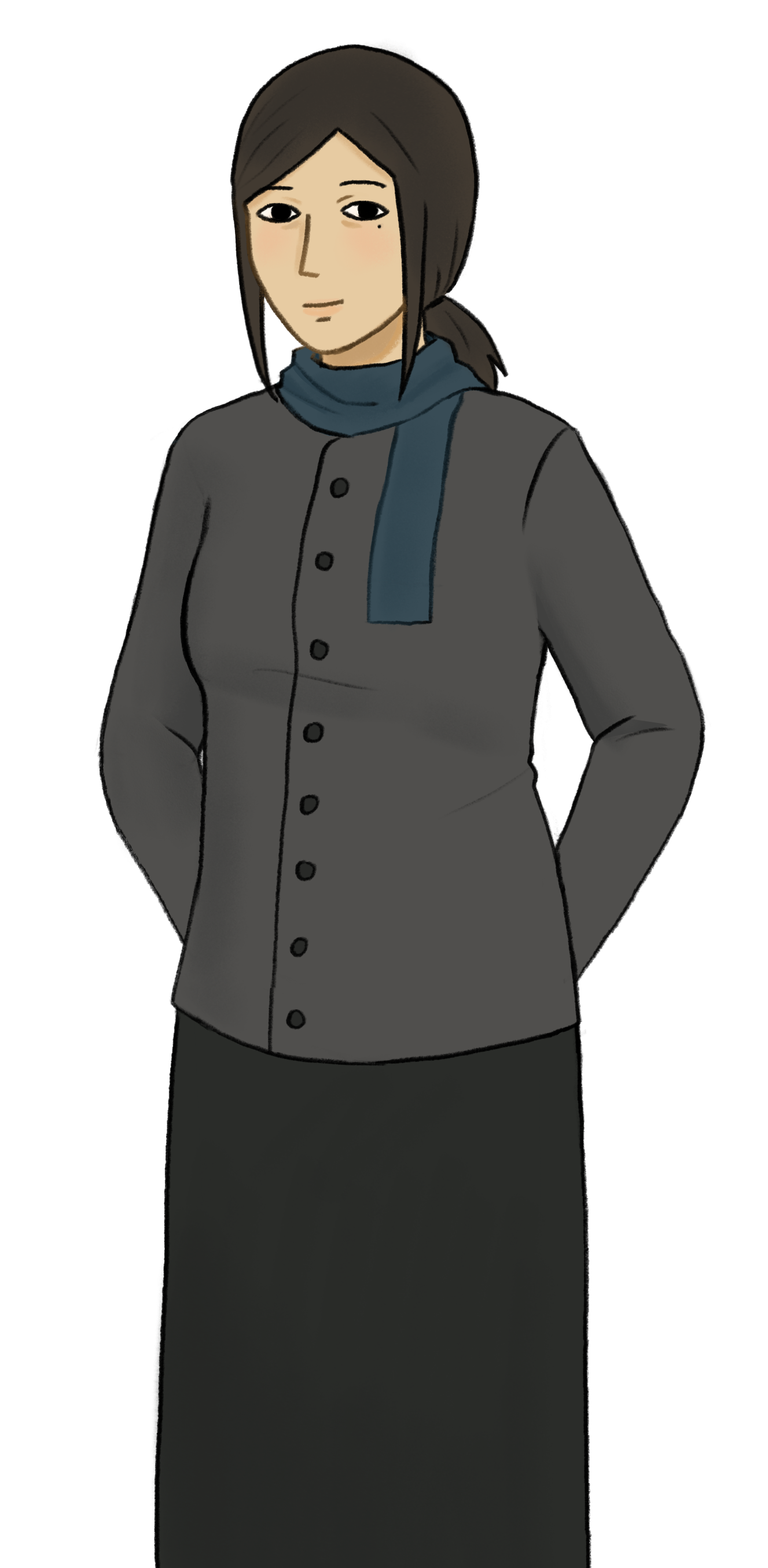
Vera Mirova is a 25-year-old biochemist from Novosibirsk working at the Institute of Cytology and Genetics in Akademgorodok in 1984. She is autistic, highly systematic, and academically successful, with a focus on regeneration in organisms like hydra and planaria. She lives in a one-room apartment with her partner Lena, maintains strict routines, and tends to be socially reserved and literal. Her main interests are cellular immortality, laboratory work, and structured walks in the nearby forest. Her decision-making is driven by analytical thinking, a strong need for continuity, and loyalty to a very small number of people, primarily Lena.

Demographics
Name: Vera Ivanovna Mirova
Age: 25
Sex/Gender: Female
Ethnicity: Russian (Siberian)
Birth date: March 6, 1959
Place of birth: Novosibirsk, USSR
Occupation: Biochemist at the Institute of Cytology and Genetics, Akademgorodok
Education: Master’s-level equivalent; candidate for biological sciences degree
Socioeconomic status: Lower-middle class; modest stipend and shared student housing
Affiliations: Member of Komsomol (largely obligatory); works under academician Dr. Kirillin
Public perception: Quiet, scientific, unremarkable; regarded as promising but “cold” by department peers
Other notes: Formally polite, socially distant; colleagues whisper about her private life with Lena
Physical Appearance
Height: 170 cm
Weight: 57 kg
Body type: Lean, long-limbed, slightly underfed
Eye color: Gray-blue
Skin color: Pale with slight olive tint from laboratory lighting
Hair color: Dark ash brown, usually tied back
Fitness level: Healthy but sedentary; walks daily with Lena in the woods
Posture/Gait: Straight-backed with deliberate, quiet steps
Coordination: Excellent fine-motor precision; clumsy with large objects
Tattoos: None
Scars/Birthmarks: Small burn scar on left wrist from a lab accident, mole under right eye
Other distinguishing features: Narrow eyes, steady gaze; hands often smell faintly of ethanol and resin
Fashion style: Practical…wool skirts, collared shirts, lab coat, worn boots
Accessories: Plain wristwatch from father; leather satchel for notebooks
Cleanliness/Grooming: Meticulous, indifferent to fashion
Weaknesses/Conditions: Fragile endurance, chronic neck pain, anemia, insomniaTics/Stim behaviors: Flexes left hand when thinking, presses palms together, hums snippets of piano music
Disabilities: Autistic; highly structured cognition and sensory regulation needs
History
Family: Father Ivan (mathematician), mother Maria (schoolteacher), younger sister in Leningrad
Notable events: Early fascination with regeneration during school science clubs; recruited into state research program at 22
Criminal record: Officially clean
Skeletons in the closet: Unregistered romantic relationship with a woman; unauthorized lab experiments outside permitted scope
Secrets: Conducted Lena’s resurrection without disclosure and falsified some lab logs
Other notes: Keeps banned Western scientific articles hidden inside a standard chemistry textbook
Psychological Traits
Personality type: INTJ
Temperament: Melancholic with rigid rational discipline
Neurotype: Autistic; emotionally restrained, literal, pattern-focused
Personality traits: Controlled, perceptive, analytical, loyal, obsessive
Introvert/Extrovert: Introvert
Self-esteem: Stable but insulated; self-worth tied to precision and productivity
Intelligence: Exceptionally high analytical and systems reasoning
Educational focus: Cell regeneration, bioelectric signaling, continuity of tissue
Morals/Virtues: Intellectual honesty, discipline, devotion
Phobias/Fears: Loss of control, public scrutiny, meaninglessness
Angered by: Sloppiness, ideological hypocrisy, romantic sentimentalism
Pet peeves: Interrupted routines and unsignaled touch
Obsessions: Permanence, cellular immortality, continuity
Desires: To understand and preserve what she loves; to prove life can resist decay at least once
Flaws: Emotional repression; arrogance about reason; tunnel vision
Bad habits: Forgets to eat; isolates when anxious
Quirks: Talks to lab cultures and to Lena’s scar as if both can hear
Favorite saying: “Nothing ends if it can be understood.”
Communication
Languages: Russian, academic English, some German
Speech style: Formal, precise, rarely uses contractions
Accent: Provincial Siberian softened by academic speech
Pacing/Pitch: Slow, calm, low and even
Gestures: Precise, restrained; steeples fingers while thinking
Facial expression: Controlled, often unreadable to strangers
Laughter/Smile: Rare; smile is fleeting but unguarded with Lena
Other notes: Voice rarely rises above a measured conversation volume
Strengths, Weaknesses, & Abilities
Physical strengths: Dexterity, steadiness under stress
Physical weaknesses: Poor stamina, prone to cold
Intellectual strengths: Methodical reasoning, innovation, focus under pressure
Intellectual weaknesses: Detached empathy; difficulty with ambiguity outside controlled systems
Interpersonal strengths: Loyalty, patience with those she trusts
Interpersonal weaknesses: Emotional misreads; bluntness
Abilities: Microscopy, data synthesis, experimental design, fine motor control
Mental health patterns: Mild obsessive-compulsive behaviors; rumination
Other notes: Treats emotions as variables to control rather than experiences to feel
Relationships
Partner: Lena Volkova (explicit, mutually romantic relationship)
Parents: Ivan and Maria Mirova
Sibling: Younger sister living in Leningrad
Friends: Few; a lab colleague, Pavel, who senses her intensity but not its cause
Mentor: Dr. Kirillin, who values her precision but worries about her isolation
Rivals: Supervisor’s assistant who suspects unauthorized experiments
Idols: Pavlov, Tsiolkovsky, and obscure Soviet regeneration researchers
Non-living attachments: Personal microscope; Lena’s wooden wolf carving kept after the resurrection
Enemies: Institutional indifference; entropy as a concept
Character Growth
Archetype: The seeker
Core values: Truth, preservation, devotion
Internal conflicts: Love versus control; proof versus peace; science versus the unknowable
External conflicts: State oversight, limited resources, moral secrecy
Goals: Preserve Lena’s life and retroactively justify it through coherent theory
Motivation: Fear of losing meaning through death; refusal to accept narrative finality
Epiphanies: The absence of consequence is its own burden; some acts remain inexplicable
Significant events: Adolescence by the river; move to Akademgorodok; Lena’s murder; the resurrection; the long silence afterward
End state: Outwardly unchanged, internally destabilized but still functioning; lives with a private miracle that refuses to become a story
Lena Volkova is a 25-year-old woodcarver and informal hunter from Kemerovo Oblast who now lives in Akademgorodok. She completed technical carpentry training, works in a cooperative workshop, and is known locally for carvings of predatory mammals and trees made with hunting knives. She shares a one-room apartment and a romantic relationship with Vera, contributes practical income through manual work, and spends time in the surrounding forest gathering materials and game. Her background includes an abusive father who later tracks her down and kills her; she is subsequently revived by Vera using experimental regenerative methods. She has strong practical skills, relatively high physical fitness, and ongoing negative psychological effects.
Demographics
Name: Elena “Lena” Viktorovna Volkova
Age: 25
Sex/Gender: Female
Ethnicity: Russian (Kemerovo Oblast)
Birth date: July 2, 1959
Place of birth: Kuzbass region, Kemerovo Oblast, USSR
Occupation: Carpenter, woodcarver, and informal hunter
Education: Completed secondary school; technical carpentry training
Socioeconomic status: Working class; modest income from cooperative and commissions
Affiliations: Local cooperative carpentry workshop; informal crafts market in Akademgorodok
Public perception: Skilled craftswoman, quiet, solitary, slightly uncanny
Other notes: Self-taught artist known locally for carvings of predators and twisted trees
Physical Appearance
Height: 168 cm
Weight: 60 kg
Body type: Strong, broad-shouldered
Eye color: Amber-brown
Skin color: Light, freckled, a little reddish
Hair color: Auburn, short-medium cut, a bit messy, goes out at the ends.
Fitness level: High; accustomed to physical labor
Posture/Gait: Confident stride
Coordination: Excellent hand-eye control
Tattoos: None
Scars/Birthmarks: Knife scars on hands (small healed cuts), healed stab wound scar on lower ribs
Other distinguishing features: Slightly crooked nose from childhood accident, teeny tiny scar on upper lip
Fashion style: Rustic…flannel shirts, leather apron, wool trousers
Accessories: Hunting knife; small round silver pendant from Vera
Cleanliness/Grooming: Clean but rough; sap under nails
Weaknesses/Conditions: Lung irritation from wood dust; cold-related illness
Tics: Clicks tongue while carving
Other notes: Smells faintly of pine and wood fire smoke
History
Family: Mother Nina; estranged father Viktor (alive at the time of the story, later disappears after killing her)
Notable events: Childhood in a logging town; father’s increasing violence after mine closures; flight with mother and stepfather south to Novosibirsk at 18
Criminal record: Minor citation for illegal hunting; otherwise clean
Skeletons in the closet: Murdered by her father near Akademgorodok and secretly revived by Vera; officially recorded as missing or presumed to have left town
Secrets: Keeps the bloodstained cloth from the night of her death hidden with her tools
Regrets: Leaving her mother to face the aftermath of her disappearance without explanation
Other notes: Keeps her father’s old hunting blade cleaned and sheathed, unable to discard it
Psychological Traits
Personality type: ISFP
Temperament: Sanguine with a hard edge
Personality traits: Passionate, tactile, humorous, impulsive, intuitive
Introvert/Extrovert: Introvert leaning ambivert; social in small, trusted groups
Self-esteem: Confident outwardly, fragile privately
Intelligence: Creative, spatial, intuitive pattern recognition
Morals/Virtues: Loyalty, independence, courage, protectiveness
Phobias/Fears: Confinement; becoming like her father; being seen as unnatural
Angered by: Condescension, institutional hypocrisy, cruelty to animals
Obsessions: Form, motion, strength of living things; how predators move through trees
Desires: Simple permanence; to be seen and remembered clearly, especially by Vera
Flaws: Impulsivity, recklessness, reluctance to set boundaries
Bad habits: Drinks when anxious; leaves blades unsheathed; avoids medical care
Quirks: Names her carvings; talks to trees before cutting branches
Favorite saying: “Everything fights to stay.”
Communication
Languages: Russian
Speech style: Conversational, rhythmic, teasing; swears casually
Accent: Rural Siberian with Kemerovo inflection
Pacing/Pitch: Warm, mid-to-low, sometimes roughened by cold or smoke
Gestures: Frequent, expressive; speaks with her hands and knife
Facial expression: Open, readable; emotions show quickly
Laughter/Smile: Unrestrained laughter; easy, bright smile, especially with Vera
Other notes: Uses humor to diffuse grief and tension, sometimes inappropriately
Strengths, Weaknesses, & Abilities
Physical strengths: Endurance, dexterity, steady aim
Physical weaknesses: Lung irritation; occasional temperature dysregulation post-resurrection
Intellectual strengths: Spatial reasoning, intuitive understanding of materials and bodies
Intellectual weaknesses: Impatience with abstract theory and bureaucracy
Interpersonal strengths: Warmth, empathy, tactility
Interpersonal weaknesses: Poor self-protection; deflects with jokes
Abilities: Hunting, tracking, carving, basic survival skills in forest and snow
Mental health conditions: Mild PTSD; vivid dreams and gaps in memory around the night of her death
Other notes: Unsure if some dreams are memories of being dead, of the procedure, or imagination
Relationships
Partner: Vera Mirova (mutual, explicit romantic relationship; share bed and home)
Parents: Viktor (estranged; later vanishes after killing her), Nina (living, unaware of the resurrection or exact fate)
Friends: Sergei, retired carpenter and mentor in the workshop
Rivals: None; occasionally mocked by less skilled coworkers but not in earnest
Enemies: The memory of her father and the violence he carries
Idols: None in name; admires animal instinct and resilience
Non-living attachments: Knives, especially the hunting blade; wooden carvings of predators and trees
Other notes: Locals assume she either followed seasonal work or left town quietly after rumors about a violent father
Character Growth
Archetype: The survivor
Core values: Independence, love, honesty, physical presence
Internal conflicts: Fear that her survival is unnatural; uncertainty whether she is the same person as before
External conflicts: Hiding her continued existence; living in a town that does not know she died
Goals: Continue living without unraveling; keep life with Vera ordinary despite what happened
Motivations: Love of Vera; love of making tangible things in a decaying world
Epiphanies: Being alive is not the same as being whole; not every miracle is meant to explain anything
Significant events: Flight from home; move to Akademgorodok; deepening romance with Vera; murder by her father near the pond; revival in the apartment; completion of the altered wolf carving
End state: Quiet emblem of singular, unremarked immortality; a life that continues with no narrative justification beyond affection and stubbornness


Political and Institutional Context of Soviet Science in 1984
In 1984, the Soviet Union was governed by Yuri Andropov until February and by Konstantin Chernenko thereafter. State priorities emphasized military parity with the United States, nuclear deterrence, and technological self sufficiency. Scientific research was centrally planned through five year plans administered by Gosplan, which set funding targets and research priorities based on perceived state needs. Basic research was officially supported but evaluated by its long term usefulness to defense, medicine, or industry.
The Academy of Sciences of the USSR functioned as the primary governing body for scientific research. It controlled funding allocation, personnel appointments, and publication approval. Research institutes were separated from universities, unlike Western models, and most experimental work occurred within Academy institutes rather than classrooms. Scientists were state employees with fixed salaries, housing tied to employment, and travel tightly regulated.
Ideological oversight still existed in 1984, but it was less rigid than during the Stalin era. Genetics had been officially rehabilitated in the mid 1960s after decades of suppression under Lysenkoism. By the 1980s, molecular biology, cytology, and biochemistry were considered legitimate disciplines, although politically sensitive topics such as human genetic enhancement or lifespan extension were framed cautiously. Ethical review boards as understood in the West did not exist in the same form.
International scientific exchange was limited but not nonexistent. Soviet researchers could access translated Western journals with delays of months or years. Some institutes received foreign visitors under supervision. Conferences abroad were rare and usually restricted to senior scientists with Party approval. This produced a research culture that was technically sophisticated but partially isolated from rapid global developments.
Akademgorodok and Novosibirsk State University
Akademgorodok was established in 1957 approximately 30 kilometers south of Novosibirsk as the center of the Siberian Branch of the Academy of Sciences. Its location was chosen for geographic isolation, security, and proximity to natural resources. By 1984, it contained more than 30 research institutes and employed over 20,000 scientists and technical staff. The area was physically separated from industrial zones and had controlled access.
Novosibirsk State University served as the educational core of Akademgorodok. It was founded in 1959 to train students directly within research institutes rather than through traditional lecture centered models. Undergraduate students began laboratory work early and were assigned to Academy institutes by their third year. This created a continuous pipeline between education and state research.
The social environment of Akademgorodok differed from most Soviet cities. Scientists were concentrated in purpose built housing with access to libraries, concert halls, and academic clubs. The population was younger and more highly educated than the Soviet average. While shortages of consumer goods still existed, access to information and informal discussion was broader than in Moscow or Leningrad.
Despite its reputation for relative intellectual freedom, Akademgorodok remained under KGB surveillance. Foreign contact, manuscript circulation, and internal seminars were monitored. However, day to day research decisions were often left to institute directors. This balance allowed technically ambitious projects to proceed as long as they avoided overt political controversy.
Biochemistry and Molecular Biology in the Soviet Union
By 1984, Soviet biochemistry had reached a mature stage, with established schools in enzymology, protein chemistry, and metabolic regulation. Techniques such as gel electrophoresis, ultracentrifugation, and radioisotope labeling were routinely used. DNA sequencing existed but lagged behind Western standards due to equipment scarcity and limited access to reagents.
The Siberian Branch maintained several institutes focused on biochemistry and bioorganic chemistry. These institutes studied protein synthesis, membrane transport, and cellular metabolism under extreme conditions such as cold stress. Research often emphasized comparative biology using plants, fish, and small mammals native to Siberia. This ecological framing aligned with Soviet strengths in field biology.
Funding for biochemistry was justified through medical and industrial applications. Topics included antibiotic synthesis, wound healing agents, and metabolic disorders. Regenerative processes were studied indirectly through cell division, tissue repair, and embryonic development rather than explicit life extension. Terminology emphasizing restoration and adaptation was preferred.
Computational resources were limited. Data analysis was performed using mainframe computers shared among institutes or by manual calculation. Experimental throughput was lower than in Western laboratories, but long term projects benefited from stable staffing and minimal pressure to publish rapidly. Career advancement depended more on institutional loyalty than citation metrics.
Regenerative Biology and Cytology Research
Regenerative biology in 1984 was not a unified discipline but a collection of studies in cytology, developmental biology, and physiology. Soviet researchers focused on tissue regeneration in amphibians, fish, and rodents. Limb regeneration in newts and liver regeneration in mammals were active areas of investigation. These models were chosen for their clear morphological outcomes.
The Institute of Cytology and Genetics in Akademgorodok played a central role in cellular and developmental research. Under the leadership of Dmitri Belyaev until his death in 1985, the institute emphasized genetic regulation of development and phenotype. Its work demonstrated that complex traits could shift rapidly under selection pressure, implying plasticity in developmental systems.
Cell culture techniques were established but constrained by sterile supply availability. Primary cell cultures were more common than immortalized lines. Studies of cell differentiation relied heavily on microscopy, histological staining, and autoradiography. Molecular signaling pathways were inferred from phenotypic changes rather than direct molecular assays.
Human regenerative research was restricted to clinically oriented studies such as bone healing, skin graft integration, and recovery after injury. Experimental manipulation of human embryos or germline cells was prohibited. Animal models served as proxies for understanding fundamental mechanisms, with findings framed as contributions to public health and labor recovery.
Daily Life and Material Conditions of Researchers
Researchers in Akademgorodok in 1984 earned stable but modest salaries relative to state averages. Housing was provided through institutional allocation and typically consisted of small apartments. Utilities and public transportation were subsidized. Private automobiles were rare, and most residents relied on buses or walking.
Laboratories operated under chronic shortages of consumables such as pipette tips, antibodies, and photographic film. Equipment repairs were handled internally by engineers rather than external suppliers. Improvisation was a necessary skill, and experimental protocols were adapted to available materials. Delays in experiments were common.
Work schedules were structured but flexible within institutes. Evening seminars and weekend work were typical during critical experiments. Scientific discussion often occurred informally in kitchens or forest walks rather than official meetings. Alcohol consumption was culturally present but regulated during working hours.
Information access depended heavily on institutional libraries. Journals such as Journal of Biological Chemistry and Nature were available in translation or microfilm. Personal copying was restricted. Manuscripts intended for foreign publication required approval from institute directors and censorship offices before submission.
References
Josephson, Paul R. New Atlantis Revisited. Akademgorodok the Siberian City of Science. Princeton University Press. 1997.
Graham, Loren R. Science in Russia and the Soviet Union. A Short History. Cambridge University Press. 1993.
Krementsov, Nikolai. Stalinist Science. Princeton University Press. 1997.
Vucinich, Alexander. Science in Russian Culture. Stanford University Press. 1970.
Roll Hansen, Nils. The Lysenko Effect. Cambridge University Press. 2005.
Medvedev, Zhores A. Soviet Science. Oxford University Press. 1978.
This is a detailed timeline of events of the story hosted on this site.
July of 1958
Vera Mirova is born in Novosibirsk, USSR, the eldest daughter of an engineer and a mathematics teacher.
Her early fascination with natural order comes from cataloguing beetles and drawing cellular diagrams on scrap paper.
September 1958
Lena Volkova is born in the same city, two months younger than Vera.
Her father is a forestry worker, her mother a nurse.
She grows up surrounded by pine sap and wood smoke, preferring forest paths to crowded courtyards.
1960s
Both girls attend different schools but participate in the same science and nature clubs hosted by local teachers.
They first meet during a river ecology trip, where eleven-year-old Vera corrects Lena’s plant identification.
Their initial rivalry turns into fascination.
1972
Lena’s father loses his job due to factory automation at the timber plant.
His temper worsens and her mother retreats into silence.
Lena begins carving small animals from scrap wood to calm herself.
1973
Vera wins a regional science fair for her paper on limb regeneration.
Her teachers encourage her to apply to Novosibirsk State University once she graduates.
She begins keeping a laboratory notebook, labeling her personal observations “field data.”
1975
Lena’s mother leaves her abusive husband and remarries a surveyor in Akademgorodok.
Lena follows reluctantly.
She starts fixing tools and crafting wooden souvenirs for extra money.
1976
Vera and Lena reunite unexpectedly through a regional nature workshop.
They spend hours along the riverbank gathering insects and talking.
Their friendship deepens into something more than expected.
1979
Both graduate secondary school. Vera’s grades earn her state sponsorship for higher studies while Lena declines admission offers, choosing independence over dormitory life.
They promise to stay in the same city regardless of where work takes them.
1980
Vera enters postgraduate study at Novosibirsk State University, researching regeneration in planaria and hydra.
The scientific optimism of Akademgorodok is fading, replaced by underfunded labs and outdated equipment.
1981
Lena relocates to Akademgorodok to be near Vera.
She works for a forestry cooperative restoring damaged tools and selling carved animals. She goes on to establish herself as a trusted carpenter.
They share a one-room student apartment with one narrow bed, one desk, and two identical coats on the rack.
Summer 1983
Vera’s experiments show early regenerative responses in hybrid tissue samples.
November 1983
A man begins asking around the cooperative for “a Lena Volkova.”
Workers describe him as unshaved, carrying old forestry paperwork.
When Lena recognizes her father, the old terror returns.
She refuses Vera’s suggestion to flee, insisting that she won’t be chased forever.
February 1984
During a power outage one freezing evening, Lena takes the forest shortcut home.
Her father confronts her beneath the pines, demanding obedience.
She refuses. He strikes her with his rifle.
He hides the body and disappears into the woods.
February 1984
SPOILERS!!!!!
Hello! I'm smallcarnivorousmammal (aka smallcarnivore or cat).
I've been an avid artist since I could comprehend it. I mostly do digital and physical art, and I like the internet. Sometimes I do creative writing, practice my research skills, and make some really good food. I've been learning webdesign and how to code recently.
I'm making this site to test my skills in writing, worldbuilding, research, character development and coding.
Late USSR history really fascinates me. Learning about its collapse, life during the soviet era, and how it worked and came to be is very interesting. I've always wanted to set a story in the later years of this period of time, so now I am.
I hope you'll enjoy browsing. Click the radio for music!
Click me to play music!

♪
♫
♪
♬